


More news on this day
President Donald Trump’s decision this weekend to pause a new round of strikes on Iran has eased immediate fears of a wider regional escalation, but publicly available aviation and travel advisories indicate that residents of the United Arab Emirates should still brace for possible flight disruptions, higher fares and fast-changing risk assessments on routes across the Gulf and wider Middle East.
Get the latest news straight to your inbox!
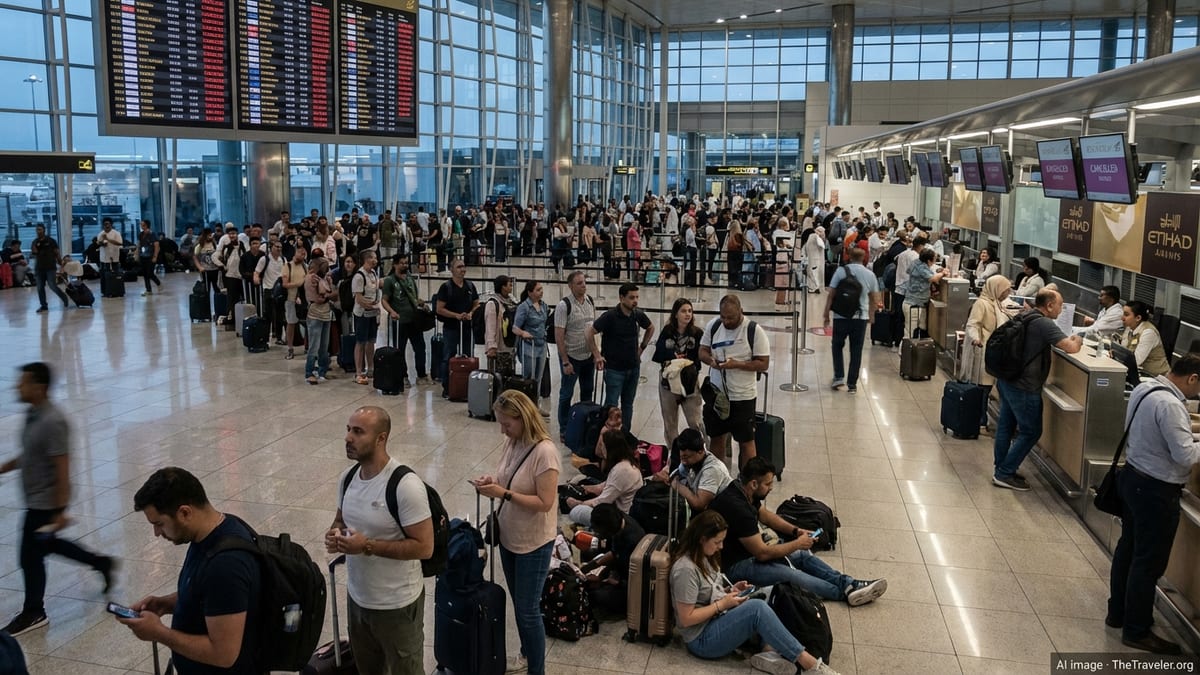
Pause in Strikes, But No Full De-escalation Yet
According to recent coverage from major international outlets, the White House has halted plans for intensive new attacks on Iranian targets after regional mediators reported progress on outlines of a political deal. Reports describe a fragile lull following months of tit-for-tat strikes that have involved missile and drone activity across the Gulf and near vital shipping lanes.
Analysts quoted in recent explainers emphasize that the pause is a tactical move rather than a comprehensive ceasefire. The United States has kept forces in the region on alert, and Iran’s conventional and proxy capabilities remain largely intact. This means that while the risk of immediate large-scale action has dipped, the underlying tensions that have driven months of instability are still present.
For travelers, that distinction matters. Airspace risk is typically assessed not only on the basis of active fighting, but also on the potential for sudden escalation. As a result, flight operations in and around the Gulf can remain constrained even when there is no active strike campaign underway.
Regional governments and international organizations are continuing diplomatic efforts aimed at locking in a more durable reduction in hostilities. Until there is a formal agreement that significantly lowers the chance of new attacks, aviation planners are expected to keep a cautious stance.
How Gulf Airspace Is Being Managed
Publicly available aviation notices show that authorities in the United States and Europe have maintained advisories urging carriers to exercise extreme caution near parts of Iranian airspace and adjacent conflict zones. These advisories often stop short of outright bans, but they signal to airlines that routing decisions should take account of potential missile or drone activity at cruising altitude.
For flights to and from the UAE, this has translated into more complex route planning on some services, particularly those crossing the Strait of Hormuz or flying near the Gulf of Oman. Many carriers have already been flying more southerly tracks or adding extra buffers around sensitive areas, adding a small amount of time and fuel burn to certain long-haul services.
Aviation security specialists note that commercial aircraft are highly vulnerable in any environment where sophisticated air defense systems and cruise or ballistic missiles are active. Even with current safeguards, existing advisories encourage airlines to avoid overflying regions where radar operators may misinterpret radar contacts or where debris from intercepts could pose a hazard.
For now, UAE airspace itself remains open and busy, and hub airports in Dubai and Abu Dhabi continue to operate at high capacity. However, airlines and regulators are reviewing risk assessments daily, and even short-notice changes to regional airspace availability could have knock-on effects for schedules, especially during peak travel periods.
Immediate Impact on UAE Residents’ Travel Plans
Travel industry reports indicate that most flights into and out of the UAE are still operating, but with some adjustments to timing and routings on routes that pass near Iranian territory. Where detours are required, longer flight times can occasionally translate into missed connections for tight itineraries and, in some cases, higher fares as airlines factor in additional operating costs.
Travel agencies in the Gulf region are advising clients to allow extra connection time when booking multi-leg journeys through Dubai and Abu Dhabi, particularly on itineraries involving Europe–Asia or North America–South Asia routes that might normally use the shortest path near Iran. Passengers are also being encouraged to opt in to airline notifications and keep a close eye on departure and arrival times on the day of travel.
Insurance policies are another area drawing attention. Some standard travel insurance products treat war and armed conflict as exclusions, which can limit coverage for disruptions directly linked to hostilities. Residents are being urged to review policy terms carefully and, where available, consider upgrades or specialist products that explicitly cover travel disruption in higher-risk regions.
For travelers flying point to point within the Gulf Cooperation Council region, schedules remain largely intact. That said, even short-haul fares can fluctuate as airlines rebalance capacity and respond to shifting demand from travelers who may delay or reroute longer journeys until the security picture becomes clearer.
Airline Responses and Potential Schedule Changes
Major Gulf carriers are continuing to project confidence in their ability to maintain extensive global networks, but public statements and schedule data reflect a more cautious approach than before hostilities escalated earlier this year. Some services that would normally transit higher-risk air corridors have already been adjusted or thinned out, while others are operating with built-in contingency time.
Industry analysts note that airlines must balance commercial pressures with safety imperatives and regulatory expectations. Even without formal bans, carriers that ignore widely circulated government risk bulletins could face legal and reputational exposure if an incident occurs. For that reason, route planners tend to err on the side of safety, especially when military activity is taking place at high altitude.
Operationally, UAE-based airlines are understood to have diversified routing options for key trunk routes toward Europe and North America, using alternative corridors across Saudi Arabia and other neighboring states. While these options can mitigate risk, they may increase competition for available airspace and occasionally create congestion that contributes to delays.
Passengers should expect that last-minute operational changes will remain a possibility. Same-day rerouting around temporary airspace closures, extended holding patterns and re-timed departures can occur with little warning whenever regional tensions spike, even if no new strikes ultimately materialize.
What UAE Residents Should Watch in the Coming Days
For UAE residents planning to travel, the latest pause in strikes offers some breathing room but not a guarantee of stability. Observers are watching several indicators over the next days and weeks, including whether the United States and Iran maintain the current reduction in hostilities, whether missile or drone launches from Iranian territory resume, and whether Gulf states adjust their own alert levels.
Publicly accessible travel advisories from Western governments have been updated frequently throughout the conflict and remain a useful barometer of perceived risk, even for noncitizens. Changes in language around airspace safety, the likelihood of attacks on civilian infrastructure, or the reliability of commercial flights often foreshadow shifts in airline operations.
Travel planners recommend that UAE residents avoid making assumptions based on headline announcements alone. A single statement about paused strikes may not immediately translate into looser aviation restrictions, just as a flare-up in rhetoric may not mean that airspace will close overnight. The more practical approach is to monitor airline communications, check in advance for any special waiver policies, and be prepared for itinerary changes.
For now, the main message for UAE-based travelers is to stay informed and flexible. The regional situation remains fluid, but with careful monitoring and a willingness to adjust plans, most journeys in and out of the country can still be completed safely, even as the geopolitics around them continue to shift.