


More news on this day
President Donald Trump returned to the White House from Camp David over the weekend as U.S. travel and security alerts focused renewed attention on the Middle East, where recent missile and drone activity has raised the risk of sudden airspace changes and transportation disruptions for travelers.
Get the latest news straight to your inbox!
Why the travel warning is resonating now
Published coverage over the past several days has centered on a fresh round of U.S. security messaging that urges Americans in the Middle East to maintain heightened vigilance and prepare for potential travel disruptions, including flight cancellations and periodic airspace closures. The messaging builds on earlier U.S. “worldwide caution” guidance that highlighted the possibility of spillover risks for Americans and U.S.-associated sites outside the region as well.
The renewed emphasis follows reported escalation involving Iran-aligned Houthi forces and Saudi Arabia, including an attempted strike toward Riyadh that Saudi air defenses reported intercepting. Travel guidance tied to the region has increasingly emphasized how quickly conditions can shift, not only on the ground but also in the skies, as carriers and regulators respond to fast-moving security developments.
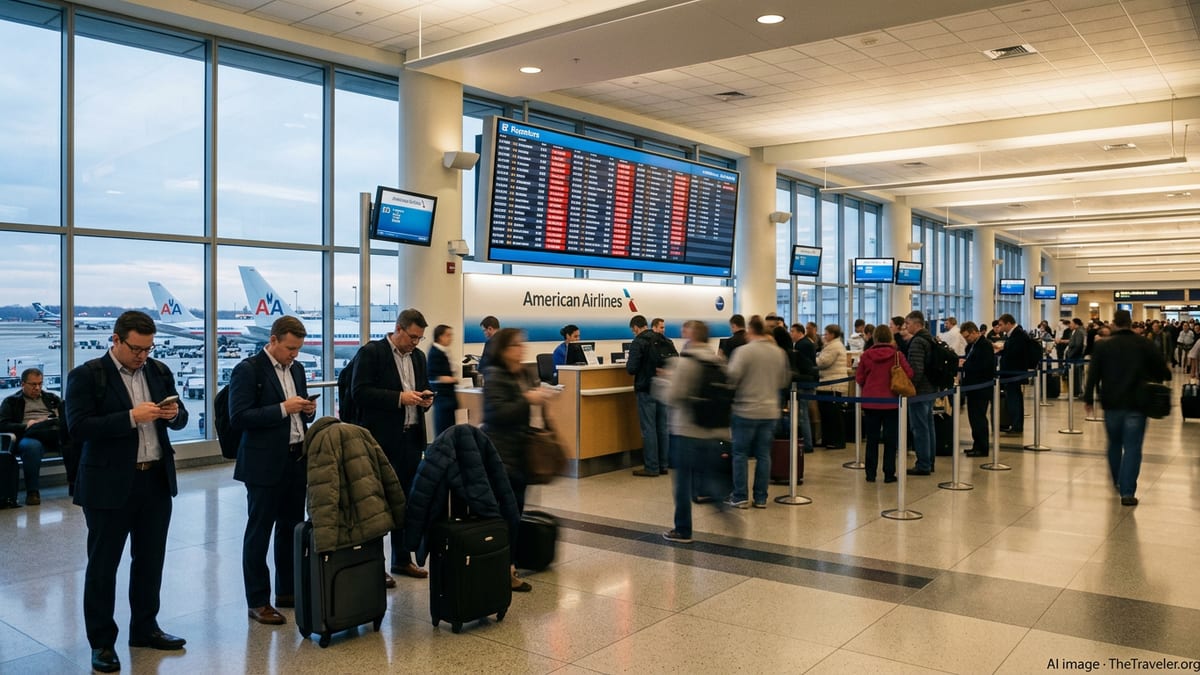
For travelers, the key practical takeaway is that the “travel warning” conversation is no longer just about whether a destination is safe. It is also about whether an itinerary will stay operable once booked, especially for trips that connect through Gulf hubs or rely on narrow routing options.
What U.S. travel advisories actually mean for trips
The U.S. State Department’s Travel Advisory system is country-specific and uses levels ranging from Level 1 (Exercise Normal Precautions) to Level 4 (Do Not Travel). In the Middle East, several destinations are currently listed at higher levels, reflecting risks that can include armed conflict, terrorism, wrongful detention concerns, or limited U.S. government capacity to provide assistance.
At the same time, the State Department also issues broader “Security Alert” notices tied to regional conditions and global events. Those alerts can matter just as much as the country-level rating because they often focus on immediate operational realities, such as possible airspace restrictions, flight cancellations, airport delays, and the need to monitor embassy or consulate updates.
Travelers planning trips to the region or transiting major hubs are often advised in publicly available guidance to enroll in STEP (the Smart Traveler Enrollment Program) so they can receive email updates from the nearest U.S. embassy or consulate. While STEP does not guarantee assistance, it can help travelers get time-sensitive information during disruptions.
Airspace risk is shaping airline schedules and connections
Flight planning to and through the Middle East has been affected by aviation risk notices and operational advisories that focus on the Persian Gulf and adjacent airspace. Publicly available FAA materials include ongoing restrictions and notices for potentially hazardous situations in certain overseas airspace areas, which airlines and dispatchers may incorporate into routing and scheduling decisions.
European aviation guidance has also highlighted the elevated risk environment for civil flights over portions of Gulf waters, warning of hazards tied to unpredictable military developments and the possible use of missiles, drones, combat aircraft, and air-defense systems. Even when airports remain open, such guidance can translate into reroutes, longer flight times, last-minute retimings, and tighter connection windows.
Published reporting and industry updates indicate that service restoration has been uneven: some airlines have resumed select routes while keeping others suspended into the fall. For travelers, that means a ticketed itinerary is not a guarantee of a stable plan, particularly if the journey relies on multiple carriers or includes a change of airport within a metro area.
What travelers can do before booking and before departure
Travelers with upcoming trips to the Middle East, or itineraries that transit through Gulf hubs, can reduce surprise disruptions by verifying the operating carrier on each segment and checking for the most recent schedule changes right up to departure. In many disrupted situations, the airline that sold the ticket and the airline operating the flight may not be the same, and traveler options can depend on the operating carrier’s policies.
It can also help to build itineraries with larger buffers. Longer layovers, daylight arrivals, and fewer same-day connections can provide more resilience if an airspace closure or cancellation cascades through a network. Where feasible, travelers may prefer routings that provide multiple daily alternatives, rather than single-frequency flights that leave limited rebooking capacity.
Another practical step is to confirm travel insurance terms before purchase, especially for policies that exclude claims when a traveler goes to a destination under a “Do Not Travel” advisory or when an event is considered “foreseeable.” Because advisory levels and security alerts can change, travelers who are cost-sensitive may also consider refundable or changeable fares when planning trips that must happen on specific dates.
Near-term outlook: volatility and planning around it
Current conditions suggest the region’s travel environment may remain fluid. Security alerts have emphasized the possibility of rapid escalation and the potential for unforeseen disruptions, a framing that often corresponds with short-notice operational changes for airlines, airports, and border processes.
For travelers already in the region, the most useful preparation often centers on mobility: keeping phones charged, maintaining access to funds, storing digital and printed copies of travel documents, and having a plan for how to reach an alternate airport or extend lodging if flights are interrupted.
For travelers considering fall and winter trips, the planning calculus is increasingly about flexibility. Even when a destination remains open to tourism and flights are operating, the evolving airspace picture means travelers may want to treat their itinerary as a plan that could require adjustments, rather than a fixed schedule that will hold unchanged from booking to departure.