


More news on this day
A newly released Transportation Safety Board of Canada investigation has concluded that trucks encroaching into the Canadian National Railway main line right-of-way near Saint-Alexandre-de-Kamouraska, Quebec, set off a chain of events that led to a VIA Rail passenger train derailment in January 2026.
Get the latest news straight to your inbox!
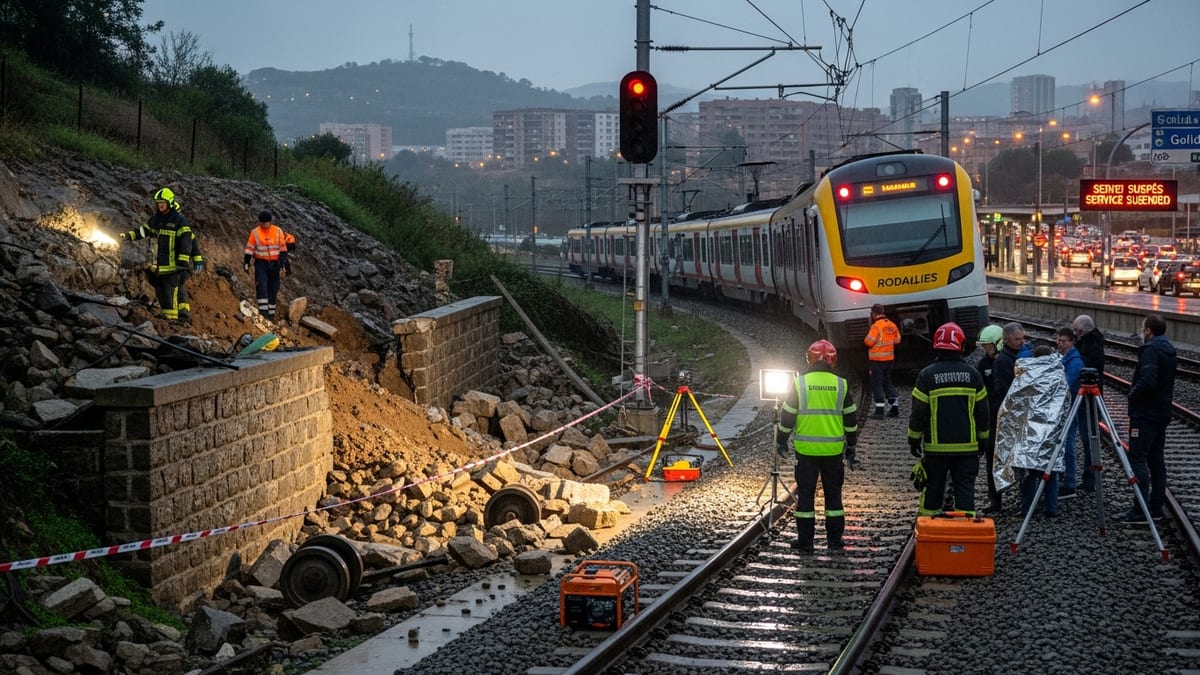
Overnight Collision on CN Main Line in Eastern Quebec
According to the Transportation Safety Board of Canada (TSB), the incident occurred in the early hours of 12 January 2026, when an eastbound VIA Rail passenger service operating on Canadian National Railway’s Montmagny Subdivision struck two parked tractor-trailers near Saint-Alexandre-de-Kamouraska. The impact caused a main-track collision and subsequent derailment on the busy corridor along the south shore of the St. Lawrence River.
Publicly available information from the investigation indicates that the trucks had come to rest too close to the active main line, within the railway right-of-way. When the VIA train approached at track speed, there was insufficient separation between the vehicles and the passing consist, resulting in contact that led to the derailment of part of the train.
The TSB report notes that the main track in the area forms part of a key CN freight and VIA Rail passenger route linking Quebec City and the Maritimes. The overnight timing of the collision meant that the train was carrying a mix of long-distance travelers and regional passengers, though there were no fatalities.
Emergency response and recovery operations continued for several hours following the derailment, affecting both passenger and freight movements through the region and drawing renewed attention to how heavy vehicles are managed in proximity to main-line railway infrastructure.
How Truck Encroachment Created a Hidden Risk
The TSB’s findings point to encroachment of heavy vehicles into the railway right-of-way as the central factor in the occurrence. Investigators determined that the tractor-trailers had been positioned in a location where the available clearance between the parked vehicles and the dynamic envelope of passing trains was inadequate.
Right-of-way encroachment is a long-recognized risk at the rail-road interface, particularly where industrial access roads, service yards, or highway pull-outs run parallel to active tracks. In this case, the TSB analysis indicates that the geometry of the roadway and the absence of effective physical or visual barriers made it possible for trucks to stop closer to the track than intended.
The report highlights the challenges of relying primarily on driver judgment in such locations. In darkness or poor weather, it can be difficult for heavy vehicle operators to accurately gauge clearance to the track, especially where markings, signage, or delineators are limited. When a high-speed passenger train passes, even a minor miscalculation in distance can have serious consequences.
Investigators also examined the interaction between train speed, vehicle positioning, and the profile of the tractor-trailers. The combination of long trailers, lateral overhang, and the dynamic sway of a moving train increased the likelihood of contact once the trucks were within the railway’s operating envelope.
Operational Impacts for VIA Rail and CN
The derailment disrupted both passenger and freight operations along the Montmagny Subdivision, underscoring the vulnerability of shared corridors when an incident occurs on a single main line. VIA Rail was required to adjust its schedules and deploy alternate transportation where possible while track repairs and inspections took place.
For Canadian National, which owns and maintains the infrastructure, the occurrence triggered a comprehensive review of track condition and signaling in the area, as well as operational measures to manage train movements during the recovery period. Main-line blockages on such strategic corridors can rapidly create a backlog of freight traffic, with knock-on effects across multiple provinces.
The TSB report notes that there was no release of dangerous goods from the train, which was operating as a passenger service. However, the incident renewed questions within the rail sector about how similar encroachment scenarios might play out in locations where mixed freight and hazardous materials are more common.
From a traveler perspective, the derailment is another reminder of the interconnected nature of road and rail operations. Delays and service interruptions for passengers often originate from events outside the control of the rail operator, including how commercial vehicles are managed on adjacent roads and access points.
Regulatory and Safety Implications Around Heavy Vehicles
In its analysis of broader safety issues, the TSB emphasized the need to better identify locations where heavy vehicles can inadvertently encroach on main-line rights-of-way. The report suggests that such sites may not always be captured in conventional grade-crossing inventories, since they may involve parallel access roads, industrial spurs, or informal stopping areas rather than marked crossings.
Publicly available commentary on the report notes that the Board has encouraged federal authorities to consider new measures to flag these risk-prone interfaces. Suggested approaches include enhanced mapping and data-sharing between railways, regulators, and provincial road agencies to pinpoint where large trucks routinely operate close to active tracks.
The findings also point toward opportunities for targeted driver education. Raising awareness among heavy vehicle operators about the limits of clearance near main lines, the dangers of stopping within the railway right-of-way, and the effect of train speed on stopping distance could help reduce similar risks elsewhere on the network.
The Saint-Alexandre-de-Kamouraska collision fits into a wider pattern of investigations where the interaction between large road vehicles and trains has played a role in serious incidents. Recent TSB work has repeatedly highlighted that crossing safety and right-of-way management are shared responsibilities spanning regulators, road authorities, railways, equipment manufacturers, and drivers.
What the Findings Mean for Future Rail Travel
For travelers using VIA Rail services along the Quebec corridor and beyond, the new report provides insight into how non-rail factors can shape rail safety. While train operations, signaling, and track conditions remain central priorities, the TSB’s focus on truck encroachment illustrates how conditions on adjacent roads and yards can directly affect passenger services.
Industry observers note that the findings could spur changes in how railways and road authorities assess potential conflicts near main lines, including new barriers, signage, or restrictions on where heavy vehicles may stop or park. Any such measures would likely be phased in over time and targeted to locations where traffic patterns, geometry, and historical experience point to elevated risk.
Travelers are unlikely to notice many of the technical responses, such as revised clearances, updated design standards, or new risk-screening tools. However, improved coordination between rail and road stakeholders could translate into fewer disruptions and incidents over the long term, reinforcing confidence in intercity passenger rail as a safe option.
The TSB’s report on the VIA Rail derailment near Saint-Alexandre-de-Kamouraska adds another case study to the broader effort to safeguard Canada’s rail corridors. For a sector that relies on both public trust and precise operations, addressing the underlying issues of truck encroachment along CN’s main lines will be an important part of keeping future journeys on track.