


More news on this day
Thailand-bound travelers are facing fresh uncertainty as Gulf Air, Qatar Airways and other Gulf carriers cancel or consolidate more than a dozen flights, disrupting busy corridors linking Bangkok with Doha, Tel Aviv and onward long haul routes just as regional airspace remains fragile.
Get the latest news straight to your inbox!
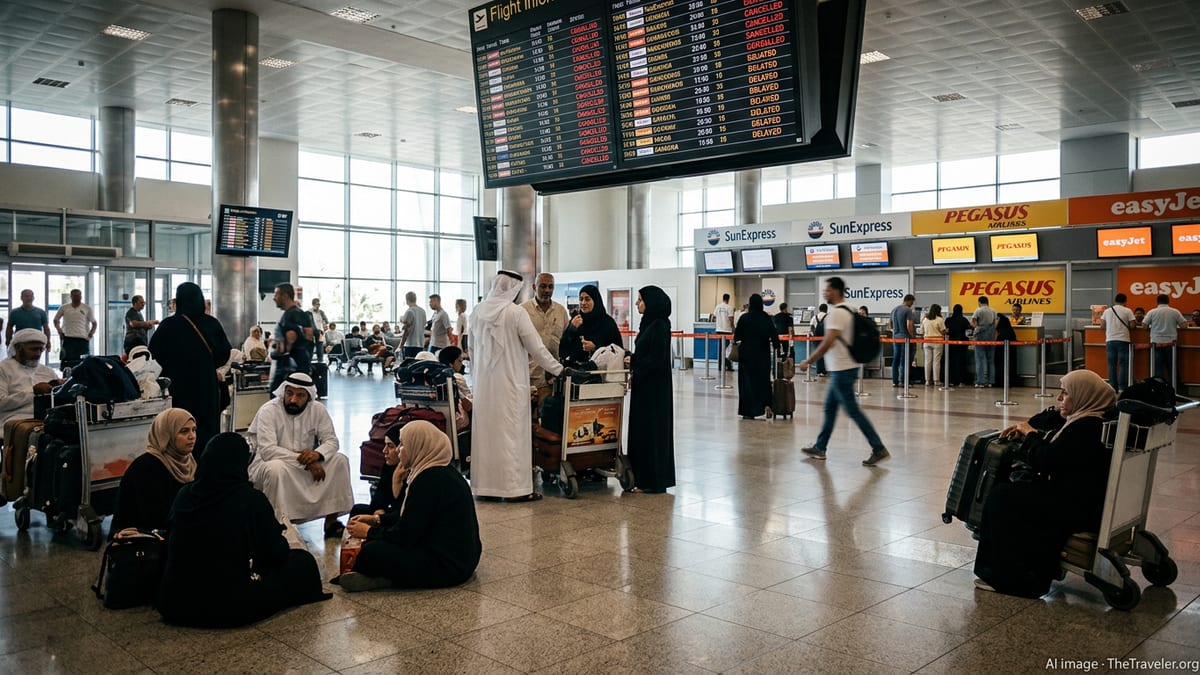
Fresh Disruptions On Key Thailand–Gulf Corridors
Published coverage in recent days indicates that multiple Gulf-based airlines have pulled or reshaped services touching Thailand, particularly routes funnelling through Doha and Bahrain. Reports highlight a rolling pattern of cancellations rather than a single shutdown, with a mix of outright scrapped flights and last minute consolidations onto alternative services.
Bangkok’s Suvarnabhumi Airport remains one of Southeast Asia’s major long haul gateways, with daily departures to Europe, the Middle East and Australasia. Timetables still show regular services between Doha and Bangkok on carriers such as Qatar Airways, but travelers describe abrupt changes to flights that have already been ticketed, especially on itineraries involving connections to Tel Aviv and secondary European cities.
Information drawn from flight tracking sites, airline schedules and passenger accounts suggests that more than a dozen flights involving Thailand and Gulf hubs have been affected in the latest wave. While many operations continue to run, the stop start pattern of cancellations is creating a challenging planning environment for travelers using Thailand as a springboard to or from the Middle East.
Why Flights To And From Doha And Tel Aviv Are Vulnerable
The latest disruption comes against the backdrop of a still fragile recovery in Gulf airspace following military tensions earlier in the year. Publicly available reporting on regional aviation shows that Qatar’s airspace closure at the end of February triggered large scale schedule cuts, with only limited services gradually returning from mid March under tighter operating constraints.
Although Doha’s Hamad International Airport has since moved into a rebuilding phase, the network is not yet back to pre crisis stability. Airlines are balancing renewed demand for Southeast Asia with ongoing route caps and altered flight corridors, leaving little slack in the system when additional operational or security issues arise. Routes that bridge multiple sensitive jurisdictions, such as services linking Thailand to Tel Aviv via Doha or Bahrain, appear to be particularly exposed.
Some Gulf carriers serving Thailand have also been dealing with separate airspace restrictions closer to home, including short notice closures affecting Bahrain. Recent consumer rights discussions and travel community posts describe cases where Gulf Air itineraries connecting Asia and Europe via Bahrain were cancelled more than once, often with limited rebooking options on alternative carriers.
How Travelers In Thailand Are Being Affected
For travelers on the ground in Thailand, the practical impact is uneven but significant. Many passengers holding tickets on Qatar Airways and Gulf Air between Bangkok and Doha, or beyond to Tel Aviv and European destinations, report receiving cancellation messages days or weeks before departure. Others describe arriving at the airport to discover that their original flight number no longer operates, with staff placing them on later departures or rerouting via different hubs.
This patchwork disruption is especially problematic for those relying on tight onward connections. A cancelled Bangkok to Doha leg can unravel an entire long haul itinerary to North America or Europe, forcing travelers to overnight in Thailand or to seek expensive last minute alternatives via hubs such as Istanbul, Singapore or Tokyo. Families and long haul leisure travelers, many of whom booked Thailand trips months in advance, are among those most affected.
There are also reports of passengers stranded for extended periods after repeated cancellations on return journeys routed through the Gulf. Discussions in online travel forums reference individuals stuck in Thailand or Southeast Asia after successive Bahrain or Doha segments were removed from the schedule, leaving travelers to negotiate refunds or to pay out of pocket for replacement flights on non Gulf carriers.
What Airlines Are Offering In Terms Of Options
Public guidance from Gulf airlines maintains that passengers whose flights are cancelled are entitled to rebooking on the next available service or to a refund, depending on fare conditions. Documents circulating online that summarise Qatar Airways policies in 2026 emphasise options such as complimentary date changes within certain windows and refunds where services cannot be operated due to airspace restrictions or safety related decisions.
In practice, traveler accounts suggest that the availability of alternative flights is highly route dependent. On some Thailand to Doha services, consolidation has meant fewer daily frequencies, making it harder to find seats in the same cabin, particularly during school holidays. Passengers connecting onward to Tel Aviv or smaller European cities often have to accept different routings or longer layovers, and in some cases are being rebooked via entirely different hubs.
Gulf Air customers affected by Bahrain airspace issues describe lengthy waits to reach call centers and uncertainty over reimbursement for self booked replacement tickets. Commenters discussing recent cancellations mention invoking international conventions and local consumer protection rules, although outcomes appear to vary case by case depending on where the journey started and the jurisdiction governing the ticket.
Practical Advice For Those With Upcoming Trips
For travelers planning to pass through the Gulf on journeys to or from Thailand over the coming weeks, publicly available information points to one consistent theme: flexibility is crucial. Experts writing in mainstream and specialist travel media recommend monitoring bookings closely, checking flight status regularly in the days before departure and ensuring that contact details in reservations are up to date so that airline notifications are not missed.
Passengers with onward connections to Tel Aviv or other politically sensitive destinations may wish to build in longer buffers between flights or to consider alternative routings that avoid multiple at risk segments on the same ticket. Travel commentators also highlight the value of booking on a single through ticket with one airline or alliance, which can make it easier to secure through rebooking if one leg is cancelled.
Those already in Thailand who receive a cancellation notice are encouraged by consumer advocates to document all communication with airlines and to research their rights under the laws of the country where their journey originated. In some cases, particularly for trips beginning in the European Union or the United Kingdom, established compensation and care rules may apply in addition to any goodwill measures offered by the carrier.
While airlines across the Gulf state that they are working to restore normal schedules as regional airspace stabilises, the current wave of cancellations shows that the recovery remains fragile. For now, Thailand bound and Thailand based travelers using Doha, Bahrain and other Gulf hubs should be prepared for last minute changes and should factor that uncertainty into their plans.