


More news on this day
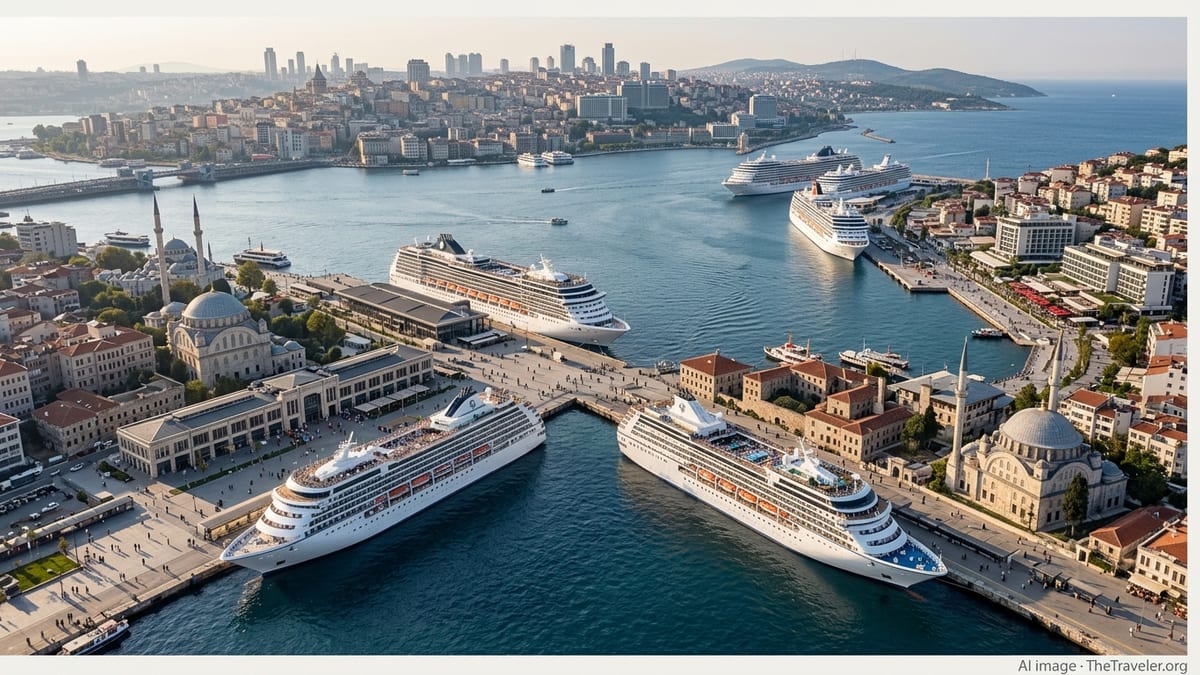
Türkiye is sharpening its global tourism strategy around Istanbul, elevating the city’s historic landmarks, lived-in quarters and expanding cultural scene as cornerstones of its appeal ahead of the peak 2026 travel season.
Get the latest news straight to your inbox!
Tourism Demand Remains Strong as Strategy Centers on Istanbul
Publicly available economic assessments indicate that tourism remains a key growth sector for Türkiye, with projections for 2026 pointing to tourism revenues of around 68 billion dollars and steady year on year expansion. Istanbul sits at the center of this strategy, consistently accounting for a significant share of international arrivals and acting as a primary gateway for visitors heading on to coastal and inland destinations.
According to recent summaries of tourism performance, more than half of international travelers to Türkiye choose major hubs such as Istanbul, Antalya and other coastal cities, with Istanbul maintaining its position as a leading urban destination. In May 2026 alone, coverage of border statistics shows that Istanbul welcomed well over a million foreign visitors, underlining how strongly demand has recovered and how resilient the city’s visitor economy has become.
The Türkiye Tourism Promotion and Development Agency, operating under the Ministry of Culture and Tourism, has continued to position the country as a global brand in international markets. Its stated mandate focuses on promoting both tangible and intangible heritage and on extending tourism beyond traditional sun and sea segments toward culture oriented and city based experiences. Campaigns that emphasize Istanbul’s layers of history, culinary scene and creative industries reflect this broader approach.
Analysts note that this focus dovetails with international trends in urban tourism, where visitors are seeking more immersive stays, neighborhood exploration and cultural programming rather than short stopovers limited to a handful of major monuments. Istanbul’s mix of waterfront districts, dense historic cores and contemporary cultural spaces gives policymakers and promotion agencies a broad canvas on which to build that narrative.
Conservation and Digital Mapping Highlight Historic Landmarks
Istanbul’s density of historic buildings and monuments remains one of the strongest assets in Türkiye’s tourism portfolio. Figures released by the Istanbul Governor’s Office indicate that the city hosts nearly 1,800 officially recognized sites of historic value, including hundreds of mosques, churches, synagogues, madrasas, palaces, fountains and traditional bathhouses spread across the metropolis. This concentration reinforces the city’s status as a showcase for the intertwined histories of Byzantium, the Ottoman Empire and the modern republic.
Heritage focused initiatives in recent months have sought to make this legacy more accessible and resilient. The “Digital Istanbul” effort, led at provincial level, has worked to document and digitize information on all mosques and tombs across the city, creating a consolidated database intended to support both conservation planning and public engagement. Officials frame this as part of a wider move toward data driven heritage management, with potential applications for digital guides, interpretation tools and accessibility features for visitors.
Alongside documentation projects, temporary exhibitions and commemorative events continue to highlight key moments from the city’s past. For the 573rd anniversary of the conquest of Istanbul in May 2026, cultural bodies supported an immersive exhibition tent that presented the event through multimedia installations and research drawn from historians. Reporting on the initiative emphasized an effort to move beyond a narrow military narrative toward a broader exploration of the city’s intellectual and cultural transformation after 1453.
Specialized trade events also underscore Istanbul’s role as a regional hub for heritage professionals. The Heritage Istanbul cultural heritage fair, staged at the Yenikapı Eurasia Exhibition Center in April 2026 with backing from national and local institutions, brought together museum experts, conservators, technology providers and tourism stakeholders. Organizers presented the fair as a platform for discussing how conservation, visitor management and urban development can be balanced in historic cities facing intense tourism pressure.
Historic Peninsula and Local Quarters Move to the Fore
Within Istanbul, the Historic Peninsula has become a focal point for efforts to connect headline monuments with everyday urban life. Recent coverage describes a new “tourism ambassador” program run through the municipality of Fatih, in which trained volunteers offer information and orientation services in key locations around the Peninsula. Participants receive instruction on local history and cultural landmarks before taking up their posts, with the aim of helping visitors navigate beyond a narrow circuit of major sights.
Local authorities promote this approach as a way to both enhance the visitor experience and distribute tourism related activity more evenly across neighborhoods. By pointing travelers toward lesser known streets, markets and religious buildings, the program is expected to ease congestion around the most famous attractions while directing spending into smaller businesses. Observers note that this aligns with international conversations about “overtourism” and the need to protect the livability of historic districts that remain home to long standing communities.
Transport initiatives complement these soft measures. The Istanbul Metropolitan Municipality has introduced a dedicated tourist tram strategy for the Historic Peninsula, designed to integrate with existing public transport while offering an alternative to coach traffic. Public information about the plan refers to a broader mobility concept for the area, seeking to prioritize pedestrian safety, protect built heritage and reduce the environmental impact of visitor flows.
At the same time, neighborhood based cultural spaces across districts such as Beyoğlu, Kadıköy and along the Golden Horn continue to broaden Istanbul’s offer beyond the Peninsula. City promotion platforms highlight refurbished arcades, contemporary art venues and small museums housed in repurposed industrial buildings, responding to the growing demand for experiences that combine local life with cultural content.
Cultural Programming and Gastronomy Deepen the Visitor Experience
Istanbul’s cultural calendar plays a growing role in Türkiye’s tourism positioning. Event listings for the city in 2026 feature international concerts, contemporary art exhibitions and thematic shows that invite visitors to explore the city’s past in new ways. One example is the “Art of Travel” exhibition at the Meşher art space, which opened in May 2026 and traces depictions of journeys to Ottoman lands through rare maps, travel books and artworks assembled from multiple collections.
These initiatives are accompanied by a sustained emphasis on gastronomy. National policy documents underline Türkiye’s investment in food focused tourism, with particular attention to Istanbul’s role in international restaurant rankings and guides. The expansion of the Michelin Guide’s coverage in the country, adding new venues in Istanbul alongside selections in other cities, has been presented in official material as a marker of both quality and diversification in the dining scene.
Programs under the Türkiye Environmental and Cultural Sustainability frameworks encourage tourism businesses to adopt practices that protect local ecosystems and support cultural continuity. Certification schemes, rolled out in phases, aim to embed sustainability standards in accommodation and service providers so that the growth in visitor numbers does not come at the expense of urban and natural environments. For Istanbul, which straddles the Bosporus and sits at the intersection of multiple migratory routes, such measures are particularly significant.
Observers also point to the increasing visibility of neighborhood food markets, culinary tours and small producer events that showcase regional ingredients within the metropolis. These activities allow visitors to connect broader narratives about Anatolian cuisine with lived experiences in Istanbul’s streets, reinforcing the city’s role as both a historical capital and a contemporary culinary laboratory.
Balancing Visitor Growth With Heritage and Community Needs
As Türkiye leans on Istanbul to sustain tourism driven growth, debates around capacity and community impact remain central. International visitor figures already place the city among the busiest urban tourism destinations, and demand projections suggest continued increases across the 2026 season. Industry observers argue that how these flows are managed will shape both visitor satisfaction and residents’ quality of life.
Policy documents from national and local bodies increasingly reference concepts such as carrying capacity, sustainable mobility and inclusive urban development. Digital mapping of heritage assets, targeted public transport solutions for historic quarters and the promotion of alternative neighborhoods all form part of a toolkit aimed at diffusing pressure. The expectation is that, by encouraging longer stays oriented around culture and local life rather than compressed sightseeing itineraries, Istanbul can secure higher value tourism with reduced strain on infrastructure.
For travelers, these shifts translate into a richer and more varied experience of Istanbul. Beyond emblematic landmarks like Hagia Sophia and Topkapı Palace, the city’s tourism narrative now encompasses side streets in the Historic Peninsula, tram linked itineraries along the Marmara shore, contemporary art spaces in former industrial zones and culinary routes that knit together different migrant and regional communities. In positioning Istanbul as both a heritage destination and a living urban landscape, Türkiye is wagering that depth and diversity will keep the city at the forefront of global travel in the years ahead.