


More news on this day
Flights at Cape Town International Airport faced significant disruption on 4 August after a Kenya Airways aircraft suffered a tyre problem on landing, prompting temporary runway restrictions, diversions and hours of delays for departing and arriving passengers.
Get the latest news straight to your inbox!
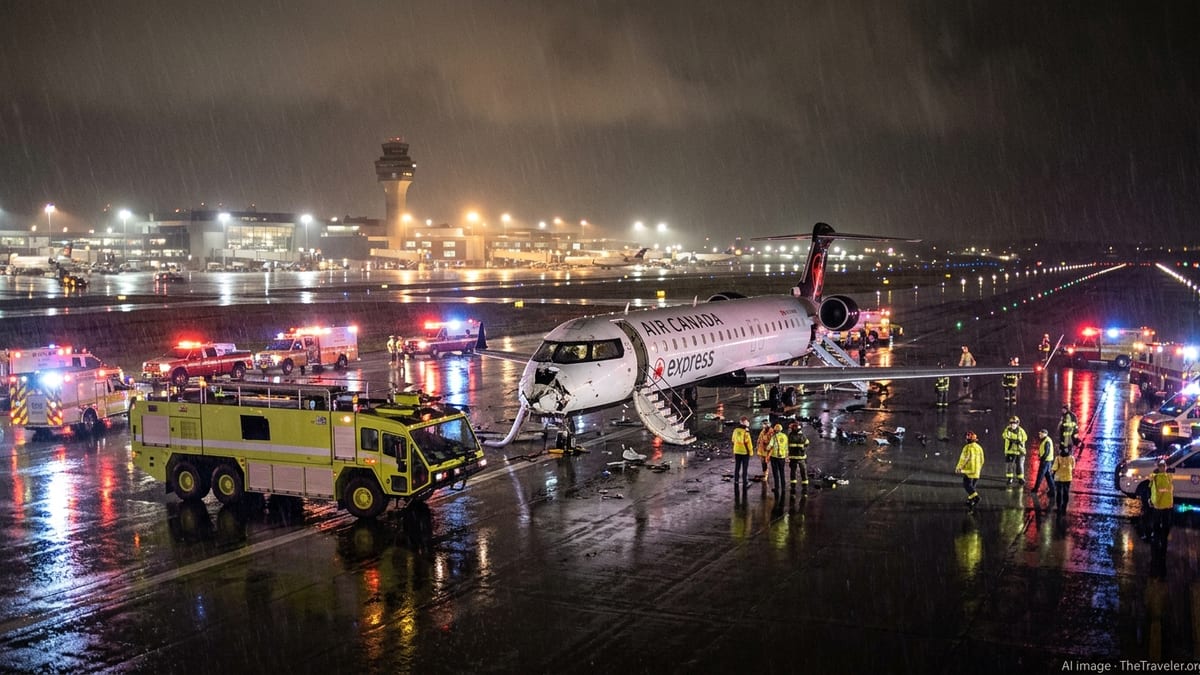
Kenya Airways jet halted on runway after landing issue
According to publicly available flight tracking data and eyewitness accounts shared on social media, a Kenya Airways service arriving in Cape Town on 4 August came to a stop on the main runway after experiencing a tyre failure during landing. Passengers reported feeling a pronounced jolt as the aircraft touched down, with the jet remaining in position while emergency and ground teams assessed the situation.
Images posted online showed the aircraft stationary on the runway with service vehicles around it, while users discussing the incident referred to a burst or flat tyre on the landing gear. There were no immediate indications of injuries among passengers or crew, and reports described the situation as a technical problem rather than a broader safety emergency.
The incident occurred during a busy evening period at Cape Town International, when both domestic and international traffic typically peaks. With the aircraft immobilised on the main arrival runway, subsequent flights were unable to land as scheduled, triggering an unfolding series of delays and diversions across multiple airlines.
Runway restrictions lead to diversions and cancellations
Publicly accessible flight tracking data shows that following the Kenya Airways landing, the main runway at Cape Town International was closed for operations while teams worked to secure the aircraft and inspect the surface. A secondary runway continued to be available, but its more limited capacity meant only selected departures could operate while most arrivals were held or sent elsewhere.
Social media posts from passengers and aviation enthusiasts on the afternoon and evening of 4 August described a stream of inbound flights initially entering holding patterns off the Cape Town coastline before being routed back to Johannesburg and other airports. At least one long haul flight from the United States diverted to Johannesburg instead of completing its journey to Cape Town, adding several hours to passenger travel times.
Some domestic services were cancelled outright, while others departed late into the night as the backlog cleared. Travellers reported missed connections to smaller regional destinations and overnight disruptions to their plans. One passenger described arriving early for an evening flight to Johannesburg, only to have the departure cancelled and be rebooked several hours later, eventually reaching their destination in the early hours of the morning.
Operational recovery as stranded aircraft cleared
As ground crews worked to address the tyre problem and make the Kenya Airways aircraft movable, departures from Cape Town continued at a reduced rate using the secondary runway, largely for smaller aircraft able to operate within its constraints. Arrivals remained heavily affected while the main runway was partially blocked, with airlines forced to choose between extended airborne holding or diversion to alternative airports.
Later in the evening, passengers posting from inside the terminal reported that the damaged wheel assembly had been removed and that a tug was being prepared to tow the aircraft clear of the runway. Subsequent posts indicated that the runway surface had been inspected and that traffic flows were gradually returning to more normal levels, with a visible surge of delayed flights finally inbound to Cape Town.
By late night, online flight boards showed a mix of delayed, cancelled and rescheduled services, but with the main runway once again available to support both domestic and international operations. For many travellers, however, the knock on effects continued into the early hours and into the next day as airlines worked to reposition aircraft and crew.
Tyre failures rare but disruptive in single-runway operations
Aviation safety data indicates that tyre failures during landing, while relatively uncommon, are a known operational risk, particularly for aircraft operating long sectors at high weights. In most cases the occurrence is contained without injuries, but it can lead to significant operational disruption when it takes place on a key runway that cannot be cleared quickly.
Cape Town International relies primarily on a main runway used by the majority of jet traffic, supported by a shorter secondary runway with more restrictive performance limits. When a large aircraft comes to rest on the primary runway with a landing gear problem, options for maintaining normal capacity are limited. Even when safety is not in question, clearing a disabled aircraft requires time, specialised equipment and coordination between ground handlers and technical teams.
The incident has renewed discussion among aviation observers about the vulnerability of Cape Town’s operations to single-runway disruptions. Previous episodes, including power outages, weather related restrictions and temporary closures for debris or animal incursions, have already highlighted how quickly delays can cascade when the main runway is unavailable for even a short period.
Passenger experience and wider implications for Cape Town
Travellers caught up in the 4 August disruption described long queues, scarce information and the challenge of rebooking connecting flights once diversions and cancellations began to mount. Some reported proactive communication and assistance from certain carriers, while others expressed frustration at what they viewed as slow or inconsistent updates about revised departure times.
The incident comes at a time when Cape Town International is handling growing traffic volumes and facing periodic capacity strain during peak seasons. Industry groups and local commentators have previously argued that infrastructure constraints, including heavy reliance on a single primary runway and limited diversion options in the region, increase the impact of any unplanned incident on the ground.
Plans for a second major airport in the wider Cape Town area, including proposed redevelopment of Cape Winelands Airport as a future commercial hub, have often been framed in terms of long term economic development and tourism growth. Events such as the Kenya Airways tyre failure are likely to feed into that debate by underscoring the operational vulnerability of a system where a single aircraft immobilised on the runway can disrupt flights across the country’s network.
For now, operations at Cape Town International have largely returned to normal, but schedules remain subject to residual delays as airlines work through repositioning and recovery. Travellers scheduled to fly in the wake of the incident are being advised, through general travel updates and airline notifications, to monitor their flights closely and allow extra time at the airport in case of ongoing knock on effects.