


More news on this day
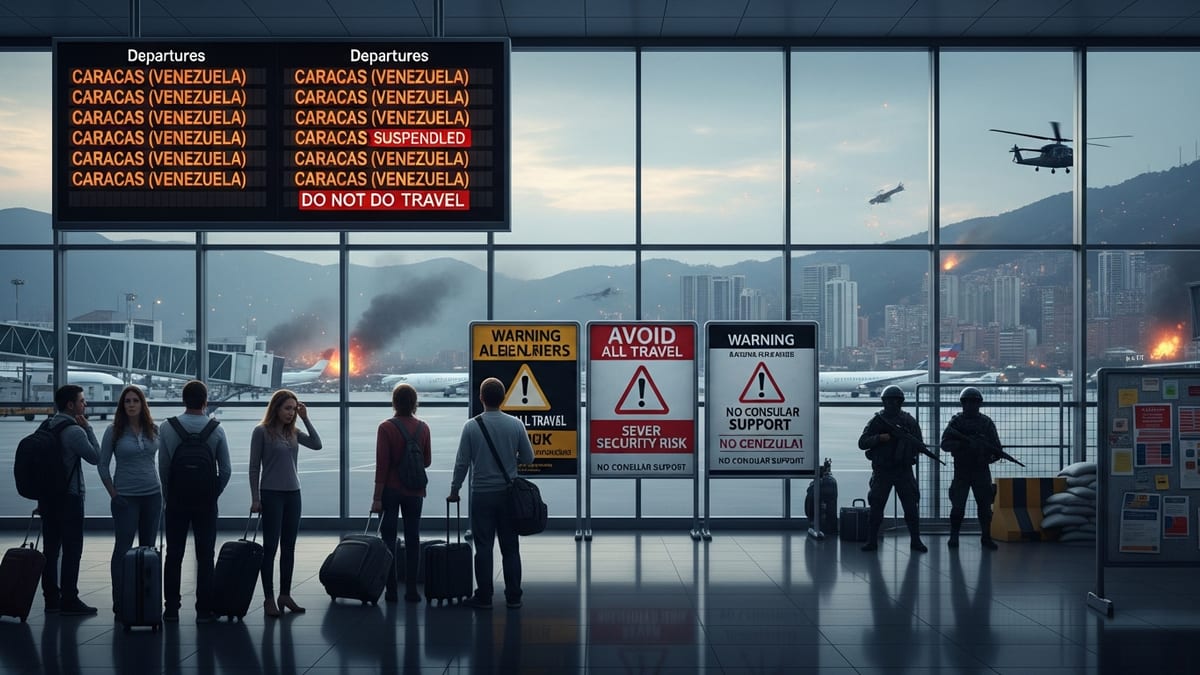
Americans planning trips in the coming weeks are being urged to double-check official guidance after the U.S. State Department refreshed broad and country-specific travel warnings, including a worldwide caution notice that highlights evolving security risks and the need to stay alert in transit hubs and popular tourist areas.
Get the latest news straight to your inbox!
What the new worldwide caution means for U.S. travelers
The State Department’s most recent Worldwide Caution, last updated on July 22, 2026, advises U.S. citizens abroad to “exercise increased caution” and notes that the security environment can shift quickly, particularly amid heightened tensions involving Iran and groups supportive of Iran.
For travelers, the practical takeaway is that the advisory is not a blanket instruction to cancel trips, but a reminder to build flexibility into itineraries and monitor conditions beyond a single destination. Publicly available guidance emphasizes added vigilance at locations associated with the United States and Americans, as well as in places where large crowds gather.
The Worldwide Caution is also a signal to pay attention to “Emergency Alerts” in addition to the standard country-by-country Travel Advisories, since alerts can be posted for short-notice events and localized disruptions that may not immediately change a country’s overall advisory level.
Country advisories are shifting, including new “Do Not Travel” guidance
Alongside global messaging, the State Department continues to reissue and update destination-specific advisories. One recent example is Cambodia, where an updated advisory dated September 15, 2026, carries a Level 4 “Do Not Travel” designation tied to a specific area: locations within 50 kilometers of the Cambodia-Thailand border, citing ongoing tensions and an elevated risk of armed conflict.
For travelers, that distinction matters. Even when an advisory highlights a particular region, the overall trip planning impact can be wider: flights, overland routes, tours, and insurance coverage can be affected if an itinerary includes a restricted corridor or if plans are forced to change on short notice.
Because the State Department’s advisory system can incorporate multiple risk indicators and can be reissued with updated dates even when the overall level is unchanged, travelers should look beyond headlines and read the advisory details for the exact locations, activities, and transportation routes flagged as higher risk.
How to use the advisory levels to plan, not panic
The State Department’s four-level system is designed to be actionable. Level 1 indicates “Exercise Normal Precautions,” while Level 2 advises travelers to “Exercise Increased Caution.” Level 3 suggests “Reconsider Travel,” and Level 4 is “Do Not Travel,” the highest warning level, generally reflecting a greater likelihood of life-threatening risks and potential limitations on U.S. government assistance.
When travelers see Level 3 or Level 4 guidance, the next step is to identify what is driving it. Some advisories are tied to security threats, crime, civil unrest, or limited consular access, while others focus on discrete areas within a country. That nuance can change decisions about where to stay, whether to use a private driver, how to time ground transportation, and what documentation to carry.
For upcoming travel, it is also worth watching for reissues and date-stamped updates. A refreshed advisory can reflect new operational realities such as changing border conditions, new restrictions on movement near conflict zones, or a reassessment of risks in specific provinces and transit corridors.
What travelers should do now: monitoring, alerts, and contingency planning
Publicly available State Department guidance encourages travelers to enroll in the Smart Traveler Enrollment Program (STEP) before international trips. STEP enrollment is intended to help travelers receive Travel Advisory updates and security messages and can make it easier for consular personnel to contact U.S. citizens during emergencies.
Travelers can also reduce risk by planning for disruptions that are increasingly common even outside active conflict zones: sudden protests, localized violence, transportation shutdowns, and temporary limits on access to government services. Concrete steps include confirming airline change rules ahead of time, storing digital and printed copies of key documents, and knowing how to reach the nearest U.S. embassy or consulate for routine guidance.
Finally, travelers should factor in geography. The Cambodia advisory illustrates how a single border region can become the focal point of a warning. Similar dynamics can apply elsewhere: a destination may look stable at a national level, but certain border areas, remote routes, or nightlife districts can carry outsized risk. Checking advisories shortly before departure and again after arrival is increasingly part of the basics for international trip planning.