


More news on this day
The United States is urging its citizens to leave Iran as soon as commercially possible, sharpening an existing Level 4 "Do Not Travel" advisory in response to a widening conflict that has severely disrupted airspace and shipping across West Asia.
Get the latest news straight to your inbox!
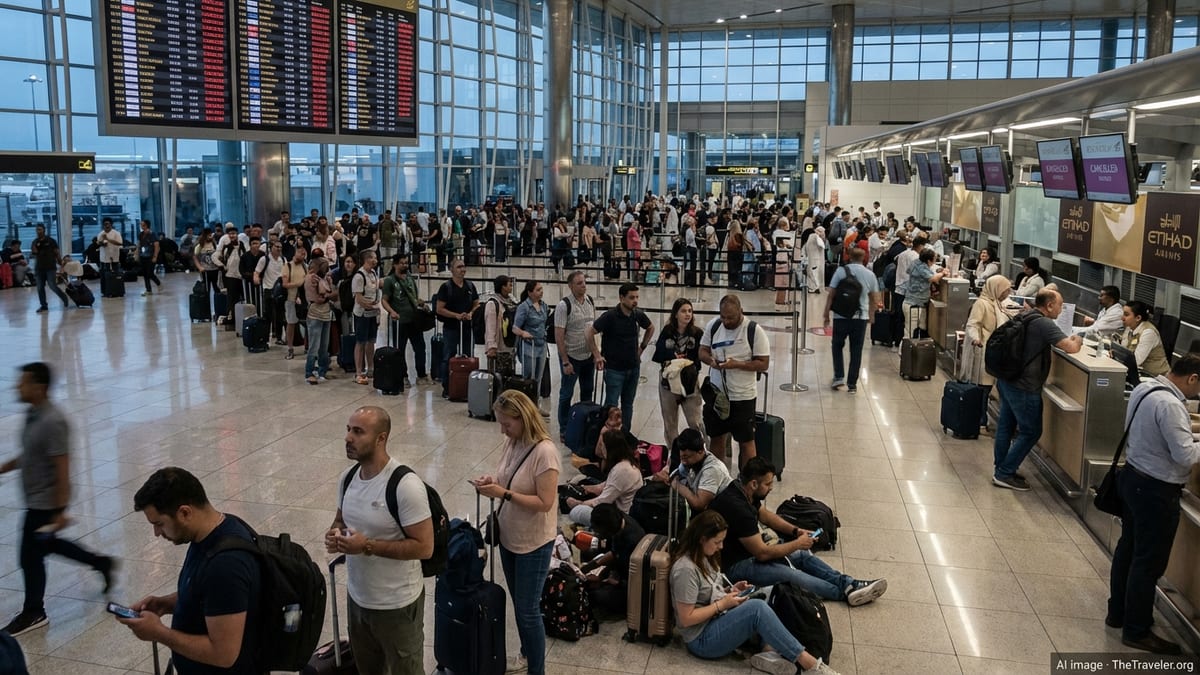
Heightened Warning on Top of Existing ‘Do Not Travel’ Advisory
Publicly available information from the U.S. Department of State shows that Iran has been under a Level 4 "Do Not Travel" advisory since December 5, 2025, citing risks that include wrongful detention, terrorism, unrest and the U.S. government’s extremely limited ability to assist citizens inside the country. The advisory notes that U.S. passport holders have previously faced interrogations, exit bans and prolonged detentions in Iran.
General guidance published by U.S. government sources explains that a Level 4 advisory is the highest warning level, reserved for destinations where life-threatening risks are considered significant and where consular support may be unavailable. In such cases, Americans are advised not to travel and, if already present, to depart when it is safe and feasible to do so.
Recent alerts disseminated through official public channels and shared widely via the U.S. Virtual Embassy for Iran emphasize that travelers should not rely on potential emergency evacuations. Instead, citizens are told to use commercial routes while they remain open and to prepare for short-notice changes to flight schedules and regional airspace closures.
Information services also point out that the United States does not maintain an embassy in Tehran and cannot provide routine consular services on Iranian territory. Americans in Iran are therefore encouraged to ensure that friends or family in third countries have copies of travel documents and that travelers remain registered in systems designed to share security updates.
Regional Conflict Drives Fears of Sudden Airspace Disruptions
The updated warning comes as the six-month-old war involving the United States, Israel and Iran continues to spread instability throughout West Asia. Analytical coverage of the 2026 Strait of Hormuz crisis and the broader Iran war describes a pattern of attacks targeting energy infrastructure, ports and commercial vessels across the Gulf and Red Sea, with Iran asserting pressure on one of the world’s most important maritime choke points.
Reports from defense and maritime outlets indicate that both U.S. and Iranian forces have struck oil tankers and other shipping around the Strait of Hormuz since early September 2026. In some cases, tankers linked to Iran’s Revolutionary Guard have been targeted, while Iranian units claim to have hit ships they describe as connected to U.S. interests. These exchanges have contributed to higher energy prices and a volatile security environment for sea lanes that many commercial airlines rely on for overflight routes.
Regional dispatches also describe continuing missile and drone incidents linked to Iran-aligned groups in Yemen and Iraq, along with periodic strikes in the Gulf and Levant. This patchwork of flashpoints has generated persistent concern that airspace corridors could close abruptly if hostilities intensify further, potentially stranding travelers who delay departure.
Travel risk analysts note that even when civilian aircraft are not directly targeted, military activity near busy routes can prompt reroutings, extended flight times or cancellations. For Americans currently in Iran, the combination of a constrained diplomatic presence and the possibility of sudden airspace restrictions is a key factor behind Washington’s call to leave while commercial options still exist.
Practical Implications for U.S. Travelers in Iran
Public advisories stress that the U.S. government’s ability to assist citizens in Iran is effectively constrained, particularly in an active conflict setting. Without an embassy, American travelers generally cannot obtain emergency passports or in-person consular help inside the country, and neighboring missions may have limited capacity to intervene in cases of arrest or exit bans.
Travel.State.Gov guidance highlights that Iranian authorities have historically restricted the movement of some foreign nationals, including preventing departures in certain cases. Under the current security climate, such measures could compound the risks associated with staying in the country, especially for dual nationals or those engaged in sensitive professional activities.
Financial access is another operational challenge. Official travel information underscores that non-Iranian credit and bank cards do not function in Iran, requiring visitors to rely on cash they bring in with them. As tensions rise and sanctions tighten, travelers who remain may find it harder to move funds, pay for accommodation or purchase onward tickets on short notice.
Because of these constraints, Americans in Iran who choose to leave are encouraged, according to public guidance, to plan well ahead of any announced curfews, flight reductions or fuel shortages. That can include booking flexible tickets, maintaining reserve funds and having alternative routings through regional hubs in case of rapid schedule changes.
How the Advisory Fits Into a Wider West Asia Security Picture
The Iran warning is part of a broader pattern of elevated U.S. travel alerts across West Asia since early 2026, when airstrikes and missile attacks linked to the Iran war began affecting multiple countries. Travel advisory summaries show that several neighboring states, including Iraq, Syria, Lebanon, Yemen and parts of the Palestinian territories, also carry Level 4 "Do Not Travel" notices, while Gulf states such as Bahrain, Kuwait, Oman, Qatar, Saudi Arabia and the United Arab Emirates have been listed at Level 3 "Reconsider Travel" at various points this year.
Analytical reporting on the conflict describes how shipping threats in both the Red Sea and Strait of Hormuz, cross-border rocket exchanges involving Israel and Hezbollah, and Iranian-linked attacks on U.S. positions in Iraq and Jordan have created a web of overlapping risks. For travelers, this means that routes commonly used to exit Iran, such as connections through Gulf or Levantine hubs, may themselves be subject to heightened security measures or temporary disruption.
Observers note that foreign ministries in Europe and Asia have also refreshed their Iran and regional travel advisories since late summer 2026, often referencing the tanker strikes and the risk of miscalculation between heavily armed forces operating in close proximity. While specific wording varies by country, many governments now counsel their citizens to avoid nonessential travel across large parts of West Asia and to leave conflict-adjacent areas where possible.
For international travelers weighing itineraries that include Iran or nearby destinations, these overlapping warnings provide a consistent message: leisure or discretionary travel is strongly discouraged, and even essential trips carry elevated security and logistical risks.
What Prospective Visitors and Transit Passengers Should Consider
For travelers who had planned tourism, business or pilgrimage trips to Iran, the standing Level 4 advisory and the new emphasis on immediate departure present a clear signal to postpone. U.S. government resources explain that travel insurance may be limited or invalid in places under a "Do Not Travel" notice, and airlines can alter schedules rapidly in response to security assessments, leaving little room for last-minute adjustments.
Transit passengers connecting through regional hubs should also review itineraries in light of the evolving security picture. Even if they do not intend to enter Iran, disruptions tied to the tanker conflict and regional missile activity can affect flights through major Gulf and Levant airports, sometimes without extensive advance warning.
Current guidance from U.S. public information channels advises citizens to monitor official travel advisory pages frequently, enroll in systems that push security alerts, and maintain close contact with airlines or travel providers. Given the pace of events in the Iran war and the associated shipping and airspace tensions, conditions affecting travelers can shift in a matter of hours.
For now, the message from Washington relevant to American travelers is explicit: avoid planning new trips to Iran, and if already present, arrange to depart promptly while commercial routes remain open and before regional security dynamics potentially narrow those options further.