


More news on this day
The United States has renewed its strongest travel warning for Iran and is urging American citizens to leave the country as soon as it is safe to do so, as rising tensions in West Asia heighten concerns over potential airspace closures, flight cancellations, and rapidly changing security conditions.
Get the latest news straight to your inbox!
Level 4 advisory re‑emphasized for Iran
Publicly available information from the US State Department shows that Iran remains under a Level 4 “Do Not Travel” advisory, the highest warning level in the US system. The advisory cites risks including terrorism, civil unrest, kidnapping, wrongful and arbitrary detention of US citizens, and the possibility of limited consular support inside the country.
Alongside the standing Level 4 designation, updated language in recent days has explicitly urged US citizens already in Iran to depart when they can do so safely. Travel advisory summaries reviewed on the State Department’s website state that Americans should not travel to the country and should leave as soon as conditions and commercial options allow, reflecting a sharp focus on rapidly evolving regional risks.
The travel warning is being framed not only as a response to conditions inside Iran, but also as part of a broader security posture for West Asia. Official guidance emphasizes that Americans should leave while commercial flights and border crossings remain available, since government-organized evacuations cannot be guaranteed if the situation deteriorates further.
Rising regional tensions drive heightened concern
Reports from international outlets describe an increasingly volatile security environment across West Asia since hostilities between the United States and Iran escalated earlier in 2026. Missile and drone threats, incidents near key maritime chokepoints, and military buildups around the Gulf have contributed to widespread concern over potential miscalculation or sudden escalation.
Security alerts summarized by US missions in the region highlight the risk that Iran and groups aligned with it could target US-linked interests beyond Iran’s borders. Alerts circulated across several Middle Eastern capitals in recent weeks have urged American citizens to maintain a high level of vigilance, monitor local media and official channels, and be prepared for rapid changes to airport and airspace status.
Public coverage also indicates that a number of other governments, including several European and Asian states, have warned their own nationals about travel to Iran or have advised them to leave. These parallel notices underline how concerns about the Iran–US confrontation and broader regional instability are not limited to one country’s assessment.
What the latest warnings mean for travelers in Iran
The renewed US warning has practical implications for the relatively small number of Americans believed to be living, working, or traveling in Iran. The State Department’s general crisis guidance stresses that individuals should leave via commercial means while they remain available, and should not rely on US government-organized flights or overland convoys as a primary evacuation plan.
For those still in Iran, publicly available consular information points to several common exit routes. Depending on personal circumstances and documentation, travelers have in recent crises used commercial flights to third countries when seats are available, as well as land crossings to neighboring states such as Armenia, Azerbaijan, Türkiye, or the Gulf region, subject to those countries’ entry requirements and security conditions at the border.
Consular pages linked from the Iran advisory describe the limits of US assistance on the ground. Without an operating US embassy in Tehran, US citizens are typically directed to seek support from US embassies in nearby capitals, such as Yerevan or Ankara, primarily by phone or email. Guidance emphasizes that the US government cannot provide in-country transportation, lodging, or security escorts, and that travelers should maintain their own contingency funds and documentation in case they need to move quickly.
Knock-on effects for air travel and regional itineraries
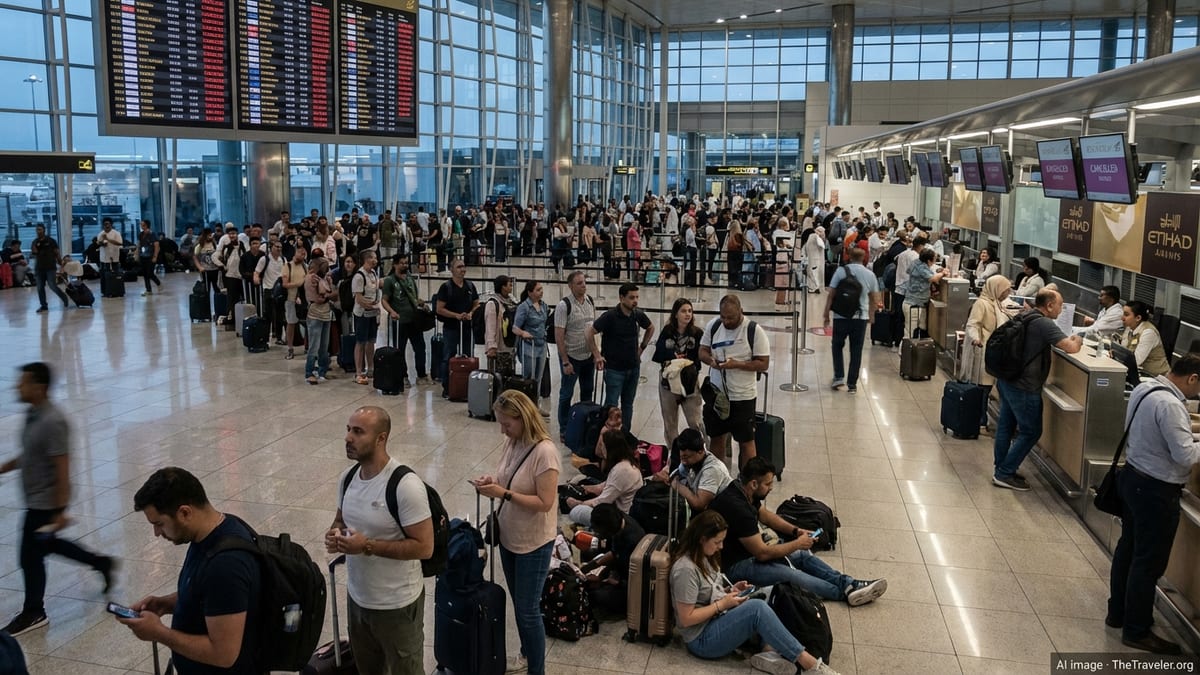
Security alerts shared by US missions across West Asia warn that heightened tensions could cause sudden flight cancellations and temporary airspace closures, even in countries not directly involved in any confrontation. Publicly posted notices advise travelers to expect disruptions to both direct flights and common transit routes that cross or skirt Iranian airspace.
Past episodes of regional crisis have shown how quickly airline schedules can unravel when airspace restrictions expand. Commercial routes over the Gulf and northern Middle East are particularly sensitive to changes in overflight permissions, and carriers may reroute or suspend services with little notice if risk assessments change. Travelers with itineraries that pass through hubs in the Gulf, Levant, or Turkey are being encouraged in public guidance to monitor their bookings closely and keep alternate routing options in mind.
For Americans planning broader trips in West Asia, State Department advisories continue to list Iran, Iraq, Lebanon, Syria, Gaza, and Yemen at the highest Level 4, with several Gulf and neighboring states at Level 3, indicating a recommendation to reconsider nonessential travel. Travel planners tracking official advisory pages note that these levels can shift as the security picture evolves, and that US travelers may face insurance, employer, or program restrictions when considering routes that transit high-risk areas.
Practical steps recommended for US citizens
While the US government’s central message for Iran is to avoid travel and leave when possible, general crisis-preparedness guidance offers practical steps for those who remain. Americans overseas are strongly encouraged in public materials to enroll in the Smart Traveler Enrollment Program so that they can receive security updates, advisories, and any information about potential assisted departures or charter options.
US crisis-response guidance also recommends that citizens maintain digital and physical copies of passports, visas, and key identity documents; keep a small, ready-to-go travel kit with essential medication and basic supplies; and ensure access to funds through multiple channels in case local banking systems or payment networks are disrupted. Travelers are additionally urged to identify more than one potential exit route, in case primary airports or border crossings are closed.
In line with these recommendations, many travel-risk consultants and international organizations advise maintaining regular contact with family members or employers in the United States, sharing updated itineraries, and agreeing on check-in schedules. In a fast-moving situation, clear communication plans can help relatives and institutions coordinate assistance or advocate on a traveler’s behalf if local conditions worsen or contact is lost.