


More news on this day
Major UAE carriers including Emirates, Etihad, Air Arabia and flydubai are implementing rolling delays and cancellations on Kuwait and Bahrain routes as renewed Gulf conflict and evolving airspace guidance disrupt regional travel plans.
Get the latest news straight to your inbox!
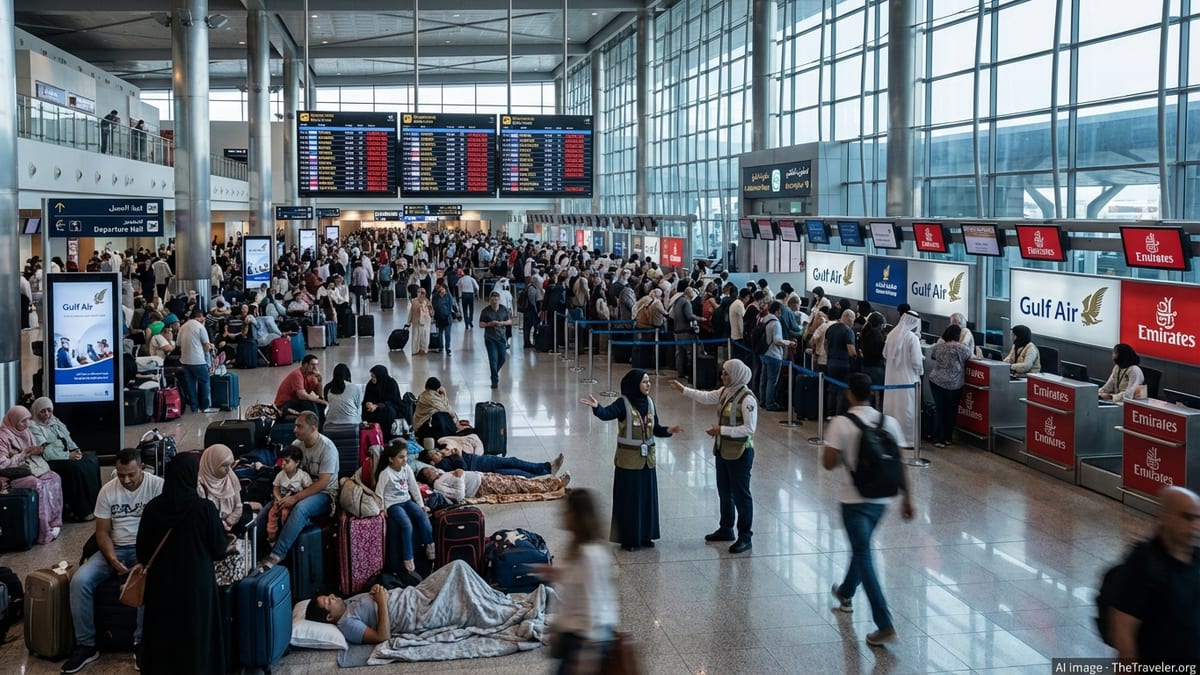
Regional conflict and airspace warnings reshape Gulf flight plans
Publicly available information shows that the latest flare-up in the US-Iran conflict is again weighing on Gulf aviation, with airlines in the United Arab Emirates adjusting services to nearby states. Routes to Kuwait and Bahrain are among the most affected, as carriers reroute aircraft, suspend selected flights and warn of potential short-notice schedule changes.
Travel and aviation coverage indicates that the renewed tensions, which escalated in early July, have prompted a fresh round of operational reviews across the region. Industry reports highlight updated advisories from European and US agencies cautioning airlines about overflying parts of the Gulf, including airspace over or near Kuwait, Bahrain and the UAE.
Despite the conflict, Dubai and Abu Dhabi airports remain open and broadly operational, according to regional media and logistics bulletins. However, airlines are trimming capacity on certain high-risk routes and building in additional buffers for rerouting, leading to longer flying times and a more fragile timetable for passengers transiting through key Gulf hubs.
Analysts quoted in regional business coverage say the new wave of disruption comes at a sensitive time in the summer peak, when aircraft are heavily booked and spare seats for re-accommodating disrupted travelers are limited. As a result, even a modest number of cancellations on core regional routes can ripple across wider networks.
Emirates reduces Kuwait and Bahrain services while maintaining hub operations
Dubai-based Emirates is maintaining the bulk of its global network but has scaled back some services to Gulf neighbors, particularly Kuwait and Bahrain. Reports from UAE business newspapers and travel outlets describe cancellations and schedule adjustments on selected flights linking Dubai International Airport with Kuwait City and Manama.
Coverage in UAE media indicates that Emirates has focused its reductions on routes most exposed to shifting airspace patterns, while keeping long-haul operations from Dubai largely intact. Publicly accessible updates emphasize that customers are being rebooked where possible or offered alternative options if their specific flight has been removed from the schedule.
Industry trackers note that Emirates, as the largest carrier at Dubai International, plays a central role in absorbing regional disruption. When Kuwait or Bahrain rotations are reduced, the airline must reshuffle aircraft and crews across its network, occasionally leading to departure delays on other sectors as aircraft arrive later via longer, conflict-avoidance routings.
Travel advisories compiled by consumer outlets repeatedly urge Emirates passengers to check flight status before leaving for the airport, as same-day changes remain possible while the conflict and associated airspace guidance continue to evolve.
Etihad extends Kuwait and Bahrain cancellations amid shifting risk assessments
Etihad Airways, based in Abu Dhabi, has taken a notably cautious approach on specific Gulf routes. According to detailed reports in UAE and regional newspapers, the airline has extended the cancellation of flights between Zayed International Airport and Kuwait International Airport on several consecutive days, citing operational reasons linked to the wider security context.
Recent updates carried by local newsrooms and radio bulletins also point to disruptions on Etihad services to Bahrain, with some rotations cancelled as the carrier recalibrates its schedule. These moves follow earlier temporary suspensions as the conflict intensified and as aviation authorities revisited recommendations on overflight corridors in the northern Gulf.
Publicly available schedules show that Etihad continues to operate many of its long-haul and regional routes, but with more conservative deployment into zones identified as higher risk. The airline is reported to be contacting affected passengers through digital channels, while travel media advise customers to use official booking tools and apps to confirm whether their flight is running on the day of departure.
Analysts covering Gulf aviation note that Abu Dhabi’s role as a major transit hub for Europe-Asia flows makes any sustained closure of Kuwait or Bahrain links strategically sensitive. Even when passenger volumes on such routes are modest, the loss of short-haul connectivity can complicate onward connections and reduce flexibility for rerouting travelers affected by long-haul delays.
Air Arabia and flydubai adjust regional networks as demand and risk fluctuate
Low-cost carriers Air Arabia and flydubai are also reshaping parts of their regional networks in response to the conflict and its knock-on effects. Reports in Gulf-focused travel sections indicate that both airlines have implemented cancellations or reduced frequencies on selected services to Kuwait and Bahrain, aligning capacity with revised demand and operational assessments.
Sharjah-based Air Arabia, which operates a dense web of short- and medium-haul routes, has been particularly active in tweaking schedules on Gulf sectors. According to recent coverage in regional outlets, the airline has issued advisories for passengers on Kuwait flights, urging them to check for possible re-timings or consolidations as aircraft are reassigned to more stable corridors.
Dubai’s flydubai, meanwhile, continues to serve a broad regional footprint but has joined other UAE carriers in temporarily suspending or delaying some departures into airspace closer to recent military activity. Travel industry reports suggest that the airline is combining flights where feasible and prioritizing routes with strong point-to-point demand and clearer airspace routing options.
Observers of the low-cost segment say that flexible scheduling, smaller aircraft and shorter turnaround times allow these carriers to pivot relatively quickly, but they remain limited by broader airspace closures and the need to coordinate with airport authorities across multiple jurisdictions.
What passengers flying from the UAE need to know today
For travelers using Emirates, Etihad, Air Arabia or flydubai today, publicly available information suggests that most flights are still operating, but with a higher risk of disruption on routes touching Kuwait, Bahrain and other northern Gulf destinations. Media roundups of the situation point to dozens of cancellations over recent days, alongside a pattern of rolling timetable updates.
Consumer travel coverage urges passengers to monitor their booking status through official airline platforms on the day of travel and to allow extra time at the airport in case of congestion at check-in and transfer desks. With aircraft and crew undergoing last-minute swaps, even flights that remain in the schedule can experience departure or arrival delays as networks absorb the impact of rerouting around sensitive zones.
Logistics and aviation briefings also highlight the potential for knock-on effects beyond the Gulf. When regional services are suspended or delayed, connecting passengers may miss onward flights to Europe, Asia or Africa, leading to rebookings that stretch already tight summer capacity. Travelers are being advised to keep contact details up to date in their bookings so they can receive notifications about gate changes, delays or alternative itineraries.
Analysts following the conflict say the outlook for the coming days will hinge on both geopolitical developments and the evolution of airspace guidance. For now, the message from public travel advisories and regional reporting is that UAE airports remain open and functioning, but that airlines and passengers alike should be prepared for a period of continued uncertainty on some Gulf routes.