


More news on this day
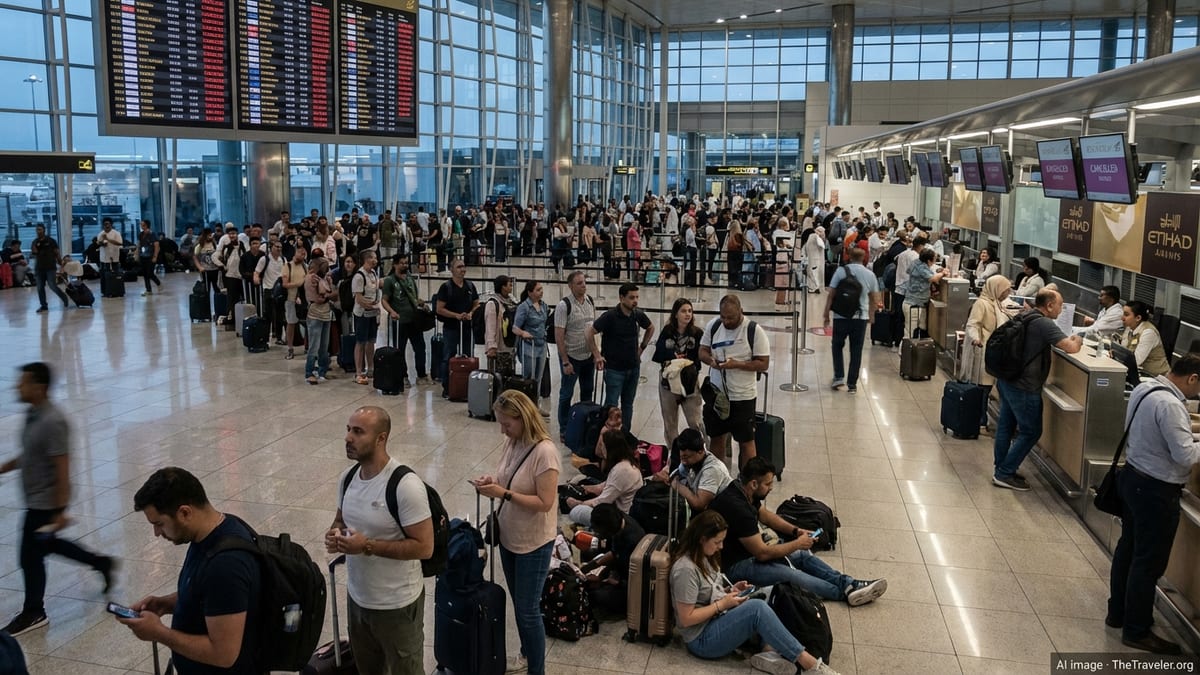
UAE travellers are being urged to monitor flight status closely as Emirates, Etihad Airways, Air Arabia and flydubai continue to adjust schedules in response to regional tensions and volcanic ash disruptions affecting routes to and from Indonesia.
Get the latest news straight to your inbox!
Regional tensions keep Gulf airspace under pressure
Publicly available information shows that flights to and from the UAE have been facing rolling disruption since late August as tensions between the United States and Iran affect routings across Gulf airspace. Travel advisories describe a pattern of delays and cancellations at Dubai International and Abu Dhabi’s Zayed International Airport, with some services operating on revised timings and others suspended for safety and operational reasons.
The European Union Aviation Safety Agency has extended its conflict-zone information bulletin for the Gulf region until September 30, underscoring an expectation that airspace risks and related schedule volatility could persist through the month. Regional media reports indicate that UAE carriers have broadly maintained their networks but continue to retime or reroute individual services where required.
Coverage from UAE-based outlets highlights that international airlines have taken a more cautious stance, with several European and North American carriers either suspending or trimming services to Dubai and Abu Dhabi. This has increased reliance on home carriers such as Emirates, Etihad, flydubai and Air Arabia for connectivity across key markets, even as these airlines make day-to-day adjustments.
Emirates trims Jakarta and regional services
Operational updates on Emirates’ website show a series of cancellations on its Dubai–Jakarta route after the temporary closure of Jakarta’s Soekarno Hatta International Airport because of volcanic ash from the Krakatau area. Flights EK356, EK357, EK358 and EK359 on multiple days between September 6 and September 8 were listed as cancelled, reflecting the ongoing impact of the eruption on air traffic between the UAE and Indonesia.
Reports from regional media also point to changes on Emirates’ Gulf network, where Dubai–Kuwait services remain suspended while a reduced schedule is in place to Bahrain. Passengers booked on affected flights have been advised, via public travel updates, to review notifications from the airline and to check their flight status frequently before heading to the airport.
Despite these cuts, Emirates has kept most of its long-haul network intact, focusing on selective cancellations and retimings rather than broad-based suspensions. Published coverage indicates that the airline is using a combination of rebooking, alternative routings and, in some cases, travel waivers to manage demand and accommodate disrupted passengers where capacity allows.
Etihad focuses on Indonesia and wider delay management
Etihad Airways’ flight status and travel update pages show a cluster of disruptions on its Abu Dhabi–Jakarta services linked directly to the volcanic ash situation. Flights EY472 and EY473 between Abu Dhabi and Jakarta have been delayed, while an earlier rotation, EY474, was cancelled and the return flight EY475 from Jakarta subsequently delayed. The airline attributes these changes to the closure of Jakarta’s airport following the Krakatau eruption.
Separate travel advisories compiled by regional media identify Etihad as one of the carriers most affected by recent operational challenges, with delays reported across routes to Europe, Asia and the wider Middle East. Public information notes that both arriving and departing services at Abu Dhabi have, at times, experienced extended ground times as the airline works within evolving airspace restrictions and slot availability.
At the same time, Etihad has been pressing ahead with longer-term schedule planning, including previously announced capacity increases on routes such as Abu Dhabi to Brussels, Krakow, Dhaka, Palma de Mallorca and Zanzibar for later in 2026 and into 2027. These longer-range adjustments underline that the airline is balancing short-term disruption management with network growth driven by sustained demand.
flydubai and Air Arabia adjust Gulf and regional links
Low-cost carriers flydubai and Air Arabia have also been drawn into the disruption, particularly on services linking the UAE with Kuwait, Bahrain and parts of the wider region. Travel advisories compiled by UAE media list multiple flydubai flights experiencing delays or cancellations in recent days, including services from Almaty, Bishkek, Moscow, Jeddah, Astana, Minsk, Addis Ababa, Damascus, Abha and Baghdad into Dubai.
Air Arabia and its Abu Dhabi unit have likewise seen schedule changes on selected routes, with flights to markets such as Bahrain, Cairo and other regional destinations highlighted as disrupted. Reports indicate that, similar to the full-service carriers, these airlines continue to operate the majority of their programmes while adjusting timings or frequencies in response to operational constraints and demand shifts.
Flydubai’s operational-update pages primarily focus on airport and terminal changes, but recent regional coverage links the carrier to some of the same airspace and security dynamics affecting its larger counterparts. Passengers are being directed through public channels to use airline apps and online tools to receive real-time gate and schedule information as changes can occur at short notice.
What UAE-bound travellers should expect this week
For travellers scheduled to fly to or from the UAE over the coming days, the picture remains mixed. Gulf-based coverage from multiple outlets describes airports that are busy but functioning, with local carriers largely maintaining operations while building in additional buffers for potential rerouting and congestion. However, continuing regional tensions and the evolving volcanic ash situation around Indonesia mean that last-minute changes remain a distinct possibility.
UAE airports and airlines are encouraging passengers, via published guidance and online updates, to allow extra time at the airport, keep contact details current, and monitor digital channels for any change to departure times, routings or aircraft type. Those flying to destinations where services have been reduced or suspended may be offered alternative dates, different routings or, subject to fare rules, refunds or travel-credit options.
With the European air safety bulletin on Gulf airspace now extended through the end of September and Jakarta’s operations still normalising after airport closures, most observers expect a continued period of adjustment rather than an immediate return to pre-disruption schedules. For now, vigilance around flight status checks and flexibility on travel plans remain central for anyone connecting through Dubai, Abu Dhabi or Sharjah.
Gulf News: UAE flights status report
Khaleej Times: UAE travel advisory