


More news on this day
Passengers travelling through the United Arab Emirates are facing fresh disruptions, with Emirates, Etihad Airways, Air Arabia and flydubai reporting delays and cancellations while Air France extends its suspension of Dubai flights amid an unsettled regional security backdrop.
Get the latest news straight to your inbox!
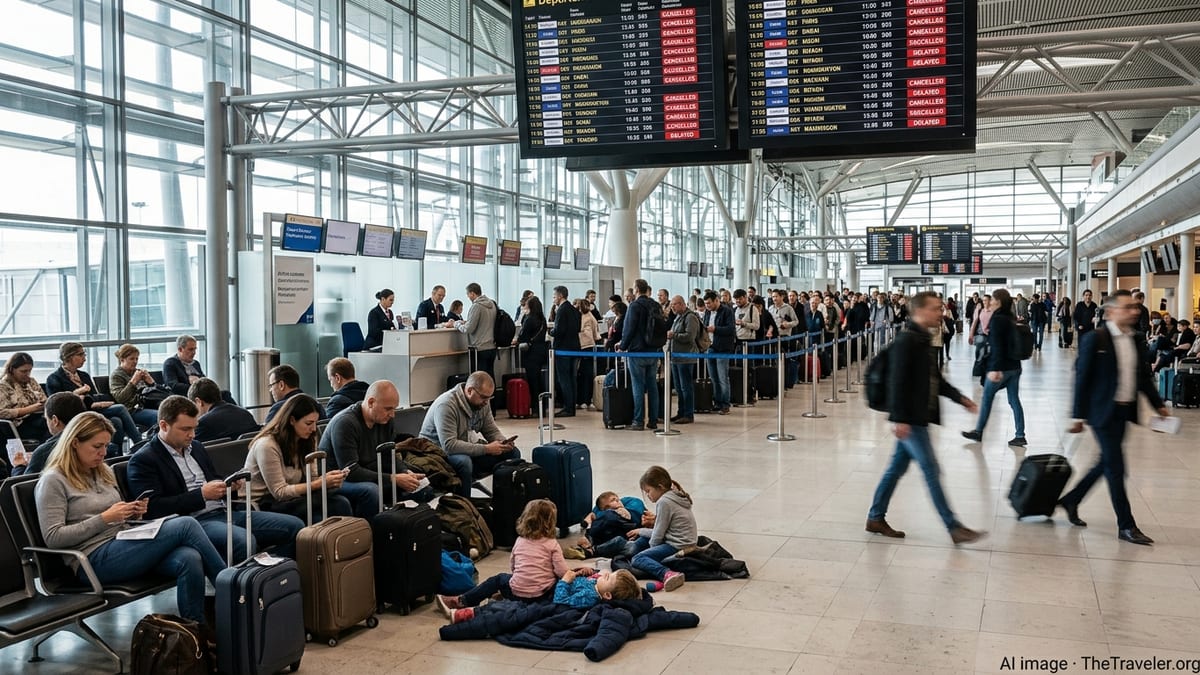
Extended Air France suspension keeps pressure on Dubai connectivity
Published coverage indicates that Air France has prolonged its halt on services between Paris and Dubai, following earlier suspensions that were initially framed as short term. Recent airline advisories and regional reports describe the Dubai route as paused beyond earlier target restart dates, as the carrier continues to assess security conditions and airspace constraints across the Middle East.
Reports from European and Gulf-based outlets note that Air France’s Dubai suspension comes alongside continued restrictions or extended suspensions on other regional routes, including Beirut and at times Riyadh, as the airline adjusts capacity in response to evolving geopolitical risks. This has reduced direct options between France and the UAE, pushing some passengers onto indirect routings or alternative hubs.
While the number of affected flights is modest compared with the scale of operations at Dubai International, the absence of Air France on the key Paris–Dubai corridor has narrowed choices for travellers tied to SkyTeam connections or specific corporate travel policies. Industry analysis suggests that some of this demand is spilling over to Gulf carriers and other European airlines that continue to operate to the UAE, contributing to fuller loads and limited availability on peak departures.
Travel industry commentators highlight that Air France’s decisions in the region generally prioritise risk management and operational predictability, often keeping suspensions in place longer than local carriers whose home hubs are in the Gulf. This conservative stance is reinforcing a pattern in which European network airlines are slower to restore full Middle East connectivity even as Gulf-based competitors keep most services running.
Delays and cancellations ripple across Emirates, Etihad, Air Arabia and flydubai
Separate updates focused on UAE-based carriers show that Emirates, Etihad Airways, Air Arabia and flydubai continue to operate the majority of their scheduled services but with a noticeable pattern of delays and select cancellations on certain routes. Gulf-focused aviation reporting describes a mix of on-time flights, late departures and ad hoc cancellations, often clustered around routes that intersect congested or rerouted air corridors.
Publicly available flight-status snapshots and local media round-ups indicate that disruptions are typically individual flight events rather than wholesale route suspensions. In many cases, aircraft are departing later than planned to accommodate revised routings, slot constraints at busy European and regional airports, or knock-on effects from earlier delays in the network. Some long-haul services have also reported extended block times as aircraft avoid sensitive airspace, adding to scheduling pressure.
Sharjah-based low-cost carrier Air Arabia and Dubai’s flydubai have both featured in recent disruption summaries, with scattered cancellations on services linking the UAE to select South Asian and regional destinations. Industry observers note that point-to-point routes operated by narrowbody aircraft can be particularly exposed when aircraft rotations are compressed and turnaround margins are thin, making even minor upstream delays more likely to cascade.
Abu Dhabi-based Etihad and Dubai flag carrier Emirates have also been managing irregular operations on a day-to-day basis. Recent coverage cites delayed arrivals from key European gateways and occasional cancellations or aircraft swaps, particularly on flights that require longer diversion routes around constrained airspace. Despite this, both airlines continue to maintain dense schedules to and from the UAE, with most flights operating albeit not always to timetable.
Regional security backdrop and airspace constraints drive operational complexity
Much of the current disruption is rooted in the wider security environment across parts of the Middle East, with aviation risk assessments influencing which air corridors remain available and on what terms. International travel outlets and risk bulletins point to a patchwork of advisories, including guidance from US and European regulators that urges airlines to carefully evaluate overflights of several Gulf and Levant states and to maintain detailed contingency plans.
This environment has led many carriers, including those based in the UAE, to adjust routings away from higher-risk areas, sometimes adding significant extra flying time. Longer routes mean greater fuel burn and tighter aircraft utilisation, which can in turn make schedules more fragile when weather events, technical checks or airport congestion occur. For airlines with complex global networks, even small changes in flight times can quickly ripple through daily operations.
Gulf-based carriers have generally maintained a higher level of service continuity than many of their European counterparts, according to regional traffic data and published analysis. However, this resilience does not remove the underlying constraints. Extended flight paths and evolving NOTAMs continue to affect planning for departures from Dubai, Abu Dhabi and Sharjah, and travel analysts note that airlines must frequently revise their schedules to keep pace with new information.
Security-driven capacity shifts by non-Gulf airlines, including Air France and others that have suspended or reduced Dubai operations at various points, have also reshaped competitive dynamics. Some long-haul traffic that once flowed via European hubs is now more heavily concentrated through Dubai and Abu Dhabi, helping sustain high load factors but leaving fewer options when irregular operations occur.
What UAE-bound passengers should expect in the coming days
For travellers heading to or from the UAE, publicly available guidance from airlines and airports underscores the importance of close monitoring in the short term. With Air France’s Dubai suspension still in place and Gulf carriers fine-tuning schedules daily, passengers are being encouraged in published advisories to check flight status frequently and to allow additional time at the airport, particularly for early-morning and late-night departures that are more vulnerable to rolling delays.
Airline customer updates and regional travel reporting suggest that rebooking options remain available in most disruption scenarios, although popular alternative flights can fill quickly when a cancellation is announced. Some passengers are being routed via alternative hubs, including European and Asian gateways, where seat availability permits. Travel specialists advise that flexible tickets or the ability to shift travel dates by a day or two can significantly improve options when schedules change at short notice.
Given that the broader security picture remains fluid, aviation analysts expect a continued period of operational uncertainty, even if most flights continue to operate. The pattern seen in recent weeks points toward intermittent disruption rather than sustained shutdowns, but it also indicates that last-minute schedule changes are likely to persist across September.
Prospective visitors to the UAE are therefore being urged, in open-source travel briefings, to prioritise direct communication channels such as airline apps and official websites for the latest updates, and to be prepared for longer journey times if reroutings are required. While Dubai and Abu Dhabi airports remain open and busy, the combination of regional risk management and airline-specific decisions like Air France’s extended suspension means that the travel experience may be less predictable than in previous years.
Key background: gradual recovery from earlier Gulf-wide disruption
The latest delays and cancellations come against the backdrop of a still-recovering Gulf aviation landscape. Data and charts published by regional newspapers earlier this year showed that flight numbers for major Gulf carriers, including Emirates, Etihad, Air Arabia and flydubai, dropped sharply following a spike in regional tensions, before gradually climbing back toward pre-crisis levels over subsequent months.
Analysts note that while daily operations at Dubai and Abu Dhabi have largely normalised compared with the height of the disruption, the system remains more finely balanced than before. Aircraft and crew are still scheduled around more circuitous routings in some directions, leaving fewer buffers when unexpected events occur. In this context, the continued absence or partial return of some foreign airlines, such as Air France and a number of other European and North American carriers, keeps pressure on the carriers that are operating full schedules.
Travel commentators add that the current situation illustrates how closely Gulf aviation is tied to geopolitical developments beyond its borders. Decisions taken in corporate headquarters in Europe or North America about risk tolerance, insurance and fleet deployment can have direct effects on availability and pricing for passengers flying into Dubai, Abu Dhabi and Sharjah. As a result, even when UAE airports function normally, connectivity can still feel fragile for those relying on a specific airline or alliance.
For now, the consensus in open reports is that travellers can continue to use UAE hubs as viable gateways, but with a renewed emphasis on flexibility and contingency planning. The extended suspension of Air France’s Dubai flights, combined with rolling delays and cancellations among local carriers, serves as a reminder that the region’s aviation recovery, while advanced, is not yet immune to external shocks.
Gulf News: UAE flights disruption update
Gulf News: Air France pauses Dubai flights