


More news on this day
Passengers flying from the United Arab Emirates on September 23 are facing a mix of delays, selective cancellations and schedule changes, as Dubai, Abu Dhabi and Sharjah airports respond to regional tensions and operational constraints across key routes to India, Iran, Oman and Europe.
Get the latest news straight to your inbox!
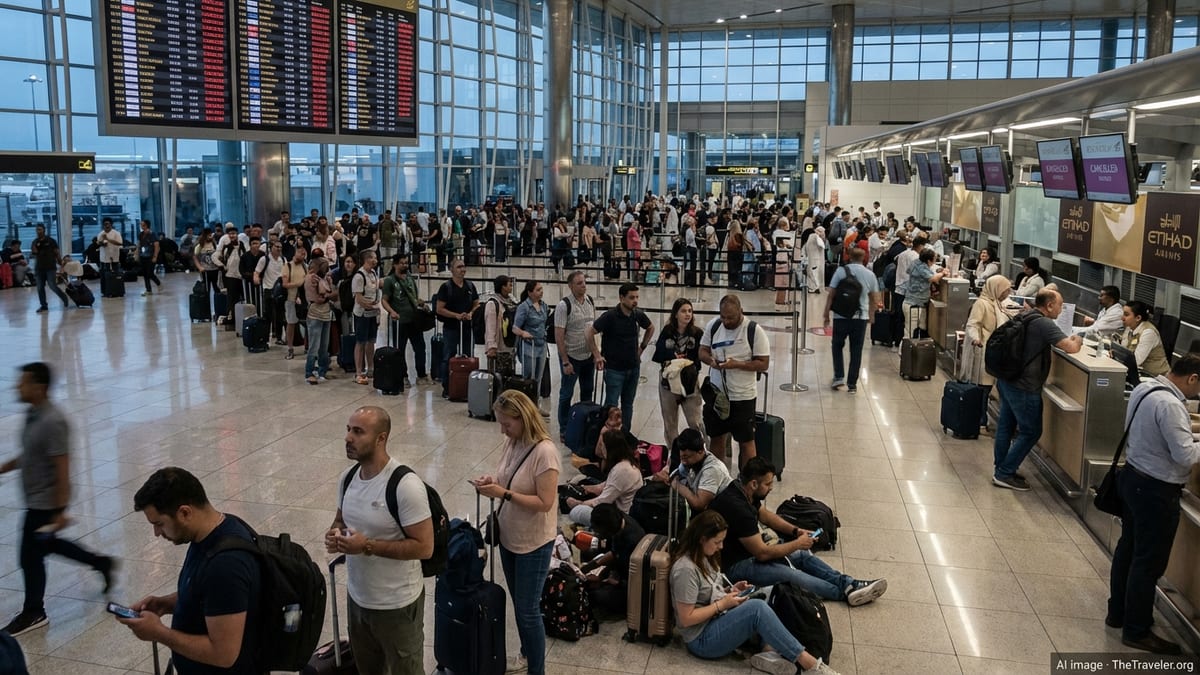
Same day disruptions across Dubai, Abu Dhabi and Sharjah
Publicly available departure and arrival boards for Dubai International, Al Maktoum International, Abu Dhabi Zayed International and Sharjah International on September 23 show scattered cancellations and multi hour delays affecting a range of services. Reports from local outlets describe flights to cities including Kozhikode, Delhi, Kochi, Mumbai, Tehran and Muscat running significantly behind schedule, with some India bound services delayed by more than eight hours.
Coverage from UAE based media indicates that at Dubai International, at least one Emirates service from Amman scheduled to arrive early evening was cancelled, while several flydubai flights from Eastern Europe and the CIS region were rescheduled with delays of more than one hour. At Abu Dhabi, monitoring services list late running arrivals and departures to destinations in South Asia and the Gulf alongside largely on time long haul operations to Europe and North America.
Sharjah International, a key base for Air Arabia, is also experiencing day of travel adjustments. Information compiled by regional travel sites shows a combination of pushed back departure times and selected cancellations on routes to South Asia and the wider Middle East, though the majority of services continue to operate. Passengers with flights booked on September 23 are being advised by airlines and airports to check their latest status before setting out.
Despite the disruptions, reporting from business and aviation outlets notes that UAE based carriers are still operating close to full schedules, with changes typically concentrated on specific city pairs, time bands or aircraft rotations rather than across entire networks.
Regional security and airspace pressures shaping schedules
The flight disruptions are unfolding against the backdrop of a more complex regional operating environment in 2026. Travel advisories from several governments highlight the impact of the armed conflict involving Iran on civil aviation in the Gulf, with references to an ongoing threat of drone and missile activity and intermittent airspace restrictions affecting traffic flows around the Persian Gulf and Gulf of Oman.
Advisories and private risk assessments issued earlier this year point to periodic closures or constraints in parts of Middle East airspace that can trigger diversions, longer routings and temporary schedule reductions. When combined with separate issues such as air traffic control outages in Europe or volcanic activity along certain long haul corridors, these measures have occasionally resulted in knock on disruption at major UAE hubs, particularly for flights connecting to or from affected regions.
Airlines based in the UAE have publicly indicated through customer updates that they continuously adjust timetables and routings in response to these conditions. In March and April, carriers described operating reduced or revised schedules on selected routes while regional airspace partially reopened, advising customers to rebook within specified travel windows or request refunds where eligible. While the current pattern of disruption on September 23 is less severe than during those peak closure periods, it is occurring in the same broader operational context.
Travel advice from foreign ministries notes that military activity in the region may cause sudden flight cancellations or diversions, and encourages travellers to stay alert to changing conditions. For passengers originating in the UAE, this means that even flights that appear unaffected at the time of booking can be rescheduled at short notice if security or airspace considerations evolve.
How UAE air traffic managers handle heavy disruption
Operational documentation from the UAE General Civil Aviation Authority outlines how air traffic managers are instructed to respond when arrival flows into major airports are heavily constrained. A circular published this year on arrival capacity management describes a system where, once delays pass specified thresholds or an airport is temporarily unable to accept arrivals, departures from nearby regional airports destined for the affected UAE airport can be paused.
The circular divides surrounding airports into two zones based on flying time to UAE destinations. When delays are building, departures from zone one and, if needed, zone two are temporarily stopped until conditions stabilize. Triggers include arrival delays that have reached 30 minutes and are expected to increase, or situations where a blocked runway or other problem prevents an airport from accepting inbound traffic for a prolonged period.
The same guidance notes that these tools are particularly important in the UAE context because of the high proportion of long haul and ultra long haul services. If disruption persists, tactical measures such as ground stops at origin airports may be combined with other flow management steps to prevent excessive airborne holding or diversions into alternative fields. This framework helps explain why passengers regionally can experience departure suspensions even when weather at their point of origin appears normal.
Separate circulars and notices also highlight the existence of an airspace coordination and contingency cell that monitors broader regional developments. While technical details are aimed at operators rather than the travelling public, they underline that irregular operations are managed through defined procedures rather than ad hoc decisions, with the aim of preserving safety and managing congestion during periods of stress.
Carrier specific schedule adjustments and seasonal changes
Apart from short term disruptions on September 23, several UAE based airlines are implementing medium term schedule changes that may affect travellers planning journeys in late 2026. Network filings reviewed by aviation industry publications show Etihad Airways, for example, adjusting frequencies on selected European routes during the Northern summer and early autumn period, including temporary reductions on some London Heathrow services earlier in the season followed by additional capacity on routes such as Abu Dhabi to key South Asian destinations from September.
Flydubai is implementing a planned adjustment to its Italy operations in November due to maintenance at Naples International Airport. According to the airline’s operational updates, the daily Dubai to Naples service will temporarily operate instead to Salerno Costa d’Amalfi Airport between November 1 and November 30, with passengers booked to or from Naples re accommodated via the alternative airport during that period.
Other Gulf and South Asian carriers serving the UAE, including low cost and regional airlines, have also made schedule tweaks in response to airspace restrictions and demand patterns. Earlier in the year, some airlines temporarily suspended certain sectors or consolidated frequencies, with public notices emphasising rebooking options within defined travel windows.
For passengers, these network level changes can translate into altered departure times, aircraft type swaps or shifts between primary and secondary airports on particular routes, even when day to day operations appear otherwise smooth. Checking not only same day status but also any emailed or app based schedule change notices in the weeks before departure has become increasingly important.
What passengers flying from the UAE should do now
Airlines and airports across the UAE consistently advise travellers to verify their flight status through official digital channels before leaving for the airport, especially on days with visible disruption such as September 23. Experience from recent weeks shows that departure times can move by several hours at short notice and that a small number of flights may be cancelled outright, even when overall schedules remain robust.
Given the interaction between regional security developments, overseas infrastructure issues and local capacity management rules, the operating picture can change quickly. Public advisories emphasise that passengers should not travel to the airport for flights that have been listed as cancelled or for services departing from airports temporarily affected by airspace measures until they have received a revised confirmed timing directly from their airline.
Travellers with onward connections are facing additional complexity. Where long haul sectors into or out of the UAE are running on time but feeder flights from neighbouring countries are delayed or grounded, missed connections can occur even if the main trunk route is unaffected. This is particularly relevant for itineraries involving short intra Gulf or South Asian legs into Dubai, Abu Dhabi or Sharjah.
For now, publicly available information suggests that the disruptions on September 23 are manageable and localised, rather than indicative of a wholesale shutdown. However, the combination of geopolitical risk and high utilisation at UAE hubs means that anyone flying from the country in the coming days would benefit from building extra time into their journey, monitoring airline alerts closely and being prepared for last minute changes to routing or timing.