


More news on this day
UAE airlines are again adjusting schedules across key Gulf routes as escalating tensions involving Iran and renewed airspace warnings trigger fresh rounds of cancellations, delays and short-notice timetable changes for Emirates, Etihad, flydubai and Air Arabia passengers.
Get the latest news straight to your inbox!
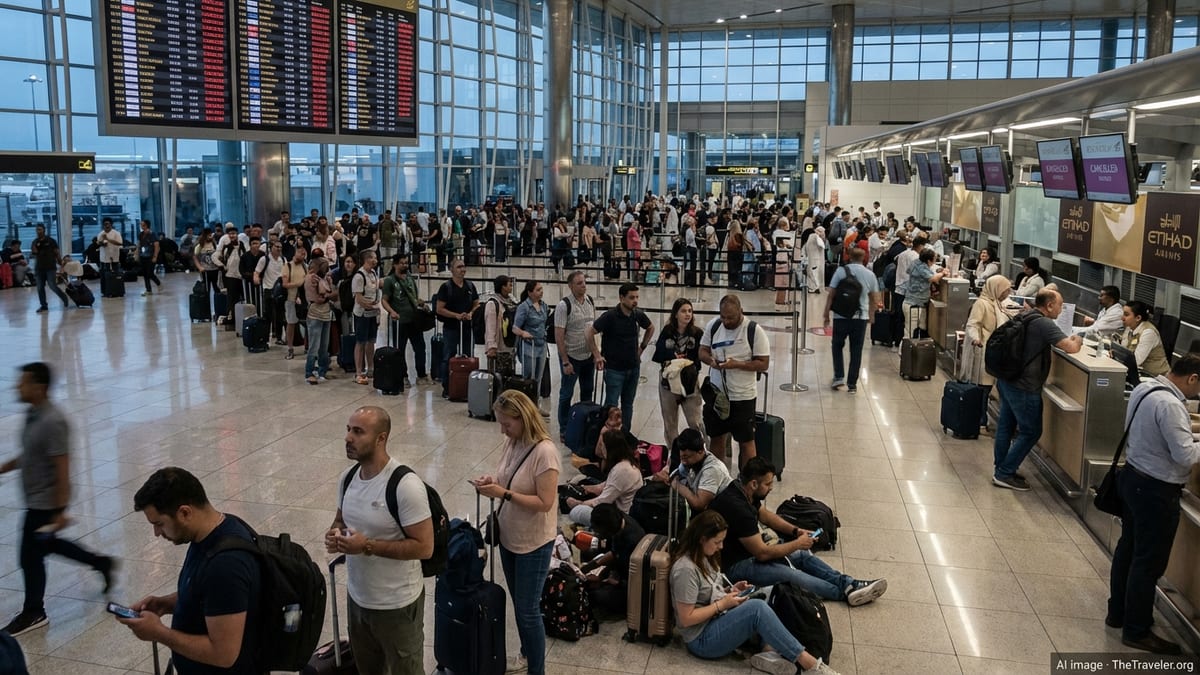
Regional tensions keep pressure on Gulf aviation
Recent escalations involving Iran and the wider US-Iran confrontation continue to weigh on air travel across the Gulf, affecting both regional and long-haul operations. Publicly available coverage indicates that conflict-related risks and periodic airspace constraints are prompting airlines and regulators to extend precautionary measures, even as most UAE services continue to operate on a largely normal basis.
The European Union Aviation Safety Agency (EASA) has extended its conflict-zone information bulletin for Gulf airspace until September 30, highlighting ongoing risk factors linked to the regional security situation and urging carriers to maintain careful routing and operational risk assessments. Reports note that this extension comes as passenger numbers through UAE hubs rise with the end of the summer holiday period, amplifying the impact of any disruption on travellers.
Analysts point out that while the UAE itself has not been the direct focus of recent strikes, tensions involving Iran and US positions in neighbouring countries have translated into more conservative scheduling decisions on certain routes, especially to Kuwait and Bahrain. This combination of geopolitical risk and heavy seasonal demand is leading to tighter margins in airline planning and more frequent short-term updates to timetables.
For passengers, the most visible effects have been isolated cancellations and rolling delays on selected services, rather than a wholesale shutdown of UAE aviation. Nevertheless, travel advisories across multiple outlets stress the importance of monitoring flight status on airline websites and apps up to departure.
Emirates adjusts Bahrain and Kuwait operations
Emirates continues to operate an extensive global network from Dubai, but its regional schedule has been periodically reshaped as Iran-related tensions ripple across the Gulf. Coverage in regional media indicates that Emirates has cancelled or suspended several Dubai–Kuwait flights since July, in line with similar decisions by other carriers serving Kuwait International Airport as security concerns in the northern Gulf intensified.
On Bahrain routes, Emirates initially cancelled selected Dubai–Bahrain services during August as tensions escalated and following reported Iranian strikes targeting US-linked facilities in the region. More recent updates show a partial resumption, with the airline now operating at least one daily service while maintaining a warning that further disruption remains possible should the situation deteriorate again.
Emirates has also been affected indirectly by wider airspace issues and industrial actions outside the Gulf, with some international routes experiencing delays or schedule tweaks. Publicly available information shows that the carrier has been advising travellers to arrive early at Dubai International Airport and to check live status via its digital channels, reflecting a broader move across the industry toward real-time communication during periods of volatility.
Despite the latest round of cancellations, Emirates’ long-haul network to Europe, Asia and the Americas appears to be largely intact, with adjustments concentrated on shorter Gulf sectors where airspace, security assessments and demand patterns are most sensitive to developments involving Iran.
Etihad extends select cancellations as advisories evolve
Abu Dhabi-based Etihad Airways has implemented a series of targeted cancellations and schedule changes on routes most exposed to the current tensions and related disruptions. Earlier in the summer, Etihad extended the cancellation of specific Abu Dhabi–Kuwait flights, notably EY653 and EY654, through late July as conditions around Kuwait remained uncertain and airspace advisories evolved.
More recently, Etihad has issued further updates covering both Gulf and regional destinations. According to published travel coverage, the airline has periodically cancelled services to Bahrain and adjusted frequencies in response to a combination of operational considerations and the broader security environment. At the same time, Etihad’s core long-haul operations from Zayed International Airport continue to function, with the carrier emphasising flexible rebooking options for affected passengers.
Reports also highlight isolated cancellations on Etihad flights involving Tel Aviv, where unplanned industrial action at Ben Gurion International Airport added another layer of disruption to an already complex operating picture. In these cases, the trigger has been local airport conditions rather than Iran-related tensions, underlining how multiple factors are converging to test airline resilience across the region.
Across its network, Etihad continues to advise travellers to verify their itinerary before heading to the airport and to ensure contact details are updated in bookings so they can receive notifications about last-minute changes, a message that is being echoed by other UAE carriers.
flydubai and Air Arabia trim Gulf schedules
Budget carriers flydubai and Air Arabia, which rely heavily on high-frequency regional routes, have been among the most exposed to short-notice adjustments driven by the evolving security picture around Iran. Air Arabia has cancelled multiple services linking the UAE with Kuwait and Bahrain in recent weeks, including flights from Sharjah and Abu Dhabi that serve as key links for both leisure and labour traffic in the northern Gulf.
Reports from regional outlets list specific Air Arabia cancellations such as Sharjah–Kuwait, Sharjah–Bahrain and Abu Dhabi–Kuwait flights, indicating that these changes are closely tied to the conflict dynamics involving Iran and US-linked sites in Kuwait and Bahrain. The airline continues to operate many other Gulf and wider Middle East routes, but with occasional delays and adjusted timings as it navigates airspace and airport constraints.
flydubai, meanwhile, has cancelled selected Dubai–Bahrain services, including flights that also carry Emirates codeshare numbers. Publicly available information shows that the carrier has at times suspended or reduced operations on certain regional sectors when airspace closures or capacity restrictions were in place, particularly during earlier spikes in the crisis. Some of these services have since been restored on a limited basis, though advisories suggest that schedules remain subject to change at short notice.
Both low-cost airlines are encouraging passengers to rely on digital tools, including mobile apps and website trackers, to confirm departure times and gate information on the day of travel. With schedules evolving in line with security assessments, this real-time visibility is becoming an essential part of planning regional journeys from UAE airports.
International airlines tighten Middle East networks
The impact of Iran-linked tensions is not confined to UAE-based carriers. A range of international airlines have scaled back or suspended operations into the Gulf and wider Middle East, reshaping connectivity into and out of Dubai and Abu Dhabi. Coverage from regional media outlets notes that carriers such as Air Canada, KLM, British Airways and Finnair have extended suspensions of certain routes to destinations including Riyadh, Dammam and Dubai into early September.
In some cases, airlines had initially planned to resume services on or around September 1, only to delay those restarts after reassessing the risk environment and ongoing airspace limitations. One European carrier has extended the suspension of its Incheon–Dubai route until further notice, citing constrained airspace capacity related to the conflict involving the US, Israel and Iran.
These international decisions feed back into UAE travel patterns by reducing alternative options for long-haul passengers who may otherwise have used non-Gulf hubs or indirect routings. As a result, demand is being concentrated more heavily on flights that continue to operate, increasing load factors and leaving less slack in the system to absorb disruptions when they occur.
Industry observers note that this tightening of available capacity makes it especially important for travellers to build extra buffer time into itineraries that involve tight connections, as any delay on an inbound leg could have knock-on effects if rebooking options are limited.
What UAE-bound travellers should do now
With cancellations and delays now occurring in rolling waves rather than in a single, clearly defined disruption window, planning has become more complex for travellers using UAE hubs. Travel advisories emphasise three practical steps: checking flight status repeatedly in the 24 hours before departure, monitoring email and SMS for schedule-change notifications, and allowing additional time for airport formalities given the likelihood of longer queues during busy periods.
Dubai International, Abu Dhabi’s Zayed International, and Sharjah International airports are all experiencing heavier traffic as residents return from summer holidays and international airlines adjust their timetables. Public reports suggest that for many passengers, the main inconvenience may stem from check-in and security bottlenecks rather than outright flight cancellations, though last-minute changes remain a risk on certain Gulf routes.
Travel experts recommend that passengers holding tickets on affected sectors to Kuwait, Bahrain or other tension-adjacent destinations review airline rebooking and refund policies, which in many cases have been relaxed to accommodate the fluid situation. Some carriers are waiving change fees for travel within specified date ranges or allowing reroutes via alternative gateways where capacity exists.
Given the evolving nature of the Iran-related tensions and associated airspace guidance, observers expect UAE airlines to continue fine-tuning schedules over the coming weeks. For now, the overall picture remains one of cautious continuity: national carriers are still flying, but with more frequent and more visible adjustments on the routes closest to the regional fault lines.
Gulf News: UAE flight update today – Emirates, Etihad, Air Arabia status
Gulf News: UAE flights today – cancellations and delays
The National: Middle East flights – which airlines are flying