


More news on this day
Manila’s main gateway and a growing network of Philippine airports are moving ahead with modular LED runway and approach lighting, a shift that promises stronger safety margins, more resilient operations and added capacity as air travel in the country surges to record levels.
Get the latest news straight to your inbox!
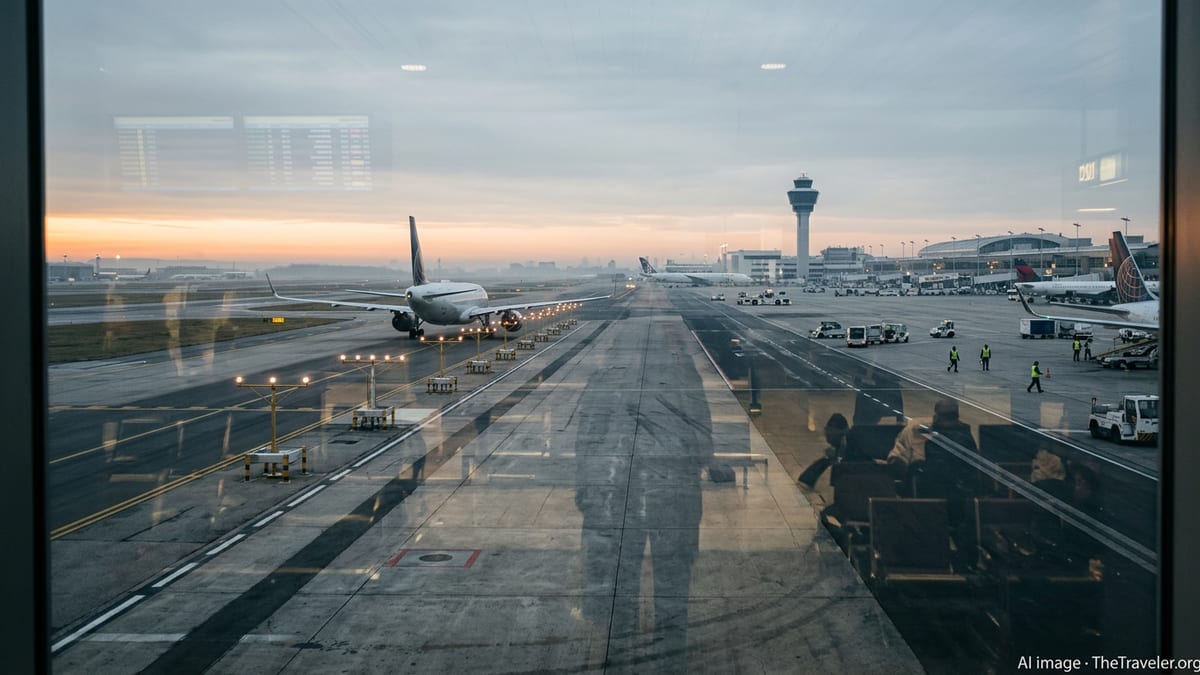
Major Upgrade Underway at Manila’s Busiest Runway
Public procurement records show that the Manila International Airport Authority has launched a significant rehabilitation and upgrade of precision approach lighting and sequence flashing systems for Runway 06/24 at Ninoy Aquino International Airport (NAIA), the country’s busiest air hub. A bid notice published in July 2024 details the project, which covers replacement of older fixtures and associated control works on the primary east west runway used by a large share of arrivals into the capital region.
Budget documents from the authority list the runway lighting rehabilitation as a multi‑year effort, reporting that work on the precision approach and associated systems had reached around 80 percent completion by October 2025, with full delivery targeted for December 18, 2025. The upgrade forms part of a broader airside modernization program that also includes conversion of legacy illuminated signboards to LED technology on NAIA’s runways and taxiways.
According to an earlier response published through the Philippine government’s Freedom of Information portal, NAIA is progressively shifting from halogen lamps to LED runway lights to reduce energy use and maintenance requirements. That transition is now aligning with a more modular approach to new fixtures and control equipment, intended to simplify future expansions or technology refreshes as Manila’s traffic grows.
Modular LED Systems Redefine Runway Safety
The latest generation of airfield lighting platforms is built around modular LED fixtures that can serve multiple roles on the runway and approaches. Industry literature describes how one family of elevated and inset lights, used at airports worldwide, is designed on a single high‑intensity platform that can be configured for approach, threshold, runway edge, centerline and stop bar functions. This modular design allows airports to standardize on fewer hardware types while still meeting both International Civil Aviation Organization and Federal Aviation Administration requirements.
Manufacturers have also begun embedding sensors and communication capabilities into these lights, turning them into data nodes on the airfield. One widely referenced example is a new LED fixture developed as part of an “Airfield 4.0” concept, which can collect situational data and support advanced control schemes. By treating each light as a modular, networked component, airports can more easily layer on capabilities such as individual lamp control, adaptive intensity and real‑time health monitoring.
Runway safety systems are starting to take advantage of this architecture. A recently introduced runway status light platform integrates the processing unit and the field lights from the same vendor, allowing faster switching times and tighter control over performance. The solution is specifically designed to work with new modular LED fixtures, illustrating how hardware standardization on the runway can enable more sophisticated safety applications in the control tower.
Philippine Airports Embrace LED and Adaptive Lighting
Available information from the Civil Aviation Authority of the Philippines highlights a broader national push toward LED lighting and modern airside systems. Notices to proceed issued in 2024 include contracts for high‑output LED floodlights at various airports, part of ongoing safety and security upgrades at regional gateways. Earlier projects introduced runway lighting and navigational aids at facilities such as Laguindingan Airport to enable night operations and expand capacity beyond daylight hours.
At the same time, global vendors are rolling out adaptive airfield lighting concepts that are expected to influence future projects in the Philippines. A modular adaptive lighting solution unveiled in 2025 uses sensors and software to guide aircraft and ground vehicles with dynamic lighting patterns, adjusting in real time to traffic, weather and operational needs. Publicly available environmental, social and governance reports from the same supplier indicate that these systems can cut airfield lighting power consumption by around a quarter while providing more precise visual cues.
For airport operators with budget constraints and rising traffic, modular LEDs with adaptive capabilities offer a way to incrementally build up more advanced guidance and safety features. Rather than committing to large one‑off overhauls, terminals and runways can be retrofitted section by section, using standardized fixtures that can later be integrated into more complex control or “follow the greens” taxi guidance schemes.
Capacity Pressures Drive Focus on Reliability and Resilience
The timing of Manila’s runway lighting upgrades coincides with a sharp rebound in passenger numbers. Publicly available statistics show that NAIA handled more than 50 million passengers in 2024, an all‑time record for the airport and a nearly 50 percent jump on the previous year. While new capacity is planned at projects such as New Manila International Airport in Bulacan and the expansion of Sangley Point, NAIA remains the primary gateway for the country and is expected to shoulder heavy traffic for the rest of the decade.
In that context, runway lighting is more than a regulatory requirement; it is a critical resilience asset. Modern LED systems are designed for higher reliability and longer lifespans than halogen predecessors, reducing the risk of outages that can curtail operations during peak periods or poor weather. Modular fixtures make it easier to keep spare units on hand and swap components quickly, limiting downtime when faults occur.
Energy efficiency is also a key driver. Corporate sustainability reports from major airfield lighting providers emphasize that LED and digitally controlled systems are central to cutting electricity use and greenhouse gas emissions across the airside. For Manila’s densely populated surroundings, lower energy consumption from thousands of runway and taxiway lights supports broader national goals around responsible infrastructure development.
From Manila to Secondary Gateways: Building a Safer Network
While NAIA’s rehabilitation project is the highest profile effort, evidence from government procurement portals points to parallel investments at other Philippine airports. Published tenders and contract awards in recent years reference new lighting, safety fencing, turn‑around pads and strip grading improvements at gateways including Zamboanga, Bicol, Butuan and others. Many of these works specify LED fixtures and provisions for integration with control and monitoring systems, indicating a gradual shift toward a more standardized, modular lighting backbone across the network.
This distributed approach to modernization aligns with wider regional plans to decongest Manila by bolstering secondary hubs. As more airports receive upgraded runway and approach lights, they become better positioned to handle night operations, diversions and expanded intra‑Philippine routes. In turn, that eases pressure on NAIA, where every additional margin of runway availability can make a difference during weather disruptions or peak holiday travel.
For travelers, these technical changes may be most visible as enhanced approach lighting on final descent, clearer runway markings during night departures and fewer delays attributed to airfield lighting issues. Behind the scenes, the move toward modular, data‑ready LED platforms gives airport operators and regulators a more robust toolkit for managing risk as flight volumes continue to rise across the Philippine archipelago.
Manila International Airport Authority: 2026 Corporate Operating Budget Annex
ADB SAFEGATE: Airfield 4.0 and AXON EQ Modular Lighting
Ninoy Aquino International Airport: Traffic and Expansion Overview