


More news on this day
Passengers flying out of the UAE today, September 2, are being urged to check their flight status frequently as Emirates, Etihad, Air Arabia and flydubai adjust schedules in response to regional tensions and evolving airspace advisories.
Get the latest news straight to your inbox!
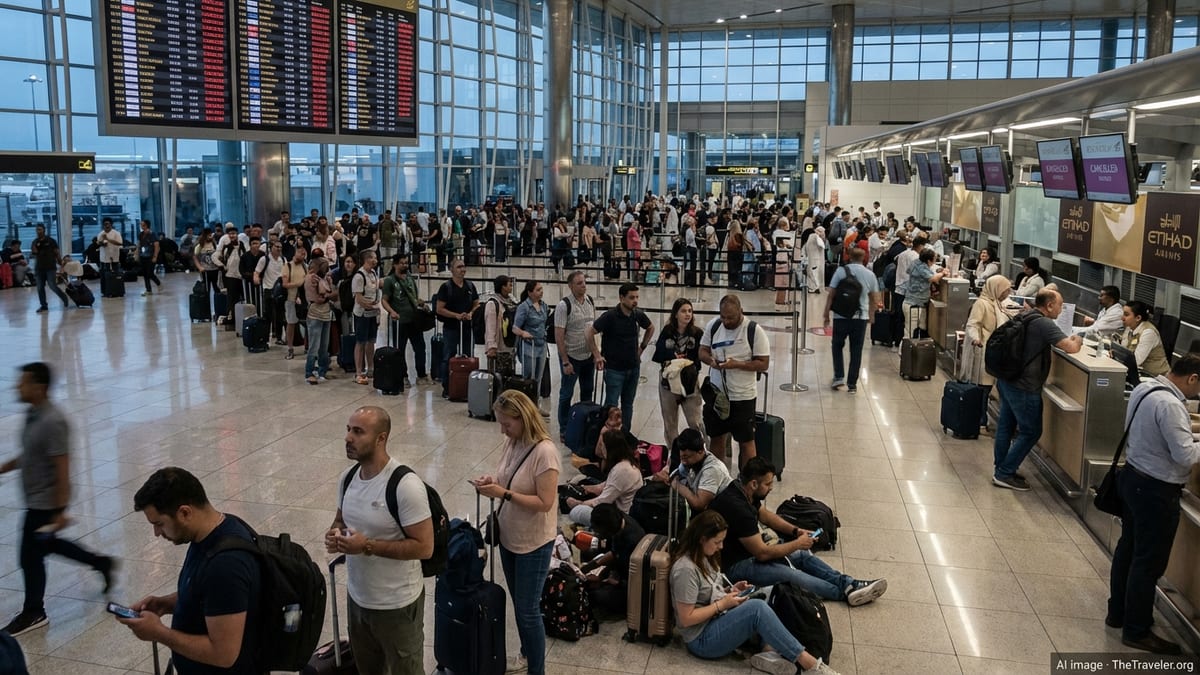
Regional situation keeps pressure on UAE flight schedules
Publicly available information shows that UAE carriers are still managing knock-on effects from regional instability and airspace warnings affecting parts of the Gulf and broader Middle East. Recent coverage highlights that European regulators have extended advisories on certain Gulf overflight routes, prompting some airlines to reroute or trim frequencies on selected services rather than suspend operations systemwide.
Reports focused on UAE operations indicate that Emirates, Etihad, Air Arabia and flydubai are keeping most flights running but with targeted cancellations and delays on specific routes. These adjustments are primarily visible on short-haul services within the region and on some connections to Europe and Asia that normally cross sensitive airspace corridors. Passengers may therefore encounter longer flight times or last-minute schedule changes even where flights remain listed as operating.
While the majority of departures from Dubai, Abu Dhabi and Sharjah appear to be proceeding, the combination of re-routings, slot constraints at busy hubs and rolling timetable updates is leaving some passengers with tight connections or extended layovers. Travel observers note that this type of disruption often unfolds unevenly through the day, with morning banks less affected than afternoon and evening waves once earlier delays cascade across networks.
Current advisories emphasize that conditions remain dynamic, meaning a service that is on time at check-in can still be delayed or cancelled at short notice. Travellers are therefore being encouraged by published guidance to rely on live flight-status tools rather than printed or emailed itineraries issued days earlier.
Emirates and flydubai: Dubai departures mostly operating with isolated cuts
Dubai International Airport remains one of the busiest global hubs, and airport data shows the facility is operating under normal weather conditions this morning, with light winds and good visibility recorded at Dubai International. Aviation meteorology charts published for DXB list no active aerodrome weather warnings, suggesting that operational challenges today are driven primarily by airspace and network factors rather than local storms or low visibility.
Emirates and flydubai, which together operate hundreds of daily departures from Dubai, have in recent days trimmed a limited number of services on routes most exposed to regional tensions, particularly on some flights to Bahrain, Kuwait and selected other Gulf points, according to local media coverage of schedule updates. These targeted cancellations are being balanced by continued operations on many trunk routes to Europe, North America, Africa and Asia, albeit with potential for extended flight times as aircraft route around constrained areas.
Dubai Airports’ own website is currently displaying an error message on the live departures board, indicating that detailed flight lists are temporarily unavailable through the main portal. Travellers are instead advised, in publicly available guidance, to search by airline or flight number on carrier channels for the most accurate, flight-specific information. Airline websites and mobile apps continue to show real-time departure and arrival status, gate details and any re-timings applied during the day.
For passengers connecting through Dubai today, this means that while the hub remains fully open and functioning, onward connections could still shift. Travel experts recommend allowing extra buffer time between flights where possible and monitoring gate and departure-time changes closely, especially for regional connections leaving from the low-cost Terminal 2 and flydubai operations at Terminal 3’s concourses.
Etihad from Abu Dhabi: rolling delays on select international routes
At Abu Dhabi’s Zayed International Airport, Etihad Airways is also operating the majority of its schedule while flagging delays on a handful of long-haul and regional services. The airline’s online flight-status page lists specific instances of disruption around September 1 and 2, including delayed returns on certain flights from Manila and other key Asian gateways, which may have knock-on effects for some departures from Abu Dhabi today.
Information made available through Etihad’s status tool shows that when an inbound long-haul service is heavily delayed, the corresponding outbound rotation from Abu Dhabi can also run late, as aircraft and crew are repositioned. These rolling adjustments can affect flights to Europe, Africa and South Asia that rely on tight aircraft turnarounds. Travellers departing Abu Dhabi today are therefore being urged by published advisories to re-check their flight details in the hours before leaving for the airport.
Abu Dhabi airport’s departures pages show individual flights transitioning from scheduled to departed with minimal delay in many cases, underlining that widespread cancellation is not occurring. Nonetheless, where flights do face disruption because of late inbound aircraft or altered routings, rebooking options are typically being offered via airline customer-service channels, call centres and digital platforms.
Passengers on Etihad’s regional network, including services to key Middle Eastern and North African destinations, may see more limited same-day alternatives if a flight is cancelled or significantly delayed, as frequencies on some of these routes are lower than on major trunk sectors. In such cases, overnight accommodation or rerouting through partner airlines may be necessary, depending on ticket conditions and availability.
Air Arabia and Sharjah operations: focused regional cuts and schedule tweaks
In Sharjah, Air Arabia’s main base, recent coverage indicates that the low-cost carrier has trimmed certain flights on routes to Kuwait, Bahrain and a selection of other regional destinations. These targeted cancellations reflect broader network adjustments as the airline responds to airspace advisories and changing demand patterns on short-haul Gulf traffic.
Performance data from Sharjah International Airport compiled over recent days points to modest average delays measured in minutes rather than hours across the airport’s departures. This suggests that while some individual flights may be cancelled or retimed, the wider operation at Sharjah is functioning close to normal, with no large-scale groundings or protracted disruptions reported.
For Air Arabia passengers departing today, the primary risk remains last-minute schedule changes on routes intersecting sensitive airspace or relying on tight turnaround times at congested regional airports. Travel analysts note that low-cost carriers typically operate aircraft on intensive daily rotations, meaning that any disruption early in the day can ripple into later flights if recovery windows are limited.
Travellers using Sharjah as a departure point are therefore advised, in publicly shared guidance, to confirm their flight status directly on the Air Arabia website or app on the morning of travel and to factor in potential minor delays when arranging ground transport or onward connections from their destination.
What UAE-bound and outbound passengers should do today
With live airport boards and airline tools indicating a patchwork of delays and cancellations rather than a blanket shutdown, passengers flying from the UAE today are being encouraged by publicly accessible advisories to adopt a cautious, well-informed approach to their journeys. Checking flight status before leaving home, and again after arriving at the terminal, remains the single most important step.
Travel guidance also stresses the value of enabling app notifications from airlines such as Emirates, Etihad, Air Arabia and flydubai, which can push real-time alerts about gate changes, revised departure times or aircraft swaps. For those who booked through travel agents or online travel agencies, agency portals may carry updates, but airline channels are generally the fastest to reflect operational decisions taken on the day.
Given that local weather at Dubai and Abu Dhabi airports is currently hot but stable, with no active severe-weather warnings reported by the UAE’s National Center of Meteorology, most disruptions are expected to be linked to network and airspace issues rather than local conditions. As a result, some flights may still operate close to schedule even while others on nearby routes are cancelled or re-routed.
Passengers already in transit or holding tight connections may wish to proactively approach airline transfer desks inside the airport if delays begin to mount, as same-day alternatives can become scarce once disruption spreads across multiple waves of departures. For travellers yet to begin their journey, rebooking to a different departure time or date may offer a smoother experience if schedules on their intended route show repeated adjustments over recent days.
Gulf News: UAE flight update today
Gulf News: UAE flights today cancellations and delays