


More news on this day
Powerful thunderstorms sweeping across the Northeast have rippled through the national air network, triggering widespread delays and cancellations that left frustrated travelers stranded hundreds of miles away in West Palm Beach, Florida, and other major hubs on Wednesday.
Get the latest news straight to your inbox!
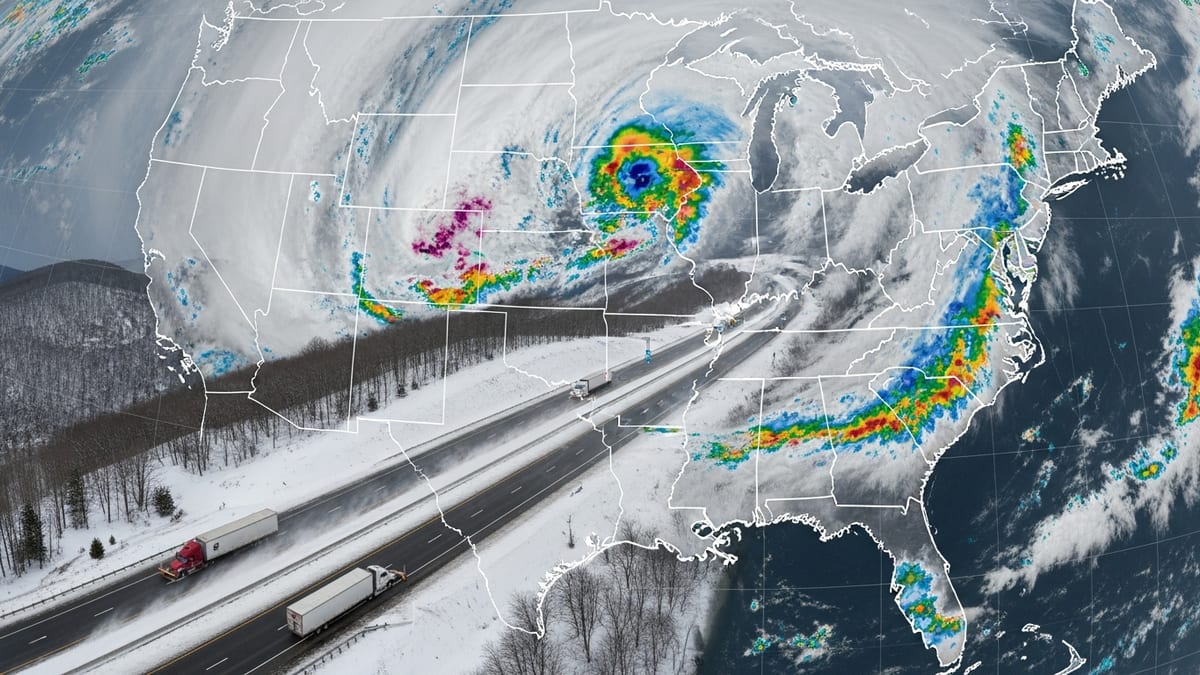
Stormy Northeast Creates a National Air Traffic Bottleneck
Weather disruptions across the Northeast’s crowded air corridors once again exposed how quickly local thunderstorms can translate into nationwide gridlock. National air traffic planning documents describe how severe weather avoidance plans and ground delay programs are routinely activated for major Northeast airports when storm cells develop over approach and departure paths, limiting the number of aircraft that can safely move through the airspace at any given time.([fly.faa.gov](https://www.fly.faa.gov/adv/adv_otherdis?adv_date=06182026&advn=78&utm_source=openai))
Publicly available Federal Aviation Administration advisories show that, on recent storm days, arrival and departure rates into key Northeast gateways such as Boston and New York have been sharply reduced, with ground stops and airborne holding used to manage traffic flows. One operations plan issued in early August highlighted “diversion recovery” for flights bound to the Mid-Atlantic and Northeast, underscoring how quickly delays can cascade when thunderstorms park over a region already operating near capacity.([fly.faa.gov](https://www.fly.faa.gov/adv/adv_otherdis?adv_date=08082026&advn=166&facId=ATCSCC&title=ATCSCC+ADVZY+166+DCC+08%2F08%2F2026+OPERATIONS+PLAN&titleDate=08%2F08%2F2026&utm_source=openai))
When that happens, flights destined for the Northeast from across the country are frequently held at their departure points, rerouted around storm clusters, or diverted to alternates if they are already en route. As connections are missed and aircraft and crews fall out of position, the impact tends to spread well beyond the immediate weather zone, affecting airports in the Southeast and across the central United States.
Travel forums have been filled in recent weeks with accounts of multi-hour gate holds, extended tarmac waits, and late-night cancellations tied to thunderstorms along the busy Boston–New York–Washington corridor. Posters describe itineraries unraveling as storms slow arrivals into the Northeast, leading to rolling delays on flights that later continue to Florida and other sunbelt destinations.([reddit.com](https://www.reddit.com/r/jetblue/comments/1v01a6j/northeast_weather_saturday_718/?utm_source=openai))
Ripple Effects Reach Palm Beach International Airport
Palm Beach International Airport in West Palm Beach has been among the airports feeling the secondary effects of these Northeast storms. FAA delay maps and regional advisories for South Florida have recently flagged arrival and departure constraints into the Miami airspace, including the Palm Beach area, as thunderstorms and traffic management programs elsewhere back up the system.([fly.faa.gov](https://www.fly.faa.gov/fly/flyfaa/semap?utm_source=openai))
According to a late August advisory issued for the Miami air route control area, users were warned to expect arrival delays and airborne holding into South Florida airports, a pattern that often emerges when weather-driven restrictions in other parts of the country compress traffic into narrower time windows. Another operations plan earlier in the month cautioned that South Florida terminal areas could see lengthy delays as severe weather avoidance measures altered standard routes.([fly.faa.gov](https://www.fly.faa.gov/adv/adv_otherdis?adv_date=08282026&advn=84&utm_source=openai))
While storms do routinely form over the Palm Beach region itself during the summer, National Weather Service products for the area in recent days have emphasized scattered afternoon thunderstorms rather than large, organized systems. Local radar from the Miami forecast office shows typical sea-breeze driven convection, but on a day when the Northeast is constrained, even relatively modest weather in South Florida can compound delays when paired with tight airspace and already stretched schedules.([weather.gov](https://www.weather.gov/mfl/radar?utm_source=openai))
Historic and seasonal data indicate that Palm Beach International is not usually among the very worst U.S. airports for flight disruptions, yet national delay statistics show that congestion and weather elsewhere can still push up its rate of late arrivals. In annual rankings of flight performance, analysts have noted that Florida gateways often experience elevated delay percentages when major storm systems move along the East Coast and into the Northeast.([insuremytrip.com](https://www.insuremytrip.com/travel-advice/travel-planning/us-airport-statistics-flight-cancellation-data/?utm_source=openai))
Travelers Face Long Waits and Limited Alternatives
For passengers on the ground in West Palm Beach, the operational dynamics behind the scenes translate into long queues, rolling departure times, and shrinking rebooking options. Airline discussion boards in recent weeks have collected reports from travelers across the country who found themselves stuck for hours after thunderstorms forced staggered arrivals into the Northeast, leaving crews out of position and reducing the number of aircraft available to operate subsequent legs into and out of Florida.([reddit.com](https://www.reddit.com/r/jetblue/comments/1v01a6j/northeast_weather_saturday_718/?utm_source=openai))
On days when the Northeast corridor is heavily impacted, some flights bound for New York, Boston, or Philadelphia from other regions never leave the gate, while those already en route may be diverted to secondary airports to wait out storms. In some cases described online, planes have returned to their origin airport after extended taxi times or airborne holding near their destination, adding to the backlog and increasing the likelihood that later segments on the same aircraft will be delayed or canceled.([reddit.com](https://www.reddit.com/r/jetblue/comments/1v01a6j/northeast_weather_saturday_718/?utm_source=openai))
Travelers trying to connect through West Palm Beach or onward to other Florida cities face additional hurdles once weather delays begin to compound. With peak-season load factors already high and many flights selling out days in advance, even a modest wave of cancellations can leave limited same-day alternatives. Passengers often report being offered rebookings one or two days later, or being rerouted through other hubs that are themselves under weather-related strain.
Publicly available FAA guidance encourages passengers to stay in close contact with their airlines during evolving weather events and to use carrier apps or websites for rebooking rather than relying solely on in-person airport counters. However, when storms affect multiple major regions on the same day, customer service channels can quickly become congested, leaving some travelers in West Palm Beach and elsewhere waiting in line or on hold while seats disappear.([fly.faa.gov](https://www.fly.faa.gov/fly/flyfaa/semap?utm_source=openai))
Why Northeast Storms Hit the Whole Network
Aviation and meteorological analyses highlight several reasons why summer and early autumn storms in the Northeast can have such pronounced national effects. The corridor from Washington through New York to Boston combines some of the country’s busiest airports with some of its most constrained and complex airspace, leaving relatively little margin when thunderstorms force traffic into narrower corridors or close approach paths altogether.([fly.faa.gov](https://www.fly.faa.gov/adv/adv_otherdis?adv_date=06182026&advn=78&utm_source=openai))
When a strong frontal system or organized thunderstorm complex moves through that region, the FAA’s air traffic command center typically responds with a mix of ground delay programs, reroutes, and, when necessary, short-term ground stops. These measures are designed to maintain safety and prevent airborne congestion, but they also require airlines to adjust departure times around the country to match reduced arrival capacity in the affected area.([fly.faa.gov](https://www.fly.faa.gov/adv/adv_otherdis?adv_date=06182026&advn=78&utm_source=openai))
Historical storm summaries from the National Weather Service show that significant East Coast storm events, including powerful nor’easters and frontal systems, have repeatedly led to thousands of combined delays and cancellations, along with diversion and extended holding patterns. In some documented cases, strong winds associated with coastal storms have been recorded as far south as West Palm Beach, linking Florida directly to broader East Coast weather patterns that disrupt aviation.([en.wikipedia.org](https://en.wikipedia.org/wiki/December_2023_nor%27easter?utm_source=openai))
Experts note that the combination of dense traffic, limited runway capacity, and susceptibility to convective storms means the Northeast will likely remain a perennial pressure point in the U.S. aviation system. For travelers heading to or from Florida, that often means that a quiet weather day in West Palm Beach can still end with long hours in the terminal if thunderstorms are flaring a thousand miles to the north.
What Passengers Can Do When Weather Chaos Hits
When severe weather over the Northeast starts to ripple through the system, public guidance from aviation agencies and travel analysts stresses preparation and flexibility. The FAA’s daily air traffic report, updated throughout the day, offers a broad snapshot of where delays and ground stops are occurring and which airports are most affected, giving travelers an early indication of where problems may emerge.([faa.gov](https://www.faa.gov/newsroom/faa-daily-air-traffic-report?utm_source=openai))
Consumer travel resources recommend that passengers departing from airports like Palm Beach International build extra time into their itineraries when storms are forecast along major East Coast routes, particularly if they have tight connections in cities such as New York or Boston. Monitoring airline notifications, considering earlier departures when possible, and packing essential items in carry-on luggage are all strategies frequently cited in travel advisories aimed at reducing stress during prolonged disruptions.([insuremytrip.com](https://www.insuremytrip.com/travel-advice/travel-planning/us-airport-statistics-flight-cancellation-data/?utm_source=openai))
For those already stranded, publicly available advice suggests exploring multiple rebooking channels at once, including airline apps, websites, and phone lines, in addition to airport counters. Some travelers in recent storm events have also turned to same-day standby lists or alternate nearby airports within South Florida when seats from West Palm Beach were scarce, though this option may not be feasible for all passengers depending on schedules and personal circumstances.([reddit.com](https://www.reddit.com/r/jetblue/comments/1v01a6j/northeast_weather_saturday_718/?utm_source=openai))
As the peak thunderstorm season continues, the experience of passengers stuck in West Palm Beach illustrates how closely local travel plans are tied to faraway weather. Even when skies appear relatively calm over South Florida, a line of storms over the Northeast can still bring the departures board to a near standstill.
FAA Air Traffic Control System Command Center Advisories
National Weather Service Miami / West Palm Beach Forecasts and Radar