


More news on this day
Passengers flying in and out of the United Arab Emirates on July 27, 2026 face a mixed picture, with most services operating normally but selective cancellations and delays continuing on key regional routes for Emirates and flydubai.
Get the latest news straight to your inbox!
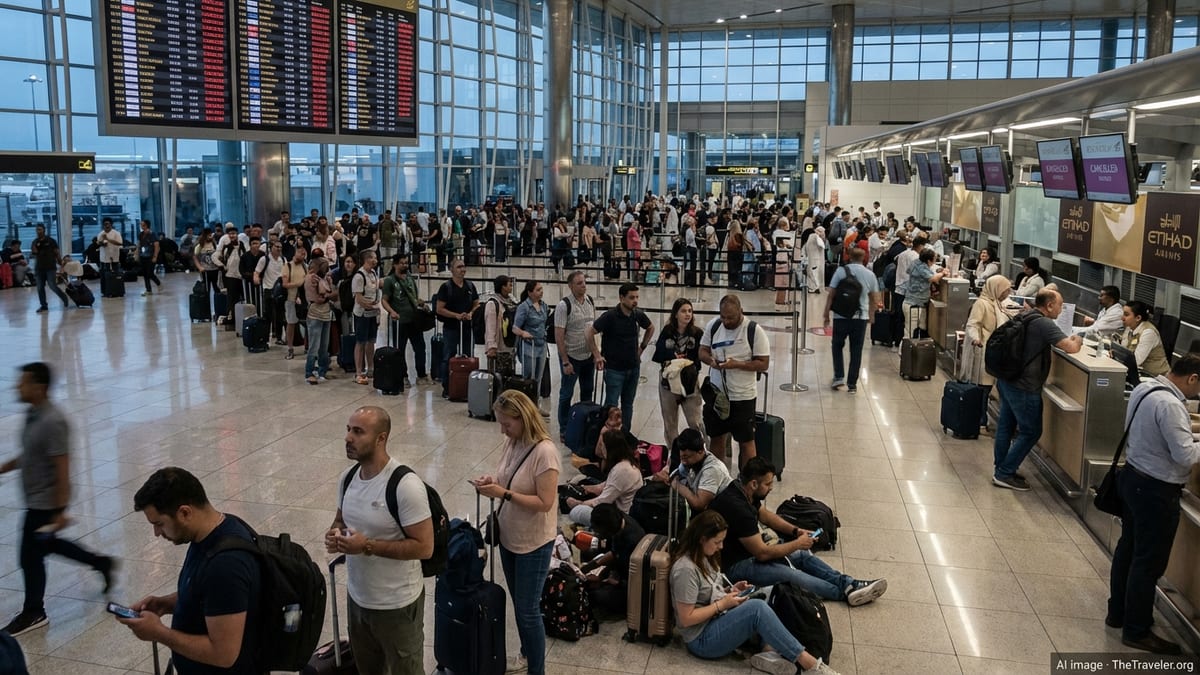
Targeted cancellations on Kuwait and Bahrain routes
Published coverage in recent days indicates that services between the UAE and Kuwait remain among the most affected, following heightened security concerns and airspace advisories across the Gulf. Reports show that multiple carriers, including Emirates, Etihad, Air Arabia and flydubai, have cancelled or consolidated flights on the Kuwait route over the past week, focusing disruptions on short‑haul regional services rather than long‑haul operations.
Gulf-based outlets report that Emirates cancelled a series of flights between Dubai International Airport and Kuwait International Airport in the days leading up to July 27, while Etihad extended the suspension of selected Abu Dhabi to Kuwait services for operational reasons linked to the wider regional situation. Similar adjustments have appeared on Bahrain routes, where Abu Dhabi flights were temporarily halted for several days as airlines reassessed schedules and aircraft deployment.
Despite these disruptions, the overall network for both Emirates and flydubai is largely intact, with the majority of departures operating as scheduled. However, passengers booked on Kuwait and Bahrain services are being urged in public advisories to treat their itineraries as subject to change at short notice, given that airspace guidance and local security assessments can shift quickly.
Industry analysts note that airlines are prioritising network resilience by trimming frequencies on shorter regional sectors, which can be more easily rebooked, in order to protect high‑demand long‑haul connections through Dubai. This approach allows carriers to preserve core transfer flows while still responding to operational and safety requirements.
Emirates operations: mostly stable but with pockets of disruption
Emirates’ live flight‑status tools show that the airline is operating the vast majority of its global schedule from Dubai today, with only a limited number of cancellations or significant delays. Earlier in the summer, the carrier had already restored a large share of capacity that had been reduced during the height of recent regional airspace closures, and current patterns suggest a focus on fine‑tuning rather than wholesale cuts.
Recent news reports highlight that Emirates has been issuing repeated travel advisories over the past week, urging customers to check their flight status before leaving for the airport and to arrive early to allow extra time for security checks and busy terminals. These notices emphasise that while airports in the UAE remain open and functional, conditions can evolve quickly if tensions in neighbouring states flare.
Operational data and public commentary indicate that the main disruptions for Emirates continue to cluster around specific Gulf destinations affected by security advisories, particularly Kuwait and Bahrain, rather than across the broader long‑haul network. Long‑distance services to Europe, Asia, Africa and the Americas from Dubai appear largely stable, though some flights may face extended routings or modest delays as aircraft avoid sensitive airspace.
Travel industry observers add that Emirates has been using schedule adjustments and aircraft swaps to manage crew and fleet utilisation, helping to keep most long‑haul sectors intact while absorbing the impact of any last‑minute airspace changes. For passengers, this can translate into departure‑time shifts or equipment changes even when a flight is not fully cancelled.
flydubai schedule adjustments and passenger options
Low‑cost carrier flydubai, which operates an extensive regional network from Dubai, has also been adjusting its timetable in response to evolving conditions. According to publicly available information, the airline continues to operate most of its flights, including key routes to major cities in the Middle East, North Africa, and parts of Europe and Asia, but has rerouted or cancelled select services where airspace restrictions or security considerations apply.
Flydubai’s customer information pages outline standard procedures for flight delays and cancellations, explaining that passengers on disrupted services may be rebooked on the next available flight or offered vouchers or refunds in line with the airline’s existing policies. The carrier notes that some flights have been temporarily rerouted to avoid restricted airspace, which can increase flight times and lead to knock‑on delays across the network.
Travel‑advice coverage stresses the importance of monitoring booking details closely, as both Emirates and flydubai share information systems for certain itineraries and are notified automatically of any delays that may affect connecting flights. Passengers are being encouraged to use airline mobile apps and online booking tools to keep contact details up to date so they can receive disruption alerts in real time.
For travellers with imminent departures on flydubai, especially to Kuwait, Bahrain or other points directly affected by recent advisories, industry guidance recommends checking flight status repeatedly in the 24 hours before departure. Where possible, passengers may be able to switch to alternative dates or nearby destinations if schedules tighten further.
Impact of wider regional tensions on UAE air travel
The current pattern of cancellations and disruptions in and out of the UAE cannot be separated from the broader security environment in the Gulf. Aviation agencies in Europe and elsewhere have issued conflict‑zone bulletins advising airlines to exercise caution or avoid specific airspace segments over parts of the region, including sectors above the Gulf of Oman and portions of the skies over Qatar, Bahrain, Kuwait and the UAE.
These advisories do not close airspace by themselves, but they influence airline risk assessments and routing decisions. In practice, carriers like Emirates and flydubai have been adjusting flight paths to add distance between their aircraft and areas of concern, which in turn can lengthen flight times and compress available aircraft‑turnaround windows at Dubai and other hubs.
Regional and international media also point to isolated incidents, such as reported interceptions of drones near Kuwait, as triggers for short‑notice schedule changes. While such events may not lead to blanket shutdowns of airports, they can prompt precautionary cancellations or temporary suspensions on specific routes while security checks are carried out.
Even so, Dubai International Airport and other major UAE gateways continue to process high passenger volumes. Travellers transiting through Dubai over the past week have described busy terminals and largely normal operations, albeit with occasional delays as air traffic is sequenced around restricted areas.
What passengers flying today should do
For travellers booked to fly with Emirates or flydubai on July 27, the key advice from publicly available guidance is to verify flight status repeatedly in the hours before heading to the airport. Airline and airport channels remain the primary sources for up‑to‑the‑minute information on delays, gate changes and any late‑breaking cancellations.
Passengers are urged to build in extra time at departure airports, both to navigate potential queues and to accommodate last‑minute schedule shifts. Many travel advisories recommend arriving at least three hours before departure for international flights from Dubai, and potentially earlier during peak periods or when travelling with checked baggage.
Those whose flights are affected by cancellations or substantial delays should review the rebooking and refund policies posted on Emirates and flydubai information pages. In many cases, passengers may be offered the option to move to an alternative date, accept a travel voucher, or pursue a refund, depending on fare rules and the cause of the disruption.
Travel experts also suggest that passengers maintain flexible onward arrangements where possible. Given the potential for rolling changes linked to regional tensions, holding refundable hotel bookings or allowing for additional connection time on separate tickets can reduce the risk of knock‑on costs if flight plans change suddenly.