


More news on this day
Travellers flying through Dubai and Abu Dhabi are facing mounting disruption as security tensions in the Gulf trigger airspace warnings, schedule changes and updated travel advisories for the United Arab Emirates.
Get the latest news straight to your inbox!
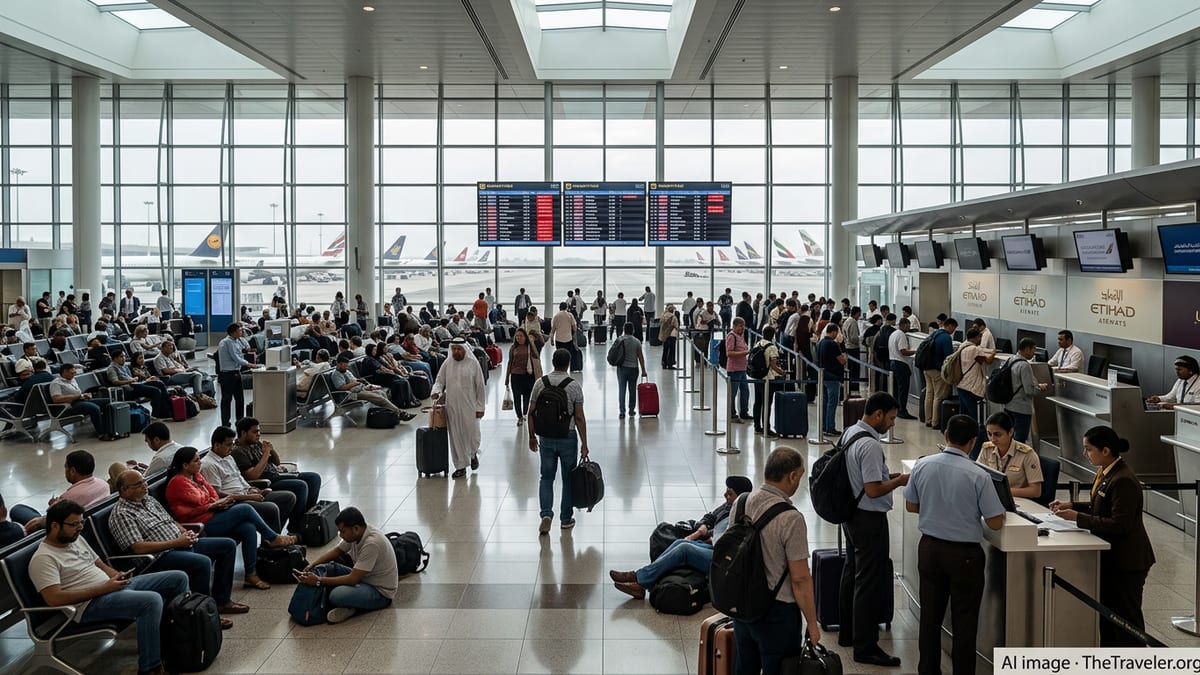
Heightened tensions translate into flight disruption
Published coverage on September 2, 2026 shows flights to and from the UAE experiencing significant disruption, with delays and cancellations affecting services at Abu Dhabi’s Zayed International Airport and Dubai International Airport. Reports highlight that renewed hostilities between the United States and Iran have led to airspace restrictions across parts of the Gulf, complicating routings for both local and international carriers.
Information from regional outlets indicates that Etihad Airways departures from Abu Dhabi have been among the most affected, with delays on routes to Europe, Asia and the wider Middle East. Additional knock-on delays have been recorded for Air Arabia Abu Dhabi and Air India Express flights serving destinations such as Cairo, Bahrain, Sialkot, Faisalabad and Tbilisi.
Dubai International Airport has also seen schedule changes, with later arrival times for a number of long haul services. Flights from major European hubs including London Heathrow, Manchester, Geneva, Bologna, Munich and Lyon, as well as services from Moscow, Toronto, Houston, San Francisco and Los Angeles, have all been listed as operating behind schedule or with altered timings.
These operational challenges come on top of an already busy early September travel period, as residents return from summer holidays and business travel picks up. Airlines are balancing the need to avoid higher risk airspace with efforts to maintain connectivity through one of the world’s most important long haul hubs.
Government advisories urge caution for travel to the UAE
In parallel with airline disruptions, several governments have refreshed their travel advice for the UAE and the wider region. Updated guidance from foreign ministries advises travellers to reconsider non essential trips due to the evolving security environment, referencing recent military strikes and reprisal attacks across parts of the Middle East.
Publicly available advisories warn that military conflict in the region may result in rapid airspace closures, flight cancellations and other restrictions that can affect itineraries at short notice. Travellers are urged to check the status of flights to, from and through the UAE before departure, and to stay alert to changes that may occur after they have begun their journey.
Guidance also notes that UAE airspace can open or close quickly in response to security assessments, which may affect operations at both Abu Dhabi and Dubai airports on the same day. Passengers are encouraged to monitor local news, follow official alert systems from their home governments and avoid areas considered at higher risk, such as military or critical energy facilities.
While the overall advisory level varies by country, there is consistent emphasis on maintaining flexible plans, having contingency arrangements for onward travel, and ensuring that travel insurance adequately covers disruption related to regional conflict.
Airlines adjust schedules and routings in the Gulf
Airlines based in the UAE and abroad are responding to the situation with a mix of temporary suspensions, rerouting and timetable changes. Coverage from Gulf based media indicates that Emirates, Etihad, flydubai and Air Arabia are continuing to operate many services, but with adjustments on selected routes where airspace or demand is most affected.
International carriers have taken a more cautious stance on certain city pairs. Reports show that some European airlines have extended suspensions of flights to Dubai, Abu Dhabi or other Gulf and regional destinations into mid or late September, in line with updated conflict zone guidance from the European Union Aviation Safety Agency. Others have resumed limited operations while continuing to avoid specific flight paths.
Travel alerts from at least one major European airline state that flights to and from Dubai are paused until late October, with rebooking and refund options available for passengers. Similar notices from North American and Asian carriers outline flexible change policies for trips involving the UAE and nearby countries, underlining that schedules remain subject to further revision.
For travellers, these varied responses mean that connections into and out of Dubai and Abu Dhabi may depend heavily on the chosen airline and transit points. Those with complex itineraries that rely on multiple carriers are being advised to reconfirm each segment and consider alternative routings where necessary.
What travellers transiting Dubai and Abu Dhabi should do now
With operational conditions shifting from day to day, airlines are directing passengers to use digital tools as a first line of information. Emirates, Etihad and other Gulf carriers provide live flight status pages and encourage customers to keep contact details up to date in their bookings in order to receive disruption alerts by email or SMS.
Travel updates sections on airline websites set out current advisory notices, including any route suspensions, special waiver policies and guidance on when to arrive at the airport. Passengers who booked through travel agencies are typically instructed to contact their agent for rebooking or refund support if their flight is cancelled or significantly delayed.
Airport operators in Dubai and Abu Dhabi are also publishing general flight status information online, though travellers are often reminded that details can change quickly during periods of disruption. As a result, industry guidance suggests checking both the airport site and the operating airline’s channels shortly before leaving for the airport.
Given the fluid security backdrop, travel experts recommend allowing extra time for connections, avoiding tight layovers and carrying essential items in hand luggage in case of unplanned overnight stays. Flexible tickets, accommodation that permits date changes and comprehensive travel insurance may help mitigate some of the financial impact of sudden schedule changes.
Outlook: short term uncertainty for a major global hub
Analysts note that the UAE’s aviation sector has a long record of adjusting quickly to geopolitical shifts, from previous regional tensions to global health crises. However, the current stand off involving the United States and Iran introduces additional complexity for carriers that rely on overflight permissions and stable airspace corridors across the Gulf and beyond.
Conflict zone information bulletins from European regulators currently extend into late September, signalling that airlines may continue to operate with added caution for several weeks. This may translate into longer flight times on some routes, changes of departure times, or temporary use of alternative gateways in the wider region.
For now, published guidance consistently highlights the importance of closely monitoring official channels rather than relying on historic timetables or past experience of travelling through Dubai and Abu Dhabi. Travellers with imminent departures are advised to stay in close contact with their airline and to be prepared for last minute changes until regional conditions stabilise.
Those planning travel later in the year may wish to track how advisories and airline schedules evolve through September, as this period is likely to shape expectations for the northern winter season, traditionally one of the busiest times for UAE inbound tourism and long haul transit traffic.
UAE travel advisory: Flights delayed and cancelled at Dubai and Abu Dhabi airports – The National
United Arab Emirates travel advice – Smartraveller
UAE flight update today – Gulf News
United Arab Emirates Travel Advisory – U.S. Department of State