


More news on this day
Travellers flying through Dubai and Abu Dhabi are being advised to prepare for possible delays and cancellations, as flights at both airports face disruption linked to regional security concerns and early‑September weather conditions.
Get the latest news straight to your inbox!
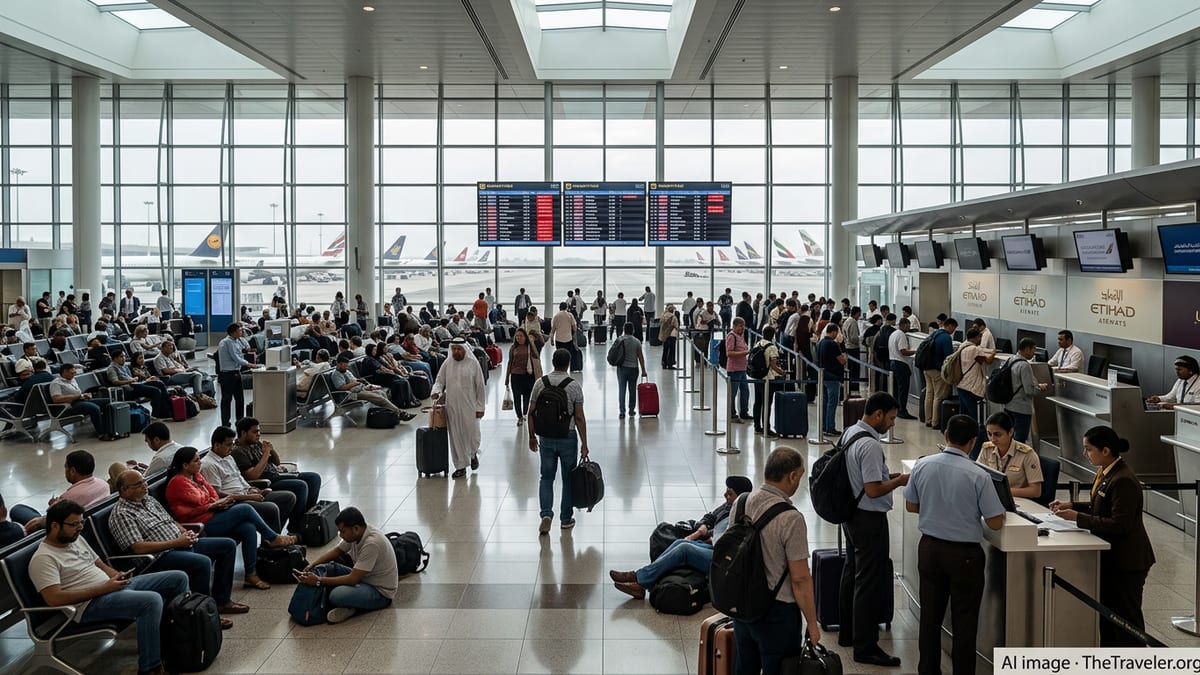
Regional tensions and airspace warnings unsettle UAE flight schedules
Publicly available flight and aviation data show that airlines operating to and from the United Arab Emirates are managing an unsettled operating environment at the start of September, with some services delayed or cancelled and others rerouted. Coverage from Gulf-based media indicates that renewed tensions between the United States and Iran have prompted a series of airspace risk advisories over parts of the Gulf region, adding complexity to flight planning for carriers serving Dubai and Abu Dhabi.
The European Union Aviation Safety Agency has extended its conflict-zone information bulletin for Gulf airspace through the end of September, highlighting continued caution for routes that pass near areas of potential military activity. Reports indicate that this is contributing to longer routings for some flights and occasional last-minute schedule changes, particularly on services connecting the UAE to destinations in the wider Middle East and Europe.
Regional airlines based in the UAE, including Emirates, Etihad, flydubai and Air Arabia, have maintained the majority of scheduled operations but continue to publish advisories reminding passengers that timings may change at short notice. International carriers have also updated their travel-alert pages to reflect altered routings and, in some cases, suspended services on specific routes touching the UAE, reinforcing the message that conditions remain fluid.
Abu Dhabi’s Zayed International sees scattered delays across key routes
According to latest reports from Abu Dhabi, Zayed International Airport is experiencing scattered arrival and departure delays affecting a mix of regional and long-haul services. Flight-status snapshots published by UAE media on September 2 list multiple Etihad Airways flights running behind schedule on routes from major South Asian cities such as Islamabad, Karachi, Delhi and Peshawar, as well as European and leisure destinations including Rome, Prague, Lisbon, Bangkok and Phuket.
Low-cost and regional operators are also affected. Air Arabia Abu Dhabi services from Ahmedabad, Calicut, Cairo, Sialkot, Bahrain, Faisalabad and Tbilisi have appeared on delay lists, alongside at least one Air India Express flight from Delhi. The disruptions are described as uneven rather than uniform, with some waves of flights operating close to schedule while others experience hold-ups on the ground or in the air.
Travel-focused coverage emphasises that airport operations in Abu Dhabi remain active, with terminals open and aircraft continuing to depart and arrive throughout the day. However, the pattern of rolling, route-specific delays means that passengers with tight connections or fixed onward plans are more exposed to disruption, making advance planning and real-time monitoring increasingly important.
Dubai operations pressured by rerouting, congestion and wider regional fallout
Dubai International Airport, one of the world’s busiest hubs, is also operating in a challenging environment shaped by regional airspace constraints and heavy traffic volumes at the end of the summer holiday period. Airport information channels point travellers to live flight-status tools and a dedicated travel and business advisory hub, underlining that schedules may be adjusted with limited notice as airlines respond to changing conditions.
Gulf-based aviation coverage notes that Dubai carriers are contending with a combination of longer routings, slot pressure and high passenger loads, particularly on services linking the emirate to nearby Gulf states and key regional hubs. Some flights are being re-timed or subject to extended taxi and holding periods, contributing to knock-on delays across wider networks.
Operational updates from individual airlines suggest that rerouted flight paths around sensitive airspace are adding minutes or even hours to certain journeys, which in turn affects aircraft and crew rotations at Dubai. While there is no indication of a comprehensive shutdown of operations, the overall picture is one of a tightly run hub managing day-to-day variability, where even minor disruptions can quickly cascade through busy banks of arrivals and departures.
Fog alerts and aviation weather advisories heighten risk of morning disruption
In addition to geopolitical factors, weather is emerging as a seasonal complication for UAE air travel. The country’s National Center of Meteorology and associated aviation-meteorology services have issued fog alerts for the early hours of September 2, warning of significantly reduced visibility over parts of Dubai, Abu Dhabi and surrounding areas. Historical data cited in local coverage show that similar conditions have previously affected key approach and departure corridors, including routes near Al Maktoum International Airport and stretches of highway linking Abu Dhabi and Dubai.
Fog and low cloud are particularly disruptive for early-morning arrivals and departures, when many long-haul flights from Europe and Asia are scheduled to land at UAE hubs. In such conditions, air-traffic controllers typically reduce runway capacity to maintain safety margins, which can quickly lead to queues of aircraft waiting to land or depart. Even when visibility improves later in the morning, it can take several hours for the operation to work through accumulated delays.
Current aviation meteorology bulletins for the UAE highlight the availability of 24-hour forecasts and specific airport outlooks for Abu Dhabi and Dubai, together with dedicated weather advisories for pilots and airlines. While modern navigation and landing systems help airports maintain movements in marginal conditions, prolonged or patchy fog can still force last-minute changes to approach patterns and may require some flights to divert or hold, lengthening flight times for passengers.
What travellers should do: monitor status, allow extra time and know your rights
Foreign-office travel pages and airline advisories for the Middle East region consistently recommend that passengers be prepared for unexpected flight cancellations, periodic airspace closures and short-notice schedule changes. Government travel advice for the UAE specifically urges visitors and residents to monitor local and international media, and to check airport and airline channels regularly for updates that could affect their journeys.
In practice, this means using airline apps and websites to confirm departure and arrival times before leaving for the airport, and again after clearing security, as gate changes and delays can still occur close to boarding. For those transiting through Dubai or Abu Dhabi, building additional buffer time into connections can reduce the risk of missed onward flights, especially on itineraries that involve separate tickets or different carriers.
Airlines typically outline disruption policies on their customer-support pages, including options for rebooking, refunds and accommodation in the event of severe delays or cancellations. Passengers booked on affected flights are usually given the option to change travel dates or routes without additional change fees, subject to fare conditions and seat availability. Travellers are also encouraged by industry guidance to keep receipts for any reasonable out-of-pocket expenses incurred during extended disruptions, in case these can be claimed back later under airline or travel-insurance rules.
Given the combined effects of regional tensions, evolving airspace guidance and seasonal weather patterns, observers expect a period of continued uncertainty for some UAE-bound and connecting flights over the coming weeks. For now, the central message for travellers using Dubai and Abu Dhabi airports is to stay informed, remain flexible where possible and make full use of digital tools that provide live operational updates.
UAE travel advisory: Which flights are delayed at Abu Dhabi airport? - The National
UAE flight update today: Emirates, Etihad, Air Arabia status - Gulf News
Foggy mornings and weather alerts in Dubai and Abu Dhabi - Gulf News