


More news on this day
Flight disruption across the United Kingdom is expected to gradually ease after a major air traffic control systems failure, even as pressure mounts on the head of the country’s air navigation provider to resign over a third serious breakdown in just over three years.
Get the latest news straight to your inbox!
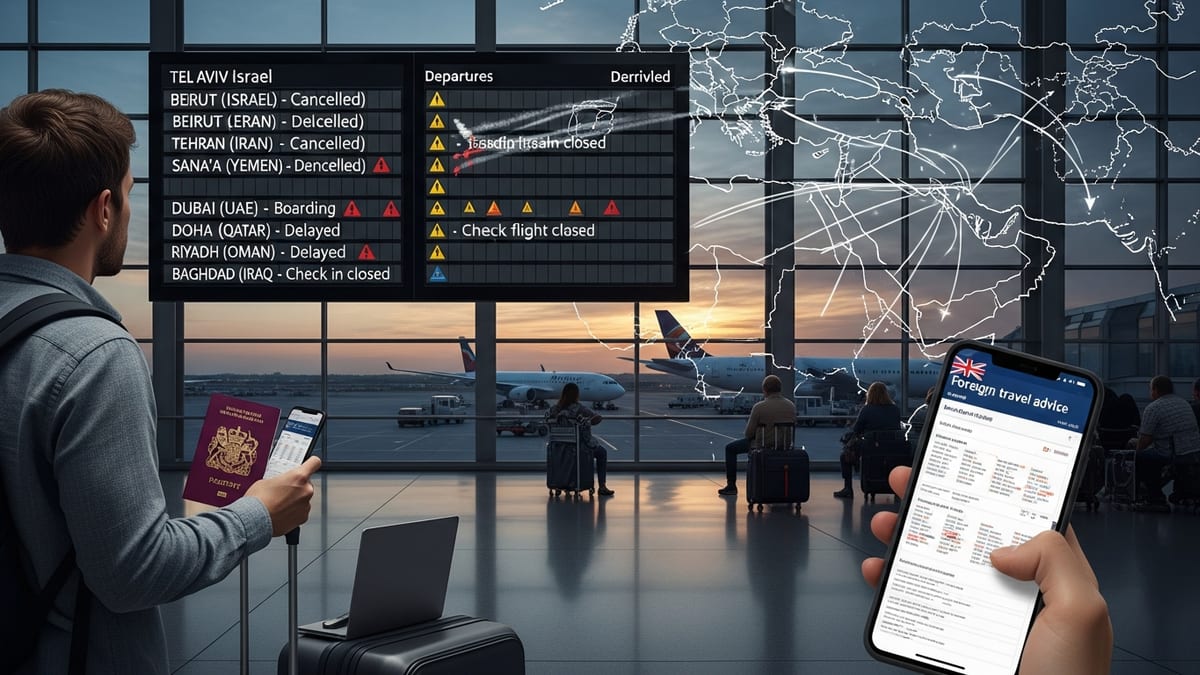
Schedules stabilise but knock-on delays linger
Airports and airlines across the UK report that traffic is starting to recover after a technical issue at National Air Traffic Services (Nats) triggered widespread cancellations and delays. Reports indicate that flights are operating again at major hubs including Heathrow and Gatwick, but with reduced resilience as aircraft and crew are repositioned.
According to aviation analytics cited in industry coverage, more than 1,750 flights were cancelled on the worst day of the disruption, with hundreds more affected as the problem spilled into a second day. Travel trade reporting suggests that at least 153 further flights were cancelled the following morning, underscoring how even a short outage can translate into prolonged disruption as airlines work through backlogs and duty-time limits.
Heathrow has advised that operations are running, but that some irregularities remain while airlines reshuffle their schedules. Passengers are being urged in public statements to verify that their flight is confirmed before heading to the airport and to expect continued queues at check-in, security and rebooking desks as the system resets.
Industry bodies estimate that well over 300,000 passengers have been caught up in the latest failure, with many facing overnight stays, missed connections and long waits for alternative flights. Consumer advocates note that compensation may be limited because the outage is being treated as a systems failure outside airlines’ direct control, though carriers remain responsible for basic care and assistance.
Airlines demand accountability and leadership change
The operational recovery is unfolding against a backdrop of mounting criticism of Nats chief executive Martin Rolfe. Recent reports from UK and Irish news outlets highlight that this is the third major breakdown affecting flights under his tenure, intensifying scrutiny of how the organisation manages resilience and contingency planning.
Low-cost carriers Ryanair and Wizz Air have publicly renewed calls for sweeping reform of the UK air traffic control system and, in Ryanair’s case, for Rolfe’s resignation. Statements published through media channels and corporate sites argue that a critical piece of national infrastructure should not repeatedly bring large parts of the aviation system to a standstill, and that previous assurances following a serious 2023 outage had not prevented a fresh collapse.
Trade associations representing UK airlines have also called for change, with one letter reported by national media describing the latest incident as a “shocking” failure and urging the government to explore structural reforms. Airlines argue that they bear the brunt of passenger frustration and financial loss when air traffic control systems fail, despite having limited influence over the technology and staffing underpinning those services.
For now, Nats has said through published statements that a technical fix has been implemented and that it is working with airports and airlines to restore full operations. Nevertheless, the political and commercial pressure surrounding senior leadership appears likely to grow as investigations probe what went wrong and whether mitigation steps taken after earlier failures were sufficient.
Government scrutiny and formal investigations under way
The UK government has moved quickly to seek answers on the causes of the outage and the robustness of Nats’ systems. National media report that Rolfe has been summoned to brief the transport secretary, with a deadline of one week set for an initial investigation into the glitch and its network-wide impact.
The Civil Aviation Authority (CAA), which regulates Nats, has indicated in public comments that it expects a detailed report on the failure and its operational consequences. The regulator previously required Nats to review contingency arrangements following the 2023 incident in which automatic processing of flight plans malfunctioned, leading to widescale cancellations across UK airports.
Policy discussions are also expanding beyond the immediate technical cause to consider broader questions of capacity and resilience in European air traffic management. European institutions and Eurocontrol have repeatedly warned in recent analyses that many national air traffic control systems are operating close to capacity, leaving limited margin to absorb shocks from equipment failures, severe weather or military activity.
Parliamentary debates and European reports over the past two years have highlighted chronic staffing shortages, aging infrastructure and slow progress on cross-border reforms as key risk factors. The latest UK outage is likely to feed into these wider conversations, with lawmakers and regulators assessing whether network design, backup systems and maintenance regimes are keeping pace with rising traffic volumes.
Broader implications for European air travel
The disruption in UK airspace has had ripple effects for airlines and passengers across Europe, particularly on routes linking major hubs with North America, the Middle East and holiday destinations around the Mediterranean. When a primary control system in such a dense piece of airspace fails, knock-on congestion can quickly spread as flights are rerouted or held on the ground elsewhere.
Recent European Commission and Eurocontrol briefings warn that a small number of states are responsible for a large share of air traffic delays, and that constrained capacity leaves little room to reroute traffic when problems arise. Documents prepared for EU transport ministers note that any combination of strong traffic growth, bad weather, industrial action or technical failure can cause bottlenecks that cascade across the continent.
Airlines have used the latest UK incident to renew long-standing calls for a more modern and better funded air traffic control network in Europe. Industry statements following other recent system failures, including in Greek airspace, stress that passengers have repeatedly faced mass delays and cancellations because of technology and staffing shortcomings beyond carriers’ control.
At the same time, union briefings and parliamentary research point to the pressures facing air traffic control staff, including high workloads, training backlogs and the complexity of managing increasingly crowded skies. Any reform effort will need to balance demands for reliability and efficiency with the need to maintain safety and manageable working conditions for controllers.
What travelers should expect in the coming days
For passengers with upcoming trips via the UK, the immediate outlook is gradually improving. Flight schedules at Heathrow, Gatwick and other major airports are expected to stabilise over the next several days as airlines complete aircraft repositioning and clear stranded customers from previous departures.
Travel experts advising through media channels recommend that passengers remain flexible, closely monitor airline apps and websites, and build in extra time at airports in case of residual queues or gate changes. Those with complex itineraries or cruise connections are being urged to reconfirm downstream arrangements, as missed flights in recent days may continue to affect availability on popular routes.
Consumer organisations are also reminding travellers that, even when compensation may not be payable due to the nature of the failure, airlines still have obligations around meals, refreshments and accommodation during extended delays or overnight stays. Travel insurance may also offer additional protection, depending on policy wording and the length of disruption.
While the technical issue at Nats has been addressed, the political and regulatory fallout is likely to continue long after flight patterns return to normal. For frequent flyers and the wider tourism industry, the incident serves as another reminder that the resilience of Europe’s air traffic control infrastructure is now as central to travel planning as the weather or seasonal demand.
RTE: Ryanair, Wizz Air call for Nats overhaul after UK flight disruption
The National: Second day of chaos at UK airports after air traffic control glitch
Travel Weekly: ATC failure fallout continues with more flight disruption
Sky News: UK airports disruption after air traffic control failure