


More news on this day
UK travelers are being urged to check updated Foreign, Commonwealth & Development Office (FCDO) guidance after a recent round of travel advice revisions highlighted 36 countries where the government now warns against all travel due to security, political and crime risks.
Get the latest news straight to your inbox!
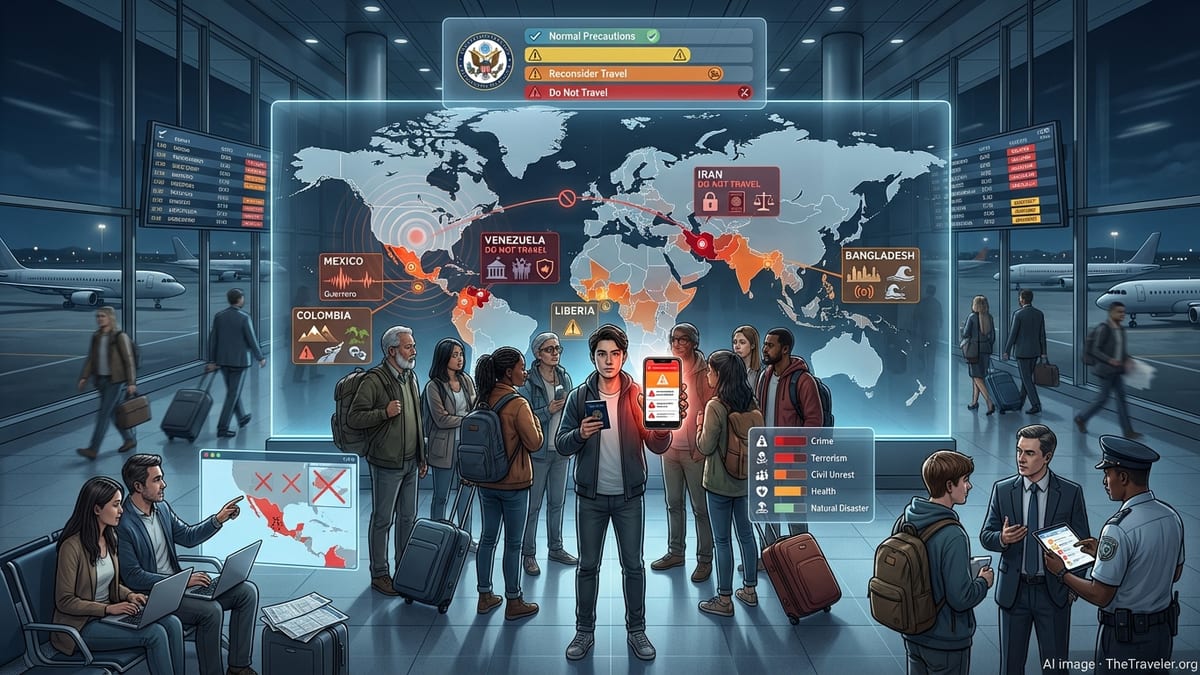
What the Foreign Office ‘do not travel’ warning means
The FCDO issues country-by-country travel advice for UK nationals, ranging from general safety information to formal warnings that advise against “all but essential travel” or “all travel.” When a country, or part of it, is placed in the highest category, it is effectively on a “do not travel” list, signalling that the risk to visitors is judged to be unacceptably high.
According to official guidance, these assessments weigh factors such as armed conflict, terrorism, civil unrest, widespread violent crime, breakdown of law and order, and serious limitations on consular support. Publicly available information shows that the FCDO also considers whether local authorities can guarantee basic services, including functioning transport links, healthcare and emergency response.
While the list of locations subject to an “all travel” warning changes over time, the latest round of updates has drawn attention because of the breadth of destinations involved. Reports indicate that 36 countries are now covered in full by this strictest level of advice, excluding cases where only specific regions are flagged inside an otherwise accessible country.
Travel to these destinations is not legally banned for UK citizens, but insurance coverage is usually invalidated where the FCDO advises against all travel. Airlines and tour operators frequently cancel or reroute services once a country moves into this category, making trips difficult or impossible in practice.
Conflict, terrorism and state collapse drive many of the alerts
A significant proportion of the countries now subject to “do not travel” guidance are affected by open conflict, insurgency or severe political instability. Publicly accessible FCDO and partner-country advisories show that destinations such as Afghanistan, Syria and parts of the Sahel in Africa have long appeared in the highest warning tier because of ongoing fighting, the presence of armed groups and the absence of reliable state control.
In several cases, travel warnings have hardened over time as security conditions deteriorated. In Myanmar, for example, international advisories reference intensifying clashes between the military and resistance forces, restrictions on movement and communications, and an unpredictable security environment in many regions. Similar patterns are visible in states such as Sudan and Yemen, where conflict has disrupted basic infrastructure and raised acute humanitarian concerns.
Terrorism risk is another recurring factor. Travel advice for countries including Somalia, Mali and parts of Iraq highlights the presence of extremist organisations capable of conducting large-scale attacks, as well as the risk of kidnapping and targeted violence against foreigners. These assessments are often shared across multiple governments, with the United States and other allies issuing parallel “do not travel” alerts for the same locations.
Even where front lines are distant from major cities, fragmented control, armed checkpoints and sudden changes in local power dynamics can make overland movement dangerous. That unpredictability is a key reason given in public explanations of why some destinations remain on the list for extended periods, even if there are no daily headlines about fighting.
Crime and governance concerns keep some destinations on the list
Not all of the 36 countries are active war zones. In several, pervasive violent crime, weak law enforcement and limited judicial capacity are central to the elevated warning level. Government advisories for some parts of Latin America and the Caribbean, for instance, cite persistent high rates of homicide, armed robbery, carjacking and kidnapping, often linked to organised crime and gang activity.
Public information from travel advisory services indicates that in certain states, security incidents have directly affected tourists and expatriates, sometimes on main transport routes, in urban centres or in popular resort areas. In these settings, the challenge for visitors is that risks can spike rapidly, and local policing resources may be overstretched or compromised by corruption.
In other cases, governance and legal concerns are as prominent as crime statistics. Some countries on the “do not travel” roster have highly restrictive legal environments, opaque judicial systems or widespread use of arbitrary detention. Advisories commonly stress that foreign nationals may not receive the same legal protections as at home, and that due process guarantees may be limited or absent.
Where severe human rights issues intersect with fragile institutions and limited consular access, the threshold for the FCDO to advise against all travel is often met, even if day-to-day life appears calm in parts of the country. The rationale is that when emergencies arise, outside help may be difficult or impossible to secure.
What this means for travelers with existing plans
For UK residents who have already booked trips, the presence of a destination on the Foreign Office “do not travel” list has immediate practical implications. Travel insurance policies commonly refer to FCDO guidance, and many explicitly exclude cover if a traveler chooses to visit a country where the government advises against all travel. That can affect medical cover, evacuation support and compensation for cancellations.
Airlines and tour operators typically monitor the same official updates. When risk ratings change, carriers may adjust flight schedules, reroute services or cancel operations altogether. Package holiday providers often use government advice as a basis for offering refunds or alternative destinations, particularly where an updated warning makes it impossible to deliver the advertised trip.
Travel industry advisories recommend that anyone planning to go abroad checks the latest country page on the official FCDO travel advice site before confirming flights or accommodation. Because these pages are updated frequently, relying on out-of-date summaries or third-party lists can lead to misunderstandings about whether a particular area is currently considered safe enough for non-essential visits.
Reports from consumer and insurance groups also highlight the need to read policy wording carefully. Some policies distinguish between advice against “all but essential travel” and “all travel,” while others use broader exclusions that apply whenever any part of a country is under heightened warning, even if the planned destination is not specifically mentioned.
How to stay informed as the list evolves
The composition of the FCDO’s “do not travel” list is not static. Changes in conflict dynamics, political agreements, improvements in policing or infrastructure, and shifts in regional risk can all lead to upgrades or downgrades in advice. Conversely, sudden events such as coups, major terrorist attacks or natural disasters may trigger rapid tightening of guidance.
To keep pace with these changes, official platforms allow users to sign up for email alerts for individual country pages. This means travelers considering a trip months ahead can monitor developments and adjust plans if the risk profile worsens. Specialist travel insurers and operators focused on adventure or expedition travel also maintain their own risk assessments, often drawing on the same public information but applying additional criteria tailored to their clients.
Analysts note that global travel advisories have become more granular in recent years, distinguishing between regions within countries and highlighting specific cities, border zones or transport corridors where risk is most acute. Even so, once the FCDO determines that the overall national picture fails basic safety thresholds, an “all travel” warning can cover the entire state.
For travelers, the key message is that these classifications are intended as risk indicators rather than blanket bans. Individuals remain responsible for their own decisions, but taking account of the latest official guidance is central to planning any international trip, particularly where security conditions are volatile or governance is fragile.