


More news on this day
Value Group plans to use the 27th GHI Annual Conference at Olympia London from 1 to 3 December 2026 to demonstrate how its integrated RUBIK technology ecosystem, global supplier network and 24/7 operations control center can help airlines and ground handlers manage flight disruptions more consistently while tailoring support to conditions at each airport.
Get the latest news straight to your inbox!
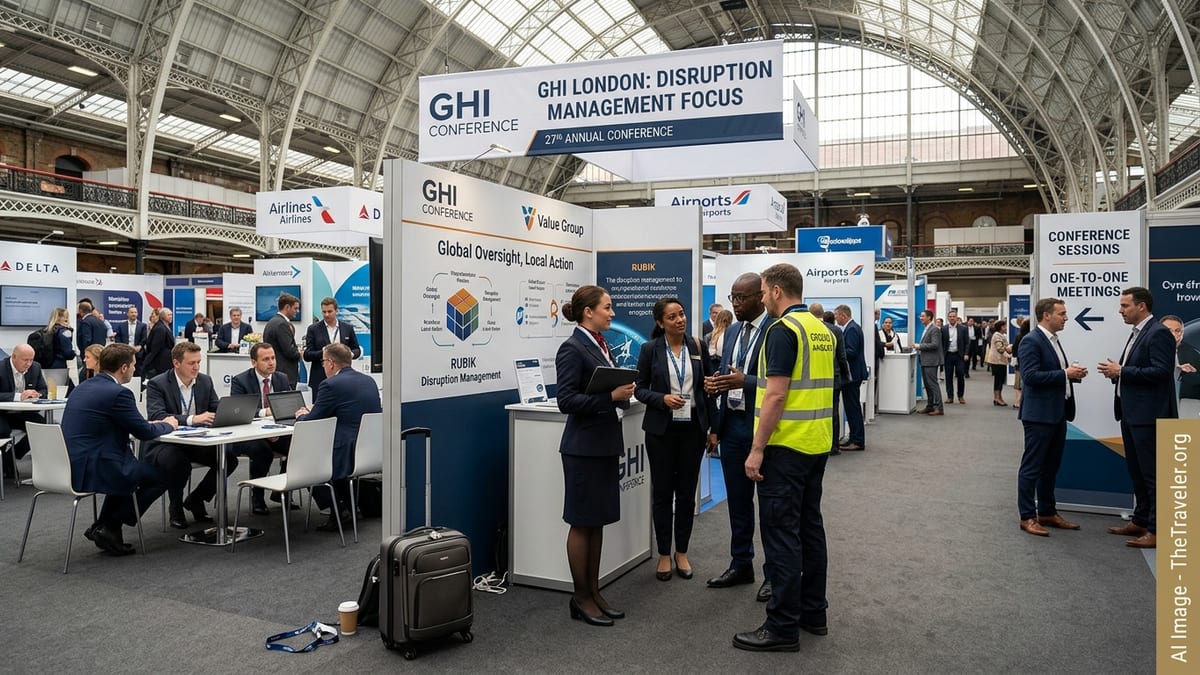
GHI London 2026 provides a platform for disruption management focus
The 27th Annual GHI Conference is scheduled to take place at Olympia London from 1 to 3 December 2026, bringing together airlines, airports, ground handlers, ground support equipment providers and IT suppliers for three days of meetings, conference sessions and an exhibition focused on ground operations. The event is organized by Ground Handling International and is billed by the host as its flagship gathering for the global ground handling community, following an edition in 2025 that drew more than 1,000 delegates and more than 100 airline representatives.
The 2026 London conference programme published by GHI confirms that sessions will run at Olympia across all three days, with an agenda that combines keynote panels, case studies and technical briefings on topics such as safety on the ramp, digitisation of ground processes and changing passenger expectations. Organisers highlight the event as a venue where carriers and handling agents can benchmark performance, discuss regulatory developments and meet suppliers in structured one-to-one meetings, alongside informal networking functions that extend into the evening.
For disruption management providers such as Value Group, the London setting and broad delegate mix provide an opportunity to reach both airline decision makers and the ground handling companies that manage passenger care at airports. The company says it is returning for a second consecutive year as an exhibitor and plans to dedicate its stand presence and meetings to explaining how a coordinated model for irregular operations, or IROPS, can support handlers who face passengers directly when flight plans unravel.
Inside Value Group’s “Global Oversight, Local Action” model
Value Group describes its approach to disruption management as “Global Oversight, Local Action,” a framework designed to give airlines central visibility over large route networks while allowing local airport teams and ground handlers to make timely decisions on the spot. According to the company’s latest announcement, the model is structured around three main components: the RUBIK digital ecosystem, a 24/7 Operations Control Center and a contracted network of local accommodation, transport and service suppliers in key markets.
Within this setup, the Operations Control Center monitors airline disruptions around the clock, coordinates recovery scenarios and ensures that information and instructions flow between airline control rooms, airport stations, handlers and suppliers. RUBIK, which the company positions as its core technology platform, is used to automate many of the manual tasks traditionally associated with disruption recovery, such as allocating hotel rooms, arranging ground transport, coordinating meal vouchers and recording which passengers have accepted or modified proposed solutions.
The “local action” element is provided by ground handlers and station-level partners, who implement recovery plans at the airport and interact with passengers. Value Group indicates that its platform is intended to connect these handlers with both the airline and local suppliers in real time, allowing staff to see current capacity for hotels and transport, confirm bookings and keep track of changing passenger needs. The company says the aim is to reduce fragmented handoffs that can occur between airline call centres, airport desks and third-party vendors when irregular operations affect multiple flights or hubs at once.
How RUBIK and RUBIK GO aim to change passenger recovery
Value Group’s RUBIK ecosystem is presented as a digital environment that supports both self-service and assisted disruption recovery. For passengers who are able and willing to manage their own arrangements, the company says RUBIK enables digital self-handling, where affected travellers can access rebooking options, confirm accommodation and receive ground transport details via their personal devices without waiting in physical queues. In practice, the specific integration and user interface will depend on how each airline chooses to connect its systems with the platform.
For more complex situations, including passengers with reduced mobility, unaccompanied minors or travellers facing language barriers, Value Group emphasises continued reliance on human support. The company states that RUBIK works alongside dedicated operational teams, ground handlers and a service known as RUBIK GO, which is designed to provide on-the-ground assistance where digital self-service alone would not be sufficient. According to Value Group’s description, RUBIK GO is focused on ensuring that passengers who require personal attention can still be guided through the recovery process while the technology handles underlying logistics and supplier coordination.
The company also highlights its use of disruption forecasting for events that can be anticipated in advance, such as large-scale weather systems or planned airspace closures. In these scenarios, Value Group reports that it monitors local accommodation and transport capacity, issues pre-alerts to suppliers and prepares operational resources before the disruption peaks. The stated intention is to help airlines and handlers secure rooms and vehicles earlier, when availability is greater, and to have clear procedures ready when passengers begin to be affected, rather than building a response reactively once queues have already formed.
Role of ground handlers and implications for travellers
Ground handlers are positioned by Value Group as central partners in its integrated disruption model, reflecting their role as the primary point of contact for passengers at the airport. In material published ahead of the London conference, the company notes that handlers are the ones who face travellers directly when cancellations, long delays or missed connections occur, yet they often depend on information and approvals from airline headquarters or remote call centres. By linking handlers more closely with the airline’s recovery strategy and local suppliers through RUBIK, Value Group argues that handlers can resolve more cases at the airport without extensive back-and-forth.
For travellers, the potential implications are primarily in speed and consistency of care rather than in any visible branding change. If an airline chooses to work with Value Group, passengers may notice that disruption communications, hotel vouchers and transport details arrive through digital channels more quickly, or that rebooking and care options are presented earlier in the process. However, the exact experience will still depend on each airline’s policies on compensation, rerouting and accommodation, which are set by the carrier and regulated by applicable passenger rights legislation rather than by Value Group itself.
The company does not publish detailed performance statistics in its latest public statements, so independent data on how much faster or more consistently disruptions are resolved using its model is not currently available. Instead, Value Group focuses its communications on qualitative benefits for operational teams, including reduced repetitive workload for handlers and station staff, and on freeing frontline employees to concentrate on passengers who need in-person assistance while routine cases are handled digitally.
What to watch at Olympia London and next steps for airlines and handlers
At the London event from 1 to 3 December 2026, Value Group is expected to use its stand and scheduled meetings to walk airline and ground handling delegates through specific disruption scenarios, demonstrating how RUBIK, the Operations Control Center and local partners interact during large-scale irregular operations. While the full list of exhibitors and session speakers continues to evolve in the run-up to the conference, GHI’s published materials indicate that digitalisation of ground operations and passenger experience will feature in multiple panels and case studies, providing a broader context for discussions about integrated recovery models.
For airlines and handlers planning to attend, the main practical consideration is how any potential collaboration would integrate with existing reservation systems, departure control platforms and on-airport processes. Decisions about adoption, timelines and network coverage would typically be taken after the conference, following technical and commercial evaluations by the carriers and service providers involved. As of late November 2026, Value Group’s announcement focuses on presenting its model and capabilities in London rather than on confirming specific new airline partnerships tied to the event.
Travellers will not see immediate changes as a direct result of the GHI conference itself, but passengers flying with airlines that choose to implement or expand Value Group’s services over time may encounter more digital self-service options during disruptions and more structured support from ground handlers at affected airports. As always, passengers facing irregular operations are advised to check their airline’s latest communications, verify their contact details in booking profiles, and review applicable passenger rights rules for the regions in which they are flying, since entitlements to refunds, rerouting or compensation are governed by regulation and carrier-specific policies rather than by third-party disruption management providers.