


More news on this day
Unusually intense rains linked to a strengthening El Niño have triggered severe flooding on Santa Cruz Island in the Galápagos, temporarily disrupting access to Baltra’s main airport, damaging roads and prompting the authorities to close several popular beaches and visitor sites while safety checks and clean-up continue.
Get the latest news straight to your inbox!
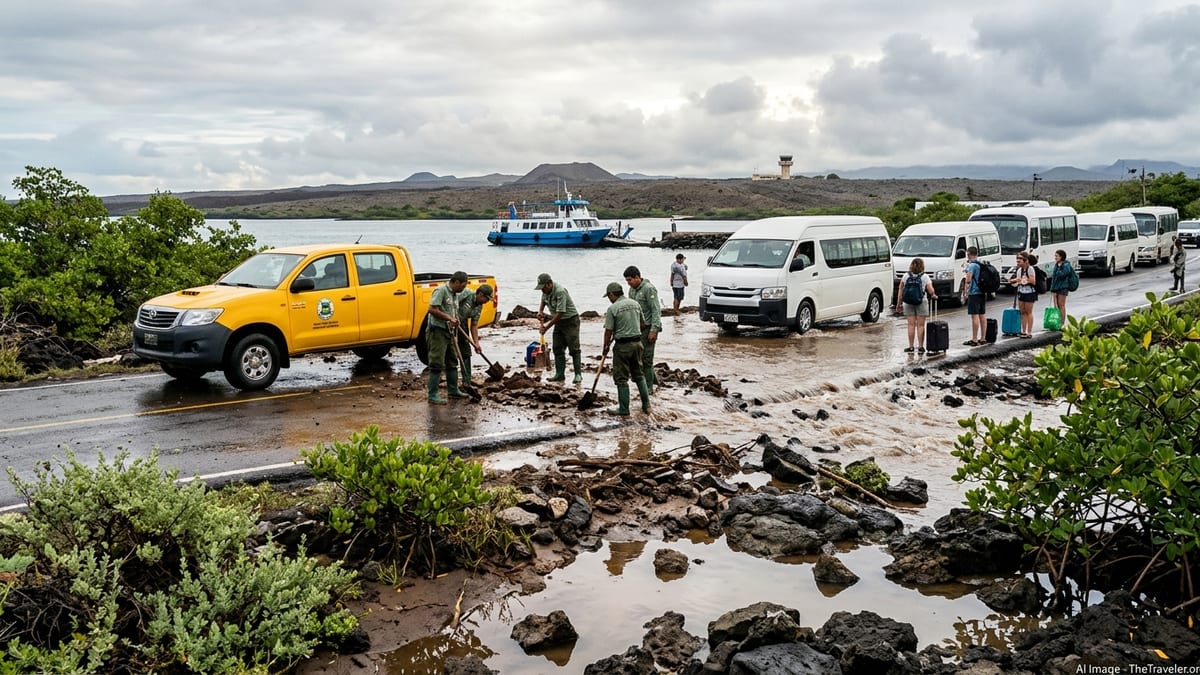
Heavy rains and flooding hit Santa Cruz and key transport links
The heaviest impacts of the current rainy spell were recorded on October 30 and 31, 2026, when intense downpours over the highlands of Santa Cruz caused drainage channels to overflow and flood parts of Puerto Ayora and nearby rural areas. Ecuador’s National Risk Management Service reported inundated streets, affected homes and localized damage to infrastructure in neighborhoods including La Unión, La Cascada and Las Orquídeas, as well as along the main road linking Puerto Ayora with the channel crossing to Baltra.
The same rainfall event was powerful enough to cut electricity in some sectors of Santa Cruz and force temporary evacuations, according to official situation reports that attribute the flooding to the combination of prolonged heavy rain and the overflow of natural ravines. Local authorities estimate that around 2,000 residents were directly or indirectly affected on Santa Cruz, with several dozen people initially sheltering in public facilities while waters receded and homes were inspected.
While damage within the built-up areas of Puerto Ayora has been largely confined to low-lying streets and some hillside access roads, the flooding also washed debris onto the arterial road that connects Puerto Ayora with the Itabaca Channel, where passengers transfer by ferry to reach Seymour (Baltra) Airport. That corridor is critical for almost all visitors arriving on national flights from mainland Ecuador and then traveling onward by boat or land-based tour across the archipelago.
Baltra (Seymour) Airport operations and ongoing flight delays
Seymour Airport on Baltra Island, the main air gateway to the Galápagos, has remained structurally intact, but its operations were temporarily disrupted in the immediate aftermath of the storms. According to aviation and industry reports from early November, airport staff and local authorities spent several days clearing standing water and debris in access areas and verifying that runways, taxiways and safety systems had not been compromised.
During that period, flights between Baltra and mainland Ecuador continued to operate but with delays, diversions and altered ground-handling procedures. Some departures were postponed while passengers and staff took longer alternative routes on the Santa Cruz side to bypass damaged or partially blocked sections of the road to the Itabaca Channel. In a limited number of cases, travelers reported missed connections on the mainland when outbound flights left late because arriving aircraft and crews had been delayed by bad weather or logistics in the islands.
By the first week of November, Seymour Airport had returned to what local officials described as normal or near-normal operations, with the runway fully available and regular schedules largely restored. However, airlines and tour operators have continued to warn of the possibility of short-notice timetable changes when heavy rainfall returns, reflecting the fact that access roads on Santa Cruz remain vulnerable to further washouts or landslides while emergency repairs are under way.
Beach and visitor-site closures following flooding and contamination risks
Beyond the transport impacts, flooding and associated incidents have led the Galápagos National Park Directorate and municipal authorities to close or restrict access to several beaches and coastal visitor sites. Earlier temporary closures on Santa Cruz have included Playa de la Estación and nearby coves in Puerto Ayora when the park authority deemed that environmental risks, including water contamination from urban runoff and debris, made it unsafe for aquatic tourism activities.
The late October storms added a new layer of concern because fast-moving water from the highlands carried sediment, organic material and solid waste into low-lying areas and toward the coast. Environmental and risk-management agencies have indicated that, in the short term, this can degrade water quality in certain bays, particularly near urban outfalls and small ports. As a result, park rangers have periodically suspended swimming, snorkeling and other in-water excursions at selected urban-adjacent beaches until monitoring confirms conditions have stabilized.
These closures have typically been localized and temporary, lasting from several hours to a few days, and are applied site by site. Iconic remote visitor locations that are accessed only by authorized tour boats, such as uninhabited islands and offshore islets, have generally remained open, although some itineraries have been adjusted when operators judge that heavy weather, strong currents or poor visibility would compromise safety or wildlife-viewing quality.
El Niño and why the flooding matters for travelers now
The current flooding episode is occurring as meteorological agencies and researchers warn that the 2026–2027 El Niño event is likely to be stronger than average, bringing warmer sea-surface temperatures and heavier-than-usual rainfall to the eastern tropical Pacific. Scientists working with Ecuadorian institutions have publicly cautioned that such conditions can significantly alter ecosystems in the Galápagos, affecting food chains and vegetation in ways that may persist beyond a single rainy season.
For visitors, the most immediate implications are logistical rather than ecological. Periods of intense rain can temporarily damage or block roads linking towns, ports and airports on the inhabited islands, slowing transfers and, in extreme cases, forcing detours or coordinated convoys while crews work to remove debris. Even when airports like Baltra remain technically open, airlines may delay or reschedule flights because of wind, visibility or staffing issues associated with the storms, which can have knock-on effects for hotel check-in times, cruise embarkations and inter-island connections.
At the same time, the pattern of closures on beaches and visitor sites shows that local authorities are taking a precautionary approach when they suspect contaminants or unsafe sea conditions following floods or strong swells. That means travelers may find that some of the more easily accessible urban beaches close at short notice after heavy rain, even when the sun has returned, while park rangers carry out inspections and, when necessary, coordinate clean-up work with municipal crews and tour operators.
What visitors should check and expect in the coming weeks
With the core rainy season typically stretching from roughly December to March, authorities and tour companies expect that further intense showers are likely in the months ahead, especially if El Niño conditions strengthen as forecast. Emergency management agencies on the islands have already mobilized equipment and personnel to monitor drainage channels, bridges and key stretches of the Santa Cruz highlands road, in an effort to respond more quickly if water levels rise again.
Travelers planning trips to the Galápagos over the next few weeks and months are being advised to pay close attention to airline notifications on the days before departure, to allow extra time for transfers between Puerto Ayora and the Baltra ferry dock, and to maintain close contact with their cruise line or local operator for any last-minute adjustments to itineraries. Flexible arrangements on the first and last nights of a trip can reduce the risk of missed international flights if a domestic leg between the islands and mainland Ecuador is delayed.
Prospective visitors should also be prepared for isolated beach or trail closures to continue on short notice when heavy rain or coastal conditions warrant, particularly around Puerto Ayora and other populated areas. Checking in with park-authorized guides, visitor center staff or hotel front desks on the day of an excursion is likely to provide the most up-to-date information on which sites are fully open, which have limited access and whether any specific safety advisories are in place as the Galápagos manages the ongoing effects of this unusually wet season.