


More news on this day
United Airlines is projecting a sharp Labor Day travel surge at Chicago O’Hare International Airport, with the carrier expecting passenger numbers to climb about 23% compared with the same holiday weekend last year.
Get the latest news straight to your inbox!
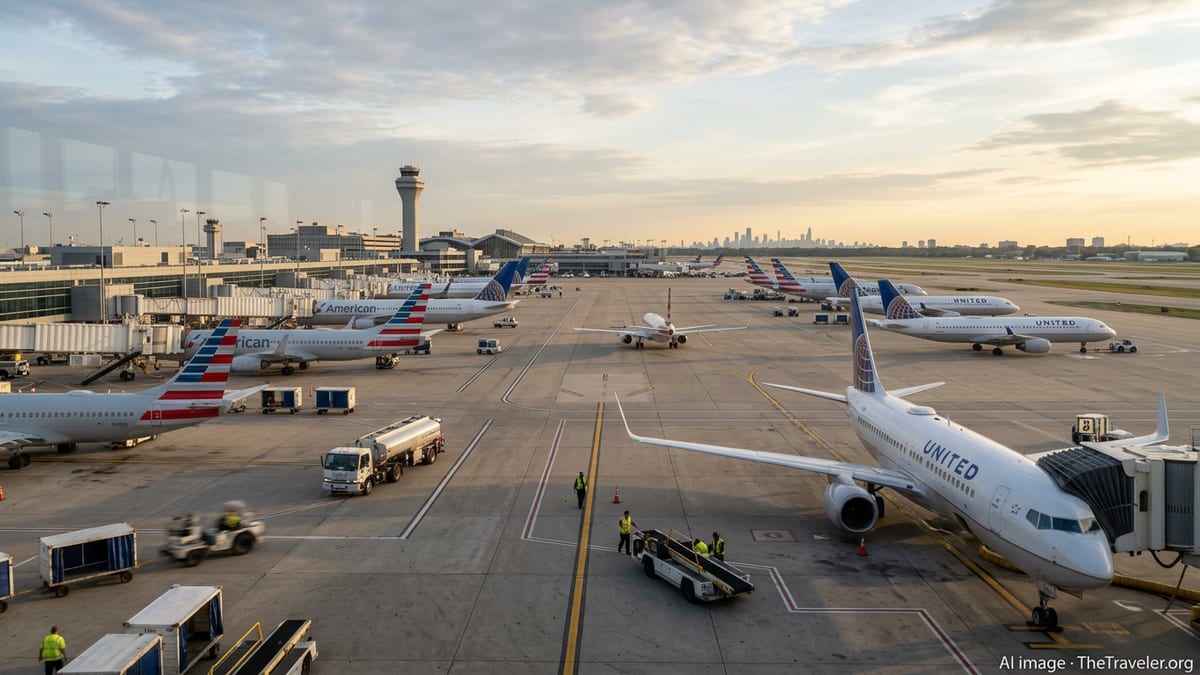
Chicago O’Hare Braces for One of Its Busiest Labor Day Weekends
Publicly available data and local coverage indicate that more than half a million passengers are expected to move through O’Hare over the Labor Day travel window, placing Chicago among the country’s most heavily traveled hubs for the unofficial close of summer.
Reports focused on United’s Chicago operation point to a 23% year-over-year increase in the airline’s Labor Day passenger count at O’Hare, a jump that significantly outpaces typical annual growth in domestic air travel. The spike reflects both robust leisure demand and the carrier’s expanded schedule from its Midwest hub.
Nationally, industry forecasts show airlines preparing for one of the busiest Labor Day periods on record, with large carriers anticipating millions of customers over just a few days. United alone expects about 3.4 million passengers across its network for the holiday, roughly 300,000 more than in 2025, according to recent broadcast and online coverage.
The growth at O’Hare builds on a summer in which the Chicago area has repeatedly recorded near-record or record passenger volumes during peak holiday periods, reinforcing the airport’s role as a major gateway for both domestic and international itineraries.
Hub Growth and Added Capacity Drive United’s Chicago Momentum
United’s projected 23% Labor Day traffic increase at O’Hare comes on the heels of a broader expansion of the airline’s Chicago operation. Company and city releases over the past year describe the hub as one of the fastest-growing in the United network, supported by new gates, added routes and higher daily departures.
Earlier in 2026 United outlined plans for what it described as its largest-ever summer schedule from O’Hare, targeting up to about 750 flights per day, significantly more than competing carriers at the airport. Public information on those plans emphasized Chicago’s importance as a central connection point in the airline’s global network, particularly for Midwest and transatlantic traffic.
In addition, the carrier has been allocated new gates and has introduced multiple new domestic destinations from O’Hare, according to prior announcements. Those changes enabled higher seat capacity and greater frequency on key routes leading into and out of Chicago, setting the stage for the strong holiday demand now emerging around Labor Day.
Forecast tables published by the Chicago Department of Aviation also show steadily rising United enplanements at O’Hare in recent years, underlining how structural growth at the hub has combined with seasonal spikes to push passenger numbers to new highs.
Holiday Travel Patterns Highlight Chicago’s National Role
The Labor Day surge is part of a broader pattern that has seen Chicago’s airports regularly highlighted among the busiest in the United States during major holiday periods. For the Fourth of July travel window earlier this summer, city aviation forecasts pointed to the busiest Independence Day period on record at O’Hare, with hundreds of thousands of passengers traveling through the airport over several days.
Local business and travel outlets have also reported that peak days around national holidays can see single-day passenger totals in the hundreds of thousands at O’Hare alone, while United and other major airlines schedule additional flights or use larger aircraft to match demand. Those dynamics appear again around Labor Day, with the final long weekend of summer drawing both returning vacationers and early business travelers.
Travel trend coverage notes that demand is being fueled by a mix of factors, including resilient consumer spending on leisure trips, the continued popularity of domestic city breaks, and strong interest in last-chance summer getaways before the school year and fall work schedules fully resume.
For Chicago, the influx means hotels, attractions and restaurants are likely to benefit from the increased volume, particularly from inbound visitors connecting through O’Hare and extending their stay in the city.
Operational Pressures and What Travelers Can Expect
The sharp rise in expected United passenger volumes at O’Hare over Labor Day also highlights potential operational strains at an already busy hub. Aviation data from earlier holiday periods show that congestion can build quickly during peak departure waves, increasing the likelihood of longer security lines, crowded gate areas and pressure on baggage systems.
Industry coverage surrounding this year’s Labor Day weekend advises travelers across the United States to build in extra time at airports, noting that the busiest departure days are often the Thursday and Friday before the holiday. At O’Hare, that guidance is particularly relevant given the additional United passengers expected to pass through the carrier’s terminals.
United’s wider network performance in recent months, as reflected in its quarterly financial updates, points to sustained high volumes and a series of record passenger days during the summer. That experience may help the airline calibrate staffing, aircraft utilization and customer service resources at O’Hare to accommodate the Labor Day spike.
Travelers using Chicago as a connection point may still need to prepare for tighter margins between flights, along with the possibility of ripple effects if weather or air traffic constraints materialize during the holiday weekend.
Economic and Long-Term Implications for Chicago
The projected Labor Day surge underscores the wider economic importance of United’s Chicago hub. State and city leaders have repeatedly framed growth at O’Hare as a key contributor to jobs and tourism, as well as a signal of broader economic confidence in the region.
Publicly available planning documents and recent statements about O’Hare’s modernization efforts link higher passenger numbers, such as those United expects this year, with investment in terminals, concourses and airfield upgrades designed to handle long-term demand. The holiday spike therefore illustrates not only seasonal travel enthusiasm but also the structural role O’Hare plays in Chicago’s development strategy.
For residents and local businesses, sustained traffic growth can mean increased opportunities in hospitality, retail and transportation, while also raising questions about ground access, environmental impact and neighborhood quality of life around the airport. Observers will be watching whether holiday peaks like Labor Day continue to set new benchmarks in the coming years as airlines, including United, add capacity.
With United anticipating a 23% jump in passengers at O’Hare for Labor Day compared with 2025, Chicago enters the long weekend as one of the clearest examples of how surging air travel is reshaping major American hubs at the close of the summer season.
Chicago Business Journal: United expects 23% Labor Day traffic jump at O’Hare
ABC News: Labor Day traffic and travel outlook
City of Chicago: Holiday passenger forecasts for O’Hare
United Airlines Newsroom: Chicago O’Hare hub and schedule updates