


More news on this day
United Airlines is once more at the center of U.S. travel disruption, topping nationwide cancellation tables as fresh weather alerts and air-traffic constraints affect its major hubs in Chicago, Newark, Denver and San Francisco at the start of the Labor Day travel period.
Get the latest news straight to your inbox!
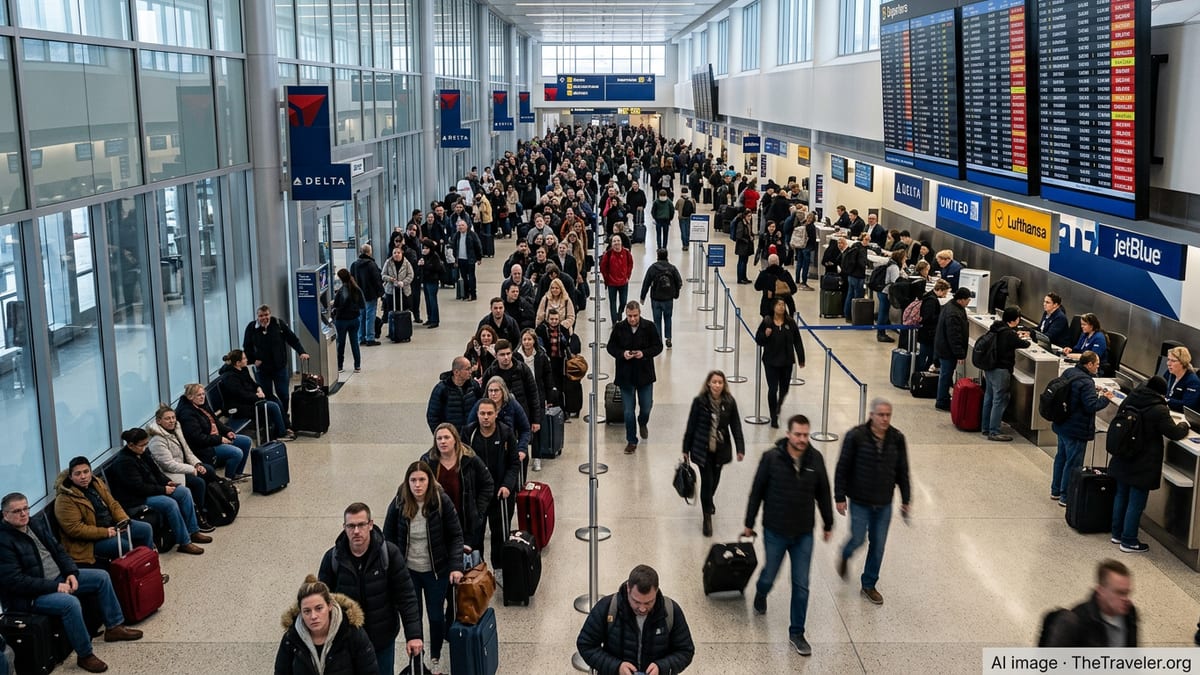
United’s Network Leaves It Exposed When Weather Turns
Publicly available tracking data show United leading U.S. carriers in flight cancellations on multiple recent stormy days, with its operation particularly hard hit when Chicago O’Hare and Newark experience ground stops or traffic management programs. Flight data provider FlightAware reports hundreds of cancellations within, into or out of the United States on peak disruption days, with United often contributing the largest share among individual airlines.
United’s hub-and-spoke model magnifies the impact. The airline operates large domestic and international banks through Chicago O’Hare, Denver, Newark Liberty and San Francisco International, among other hubs, concentrating aircraft and crews at a handful of locations. Corporate filings highlight that any significant interruption at one of these airports can quickly cascade through the network, forcing widespread delays and cancellations as aircraft and staff end up out of position.
Recent operational statistics and independent coverage indicate that these concentration risks are now colliding with an active late-summer weather pattern, leaving United disproportionately exposed when thunderstorms or low visibility repeatedly target the same metropolitan areas.
Industry analysts note that while all major U.S. carriers face similar meteorological challenges, United’s particularly heavy reliance on O’Hare and Newark, two of the country’s most delay-prone airfields, makes it more vulnerable when the National Airspace System is strained.
Chicago O’Hare Ground Stops Trigger Ripple Effects
Chicago O’Hare has been a focal point for the latest wave of disruptions. FAA advisories show repeated traffic management programs and arrival rate reductions driven by thunderstorms and convective weather over the upper Midwest, restricting the number of flights that can safely approach the airport during peak periods. According to published coverage drawing on FlightAware data, recent storms over Chicago produced more than 1,600 delays in a single day, the highest total of any airport worldwide at that time.
United, the largest carrier at O’Hare by departures, saw nearly half of its flights from the hub delayed on that heavily impacted day, with additional cancellations tied to a series of FAA ground stops. Those targeted measures temporarily halted departures bound for Chicago from airports across the United States, forcing rolling pushbacks, missed connections and a growing backlog of passengers.
As the disruptions stretched into the evening hours, knock-on effects were felt at downline stations across United’s network. Aircraft that were scheduled to operate late-night transcontinental or international departures out of Chicago arrived hours behind schedule or not at all, compelling the carrier to preemptively cancel some flights in order to reestablish its schedule for the following morning.
National Weather Service forecasts for the Chicago O’Hare area on September 1 indicate continuing adverse conditions, including a heat advisory and the potential for additional instability later in the day. While not all weather alerts translate directly into airfield restrictions, any renewed thunderstorm activity could once again limit arrival and departure rates at one of United’s most important hubs.
Newark, Denver and San Francisco Face Parallel Weather Warnings
Chicago is not the only pressure point. United’s coastal and mountain hubs are also operating under heightened weather awareness. Newark Liberty, the airline’s primary New York–area base, has experienced repeated summer thunderstorm outbreaks that have prompted multiple travel waivers in recent weeks. Publicly shared waiver notices have allowed customers traveling through Newark during specified storm windows to rebook without change fees, reflecting expectations of significant operational impact.
Denver, another key United hub, is highly sensitive to convective weather and strong winds along the Front Range. Federal aviation summaries and recent news coverage have documented previous instances where FAA ground stops or flow control initiatives at Denver, combined with United’s dense schedule there, have produced waves of cancellations similar to those now seen in Chicago.
On the West Coast, San Francisco International frequently contends with a different but equally disruptive phenomenon: low cloud ceilings and coastal marine layers that force the airport to operate on reduced arrival rates. National Weather Service observations for San Francisco International show variable visibility and cloud ceilings that can require the use of instrument approaches, slowing operations and prompting spacing requirements between inbound flights.
With four of its largest hubs facing, at various times, thunderstorms, low ceilings, heat advisories or strong winds, United has limited room in its network to re-route aircraft around trouble spots. The overlapping weather risks increase the likelihood that the airline will continue to sit near the top of national cancellation tallies when conditions deteriorate in more than one region simultaneously.
Data Show United Repeatedly Leading U.S. Cancellations
Real-time dashboard tools from FlightAware and other trackers present a recurring picture on recent high-weather-impact days: United appears at or near the top of both delay and cancellation counts among U.S. airlines. On one particularly disrupted late-August day, FlightAware statistics cited in industry reports showed nearly 7,000 delayed flights and more than 100 cancellations across the country, with United responsible for the largest block of scrubbed operations.
Historical context from congressional records and prior government briefings underscores that this pattern is not entirely new. Lawmakers have previously pointed to periods when United significantly outpaced competitors in cancellations, especially during holiday weekends or extended storm systems that repeatedly targeted its core hubs in Chicago, Newark and the broader Northeast.
The airline has argued in public communications that air-traffic control staffing constraints and infrastructure limitations at key airports amplify the impact of severe weather. Flight-tracking experts similarly note that when the FAA imposes ground stops that single out a specific carrier or hub, the carrier in question will naturally see a disproportionate share of cancellations, even if the underlying meteorological conditions affect a wider region.
Despite these caveats, the headline effect for travelers is clear: on many of the worst weather days this summer, passengers booked on United have faced a higher statistical likelihood of cancellation compared with those traveling on some rival carriers, particularly on itineraries that connect through Chicago O’Hare or Newark.
Travelers Brace for More Disruptions as Summer Closes
With the Labor Day period marking one of the final peaks of the U.S. summer travel season, the combination of unstable weather, congested hub airports and already tight airline schedules leaves little slack in the system. Any additional thunderstorms near Chicago or Newark, or marine-layer slowdowns at San Francisco, could tip United once again into leading the nation in cancellations on a given day.
Travel advisers and frequent flyers emphasize that passengers connecting through United’s big four weather-exposed hubs should be prepared for schedule changes when forecasts call for storms or low ceilings. Published guidance from regulators and airline consumer advocates stresses the importance of checking flight status early and often, using airline apps and flight trackers to monitor developing delays, and allowing extra connection time when possible.
While United’s management continues to highlight year-over-year improvements in overall reliability and on-time performance metrics, the latest bout of cancellations illustrates how quickly those gains can be overshadowed when multiple hubs face simultaneous weather warnings. For travelers, the immediate concern is less about long-term statistics and more about whether today’s flight will operate as scheduled.
If current weather patterns persist into September, industry observers expect United’s operations at Chicago, Newark, Denver and San Francisco to remain under pressure, sustaining the airline’s prominent position in national disruption tables even as the broader U.S. aviation system gradually shifts into a slower-paced autumn schedule.
FlightAware U.S. Cancellations Dashboard
Aero Crew News coverage of recent United disruptions
National Weather Service Chicago O’Hare forecast