


More news on this day
United Airlines has pushed back the planned relaunch of its Erie to Chicago O’Hare flights, with publicly available information indicating the long-awaited route will now begin no earlier than October 2027, extending a delay that has already frustrated many northwest Pennsylvania travelers.
Get the latest news straight to your inbox!
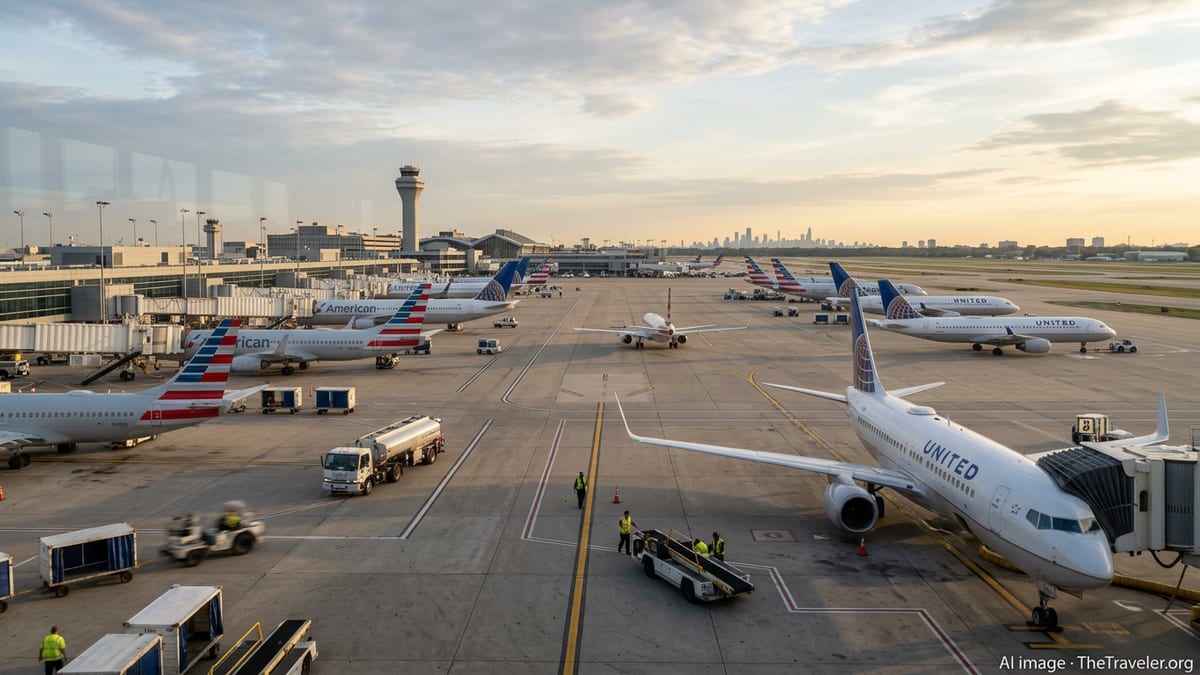
Service Once Slated for Summer 2026 Faces Multi‑Year Slip
The Erie to Chicago link was initially promoted as part of United’s broader 2026 expansion from Chicago O’Hare, with three daily Erie flights highlighted in late 2025 planning documents and airport communications as returning on June 1, 2026. That timeline has since shifted, and local travelers watching schedules and airport notices report that the start date has been moved out by roughly sixteen months.
Community discussion and traveler reports in recent days point to updated references indicating service will not resume in October 2026, as earlier suggested informally, but has instead been pushed back to October 2027. The adjustment effectively turns what was framed as a short‑term schedule change into a multi‑year postponement for nonstop United flights between Erie International Airport and Chicago O’Hare.
The change extends an already lengthy gap in United’s Erie presence. Chicago flights operated by the carrier ended in mid‑2023, and the 2026 restart had been billed as a restoration of connectivity to one of the nation’s largest hubs. With the latest delay, northwest Pennsylvania travelers now face at least four years between the last United departure from Erie and any potential resumption of service.
Published planning materials from aviation and regional sources have consistently underscored the importance of the Erie–Chicago link as part of a strategy to rebuild small‑city access to major hubs. The extended postponement therefore comes as a setback for local business and leisure passengers who had been anticipating a near‑term return of the route.
FAA O’Hare Capacity Caps Cited as Key Factor
The latest pushback appears to be closely tied to federal caps on daily operations at Chicago O’Hare. In recent months, aviation industry coverage has detailed how the Federal Aviation Administration is limiting the number of takeoffs and landings at O’Hare during peak periods as part of efforts to manage congestion while major terminal and airfield projects continue.
Analyses of these caps note that they are heavily affecting the largest hub carriers, particularly United and American, which had increased schedules at O’Hare in anticipation of strong summer demand. When the new limits take effect, airlines must trim or reshuffle flights to stay within the daily operation thresholds, and planners frequently look first at adjusting or delaying service to smaller markets.
Sector commentary on O’Hare’s capacity management indicates that some new and restored routes from the airport, including links to smaller cities, have been delayed from their previously announced launch dates. Earlier this year, industry newsletters described Erie among several communities whose planned service start was shifted from the original target month as carriers responded to FAA requirements.
Recent local discussion around Erie’s schedule changes references these O’Hare caps as the primary driver behind United’s decision to postpone the Erie flights past 2026. While no single factor is likely to explain the entire change, the combination of regulatory limits and ongoing construction work in Chicago appears to be shaping how and when airlines can add capacity to smaller regional destinations.
Regional Travelers Turn to Competing Options
With United’s return date receding into 2027, Erie‑area travelers are continuing to rely on competing air and ground options to reach Chicago and beyond. Other carriers already connect Erie to larger hubs, and regional flyers can also access additional nonstop Chicago service from airports such as Pittsburgh, Cleveland, and Buffalo, albeit with longer drives at the start and end of their trips.
Public discussions among Erie residents highlight a mix of strategies: some plan to use American’s service patterns once fully in place, while others opt to drive to larger airports for more frequent flights and lower fares. Travelers with flexible schedules point to overnight Amtrak service between Erie and Chicago as another alternative, noting that it can bypass some of the weather‑related disruptions that periodically affect O’Hare.
Still, the absence of a dedicated United link from Erie to Chicago reduces one‑stop access to a broad network of domestic and international destinations. Past promotional materials for the planned route stressed how three daily departures would have provided convenient same‑day connections to cities across the United States as well as to Europe, Asia, and Latin America through United’s O’Hare hub.
For frequent United customers based in northwest Pennsylvania, the extended delay may influence loyalty and booking patterns. Without a local United option, some flyers are likely to consolidate their travel with whichever carriers maintain the most reliable and convenient schedules from Erie and nearby airports over the next several years.
Economic Hopes on Hold for Erie International Airport
The prolonged postponement also has implications for Erie International Airport’s broader role in regional economic development. Publicly available filings and applications related to Erie’s air service have stressed that the community has struggled with reduced connectivity since the pandemic, with several routes either reduced or eliminated entirely.
Business groups and civic leaders in the region have previously argued that more robust air links are critical to attracting investment, supporting tourism, and keeping local companies competitive. The anticipated return of United service to Chicago in 2026 had been portrayed as a key part of that recovery narrative, promising more options for corporate travel, conferences, and inbound visits.
With the start date now seemingly shifted to October 2027, those expectations will need to be recalibrated. Instead of planning around immediate growth in flights and passenger numbers, airport stakeholders may face at least another year of focusing on incremental improvements with existing carriers and routes.
Analysts who track small‑market air service note that such multi‑year gaps can make it more challenging to rebuild passenger habits when flights finally do resume. Airlines weigh not only regulatory limits and operational costs but also demonstrated demand, and communities that have gone several years without a particular carrier must often invest significant effort in marketing and outreach when service returns.
Next Steps for Schedules and Travelers
For now, travelers watching the Erie–Chicago route have limited immediate options beyond monitoring airline schedules and airport updates. Industry practice suggests that any firm new start date will eventually appear in reservation systems and public timetables well before the first flight operates, giving passengers time to plan trips around the restored service.
In the meantime, travel experts recommend that Erie‑area flyers consider a mix of strategies to manage the uncertainty. These include building in longer connection windows when itineraries involve Chicago, comparing fares and schedules from nearby airports, and weighing the potential benefits of rail or driving for trips where time and flexibility permit.
The broader picture for O’Hare is also likely to evolve over the next year as construction progresses and terminal projects move closer to completion. Aviation planners expect that new gate capacity and improved layouts could eventually ease some of the pressure that led to the current flight caps, potentially opening more room for routes like Erie to be reintroduced.
Until those changes materialize, the Erie to Chicago link remains a future promise rather than a present option. For travelers and businesses in the region, the extended delay to October 2027 underscores how national capacity policies and major hub constraints can ripple outward to shape connectivity in smaller communities.