


More news on this day
United Airlines has issued a warning to its more than 28,000 flight attendants that manipulating rolling flight delays to trigger pay protection on trips they do not intend or are unable to work could result in serious discipline, including termination, highlighting new tensions around delay-related compensation as the carrier navigates a busy travel period.
Get the latest news straight to your inbox!
Memo Targets ‘Gaming’ of Rolling Delay Pay Protections
According to published coverage of an internal communication, United has identified what it describes as an “impermissible and fraudulent” pattern involving some flight attendants using anticipated or ongoing rolling delays to secure pay protection for trips they ultimately cannot operate. The practice centers on complex work rules that guarantee certain pay when flights are significantly delayed, canceled or reassigned after crew members have already committed to a sequence of duties.
Reports indicate that in the scenarios flagged by the airline, a flight attendant working a trip that is already facing rolling delays uses the company’s scheduling and trip-trading system to pick up an additional trip returning shortly after the first is due back. If the initial delay ultimately creates an illegal rest or duty-time conflict, the second trip drops from the schedule, but pay protections may still apply. Coverage of the memo suggests United views this as improper if the employee never reasonably expected to be able to work the added flying.([paddleyourownkanoo.com](https://www.paddleyourownkanoo.com/2026/09/05/united-threatens-to-fire-flight-attendants-who-game-rolling-delays-for-pay-without-working/?utm_source=openai))
Publicly available descriptions of the communication emphasize that the airline is not seeking to remove or weaken contractual delay pay protections themselves. Instead, the warning focuses on intent, stating that crew members must have both the intent and the ability to operate any trip they pick up or trade into, and that using advance knowledge of likely delays solely to trigger pay without flying could be treated as grounds for discipline.([paddleyourownkanoo.com](https://www.paddleyourownkanoo.com/2026/09/05/united-threatens-to-fire-flight-attendants-who-game-rolling-delays-for-pay-without-working/?utm_source=openai))
The memo, as summarized in industry and aviation news reports, references arbitration decisions that have upheld the principle that schedule trades require a good-faith intention to perform the work. United’s reminder appears designed to align flight attendant behavior with that standard as it applies to increasingly common rolling delays, which can shift departure times in small increments over many hours.([paddleyourownkanoo.com](https://www.paddleyourownkanoo.com/2026/09/05/united-threatens-to-fire-flight-attendants-who-game-rolling-delays-for-pay-without-working/?utm_source=openai))
How Rolling Delays and Trip Trading Interact
Rolling delays, which occur when departures are pushed back incrementally as conditions evolve, have become a regular feature of airline operations, particularly during periods of heavy traffic, severe weather or airspace constraints. For crew members, these shifting times can complicate federally mandated rest requirements and contractual duty limits, often forcing scheduling changes that trigger pay protections or reassignments.
United flight attendants, like their peers at other major carriers, use a computerized system to pick up, drop and trade trips, including close to departure when operational needs allow. Industry commentary notes that some employees may closely watch flights already showing substantial delays and then bid or trade into additional sequences that appear likely to become illegal to operate due to rest rules, creating the potential for pay without additional flying if the second trip later conflicts with the delayed first assignment.([thetraveler.org](https://www.thetraveler.org/united-warns-flight-attendants-over-gaming-rolling-delay-pay/?utm_source=openai))
Public explanations from union-focused resources typically frame pay protection as a negotiated safeguard against the financial impact of irregular operations. These protections are intended to ensure that flight attendants who are available and scheduled to work are not financially penalized when the airline’s operation breaks down because of factors outside their control. The new memo does not alter those rules but signals that United is scrutinizing how they are applied when employees use advanced operational information to shape their schedules.([thetraveler.org](https://www.thetraveler.org/united-warns-flight-attendants-over-gaming-rolling-delay-pay/?utm_source=openai))
A key operational question raised in external analysis is how precisely the company can determine intent in specific cases. While digital records can show the exact time a flight attendant picked up or traded into a trip, they may not clearly reveal what the employee knew about potential delays at that moment. Aviation commentators suggest that distinguishing legitimate use of open-time trading from attempts to secure a paid day off will likely hinge on detailed case-by-case reviews.([paddleyourownkanoo.com](https://www.paddleyourownkanoo.com/2026/09/05/united-threatens-to-fire-flight-attendants-who-game-rolling-delays-for-pay-without-working/?utm_source=openai))
Risk of Discipline Adds New Strain to Labor Climate
The warning arrives in a period of heightened focus on working conditions, scheduling stability and compensation for United’s flight attendants. Earlier this year, the airline and the Association of Flight Attendants reached a new agreement that addressed a range of economic and work-rule issues following an extended bargaining process. Public documents describing that agreement underscore the importance of predictability and robust protections in a network where delays and schedule disruptions are common.([united.mediaroom.com](https://united.mediaroom.com/2026-03-26-United-Reaches-New-Agreement-with-Association-of-Flight-Attendants?utm_source=openai))
Union-side resources and independent labor analysts often portray delay-related pay protections as among the most valued components of flight attendant contracts, arguing that they are essential to offset the unpredictable nature of the job. From that perspective, a carrier’s effort to police alleged abuse of such provisions can be seen as part of a broader tug-of-war over how far employees can go in using complex scheduling systems to balance quality of life with income opportunities.([thetraveler.org](https://www.thetraveler.org/united-warns-flight-attendants-over-gaming-rolling-delay-pay/?utm_source=openai))
For United, the communication also reflects a continued drive to maintain operational reliability and control labor costs as it manages one of the world’s largest route networks. The airline has previously highlighted the challenges that delays and staffing constraints pose to its operation, and has at times turned to incentive pay to encourage flight attendants to pick up extra flying during peak disruptions. The new message takes a different tack by signaling that some forms of opportunistic schedule management will not be tolerated.([united.mediaroom.com](https://united.mediaroom.com/2026-03-26-United-Reaches-New-Agreement-with-Association-of-Flight-Attendants?utm_source=openai))
Travel industry observers note that another major U.S. carrier, American Airlines, has reportedly confronted similar concerns about so-called “conflict trades” among its own flight attendants. In that case, discipline was described in coverage as limited, in part because existing contract language allowed certain trades regardless of an employee’s knowledge of delays. United’s stance may test how far a carrier can go in linking such trades to alleged misconduct when contractual protections remain in place.([paddleyourownkanoo.com](https://www.paddleyourownkanoo.com/2026/09/05/united-threatens-to-fire-flight-attendants-who-game-rolling-delays-for-pay-without-working/?utm_source=openai))
Implications for Travelers and the Wider Industry
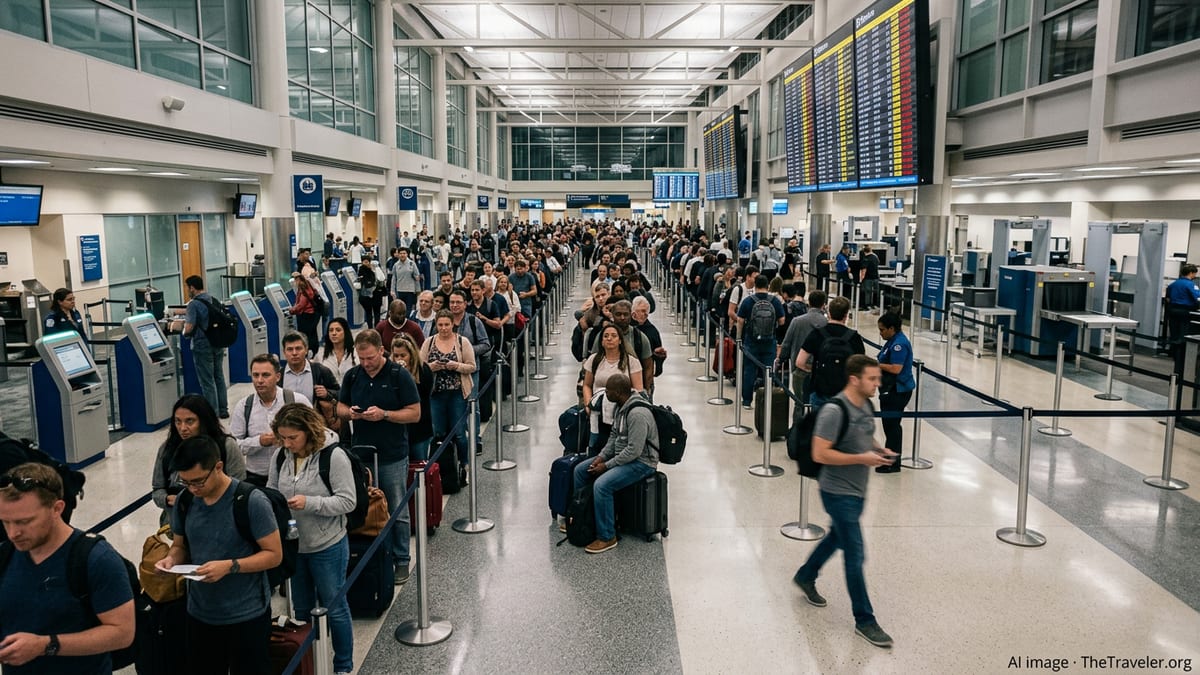
For passengers, the dispute is unlikely to change day-to-day interactions with crew in the near term, but it reflects the operational pressures that sit behind the scenes of delays, cancellations and tight crew connections. When rolling delays proliferate across a hub, scheduling systems must constantly rebalance aircraft, pilots and flight attendants to keep as much of the network running as possible. Any breakdown in that process can quickly ripple into missed connections and extended disruptions for travelers.
Aviation analysts suggest that airlines could invest further in technology capable of automatically flagging problematic trip trades or adjusting pay algorithms in real time, reducing the gray areas that now spark warnings like United’s memo. Some commentary questions why scheduling tools cannot simply prevent employees from picking up trips that are almost certain to become illegal based on existing delays, rather than relying on after-the-fact investigations and the threat of termination.([onemileatatime.com](https://onemileatatime.com/news/united-airlines-threatens-fire-flight-attendants-profit-off-delays/?utm_source=openai))
At the same time, delay statistics and regulatory reports show that much of the disruption experienced by major U.S. carriers in recent years has been driven by weather, air traffic control constraints and other systemic factors. Against that backdrop, labor advocates often argue that focusing on a relatively small subset of employees alleged to be “gaming” the system risks obscuring larger structural causes of operational volatility.([ground.news](https://ground.news/article/united-threatens-to-fire-flight-attendants-who-game-rolling-delays-for-pay-without-working?utm_source=openai))
How United ultimately enforces its warning, and whether it pursues high-profile disciplinary cases, will be closely watched across the industry. Other airlines, unions and regulators are likely to pay attention to how contractual pay protections, employee scheduling tools and operational data intersect, particularly as rolling delays remain a persistent feature of modern air travel.