


More news on this day
Urban rail systems across the globe are advancing on multiple fronts this summer, with cities investing simultaneously in new corridors, automation, safety upgrades and disruptive maintenance projects that are reshaping daily commutes.
Get the latest news straight to your inbox!
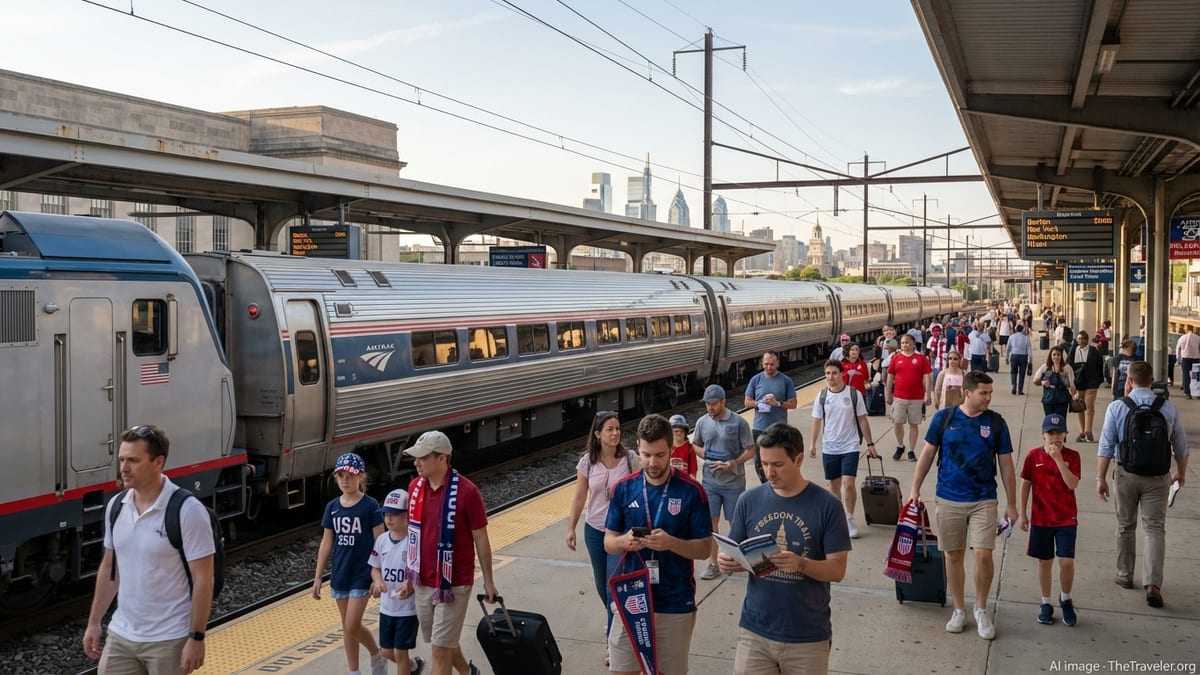
Major new urban and suburban rail links advance
Several high-capacity rail corridors have reached key milestones in recent weeks, underscoring the pace of expansion in urban and regional networks. In Türkiye, the Asian Infrastructure Investment Bank has approved up to 1.5 billion dollars in financing for the Istanbul North Rail Crossing Project, a 127 kilometer electrified double-track corridor that will connect the Asian suburb of Çayırova with Çatalca on the European side via the Yavuz Sultan Selim Bridge. Publicly available information indicates the line is designed to integrate airport rail links and the national high speed network, creating a powerful spine across the metropolitan area.
Industry trackers also highlight a run of recent openings and extensions in major metropolitan regions. In China, new sections of Shenzhen Metro Line 13 and Foshan Metro Line 3 have opened, expanding coverage in rapidly urbanizing corridors. In Europe, Berlin has inaugurated S-Bahn Line S15 between Wedding and Hauptbahnhof, reinforcing suburban access to the German capital’s main station, while Riga has extended tram services in its southeastern districts.
In North America, regional and light rail projects continue to push outward from central cores. Kansas City has advanced its streetcar northward to the riverfront, improving access to redeveloping waterfront districts, while Montreal’s REM has added a new western segment from Bois Franc to Anse à l’Orme, knitting more suburbs into its automated light metro network. These expansions collectively signal a shift toward higher-capacity, rail anchored growth at the urban fringe.
Looking ahead, planning and environmental approvals completed in early 2026 for projects such as the K Line light rail extension to Torrance in Los Angeles position additional North American corridors for construction, with new stations and track expected to strengthen rail’s role in regional mobility over the next decade.
Automation and technology reshape metro operations
Automation is emerging as a central theme in this year’s urban rail agenda. In Kolkata, reports indicate that the city’s Green and Purple metro lines are being prepared for driverless operation, moving toward high-tech unmanned train control. According to published coverage, these corridors are being equipped with advanced signaling and platform systems intended to support high frequencies and reduce human error, aligning Kolkata with other global pioneers in automated metro technology.
Automation is also gaining traction at the planning stage in other major conurbations. Documents related to the Tel Aviv metropolitan metro program describe a fully automated, driverless signaling concept for future lines, reflecting a wider industry trend toward Grade of Automation 4 systems on new-build urban metros. Such designs typically support shorter headways, allowing operators to run more trains in dense corridors without proportionally increasing labor costs.
In parallel, rail technology is advancing behind the scenes through simulation and data-driven planning. Recent academic work out of Germany has presented open-source national rail scenarios for microscopic simulation, giving planners and researchers tools to model disruption management and capacity improvements at network scale. These developments, while less visible to passengers, underpin decisions about timetables, infrastructure bottlenecks and investment priorities in crowded urban rail grids.
Together, these technology initiatives indicate that capacity expansion in cities is no longer only about laying new track. It increasingly relies on sophisticated control systems and analytics to squeeze more performance, resilience and safety out of existing and planned infrastructure.
Network maintenance brings summer disruption for riders
Alongside new openings, many operators are undertaking intensive maintenance and renewal work that is temporarily disrupting services but is intended to extend asset life and prepare for new fleets. In the Washington region, Red Line passengers have faced a significant summer shutdown as a segment of the metro is closed for major rehabilitation, forcing commuters onto shuttle buses along a roughly six mile stretch. Local coverage describes dense bus operations and revised crowd management strategies as the transit agency works to keep people moving while accelerating station and track work.
The same system is moving ahead with additional safety-focused upgrades. Reports from the Washington area indicate that Red Line platforms are slated to receive new doors and barriers aimed at reducing track intrusions and improving passenger protection at busy stations. The initiative reflects mounting concern over incidents on the tracks in recent years and places the network among a growing list of metros experimenting with platform separation technologies.
On the West Coast, the Sacramento Regional Transit District has announced a temporary suspension of Blue Line light rail service between Broadway and Fruitridge stations from late July through mid August to allow for major platform reconstruction at key stops. According to agency information, the work is part of a broader modernization program to accommodate a new generation of low-floor light rail vehicles, with platform heights and access points being reconfigured for level boarding.
Such maintenance windows, while frustrating for riders in the short term, are a recurring feature of mature urban rail networks. Operators increasingly favor concentrated construction closures that compress years of overnight work into a shorter, more disruptive period, in exchange for faster delivery of reliability, accessibility and safety upgrades.
High speed and regional rail blur traditional urban boundaries
The line between urban and intercity rail continues to blur as high speed and regional projects are designed to function as extensions of city rapid transit systems. In California, the state high speed rail program has taken what officials describe in public documents as a major step toward system installation, selecting a consortium to build electrified track and core systems on the initial Central Valley segment. While this corridor primarily links regional cities, plans for future connections into the Los Angeles Basin and Bay Area would effectively integrate high speed trains into existing metropolitan rail networks.
In Istanbul, the planned North Rail Crossing will similarly act as both a regional connector and an urban artery. Project information indicates the corridor will tie together suburban districts, two major airports and national high speed routes, allowing long-distance trains to traverse the metropolitan area while also providing frequent urban and commuter services. This multi-layered use of infrastructure is increasingly common in megacities where space for new rights of way is limited.
Elsewhere, high speed and regional projects in Asia and the Middle East continue to report incremental progress, with new corridors planned to connect airports, satellite cities and central business districts. Even where full service launch remains several years away, detailed design and early construction activity are already influencing local land use decisions and prompting cities to rethink station area development as future multimodal hubs.
For travelers, these hybrid networks promise more seamless journeys in the longer term, with the possibility of boarding a train in an outer suburb and traveling at high speed directly into a downtown rail hub or airport without changing modes. For operators and planners, they present a complex coordination challenge that is likely to shape the next decade of urban and regional rail policy.
India and other fast-growing markets scale up urban rail
Fast-growing economies are also moving quickly to expand their urban rail footprints. A recent analysis published by an international public transport association notes that India has entered a new phase in which metro and commuter rail projects are being framed as integrated urban mobility systems rather than isolated infrastructure works. Government approvals in early 2026 for additional high speed and metro corridors, including a proposed line in Kerala, reflect this more networked approach.
Indian cities such as Delhi, Mumbai, Bengaluru and Pune already have extensive or rapidly expanding metro systems, and the latest policy direction points toward deeper integration with bus services, regional rail and land use planning. Transit oriented development principles are being embedded in new project designs, promoting higher density, mixed use districts around stations.
Other emerging markets in Asia, Africa and Latin America are following similar paths, using a mix of conventional metro, light rail and bus rapid transit to deliver high-capacity public transport at lower per-kilometer costs than traditional heavy rail alone. International development banks, export credit agencies and private partners are playing a significant role in financing these schemes, often attaching requirements for climate resilience and low-emission operations.
As these networks grow, their influence on global urban rail standards is likely to expand, particularly in areas such as cost-effective construction methods, energy efficiency and digital ticketing. For travelers and residents, the result is a more extensive web of rail-based options that increasingly defines how they access jobs, education and services in some of the world’s fastest-growing cities.