


More news on this day
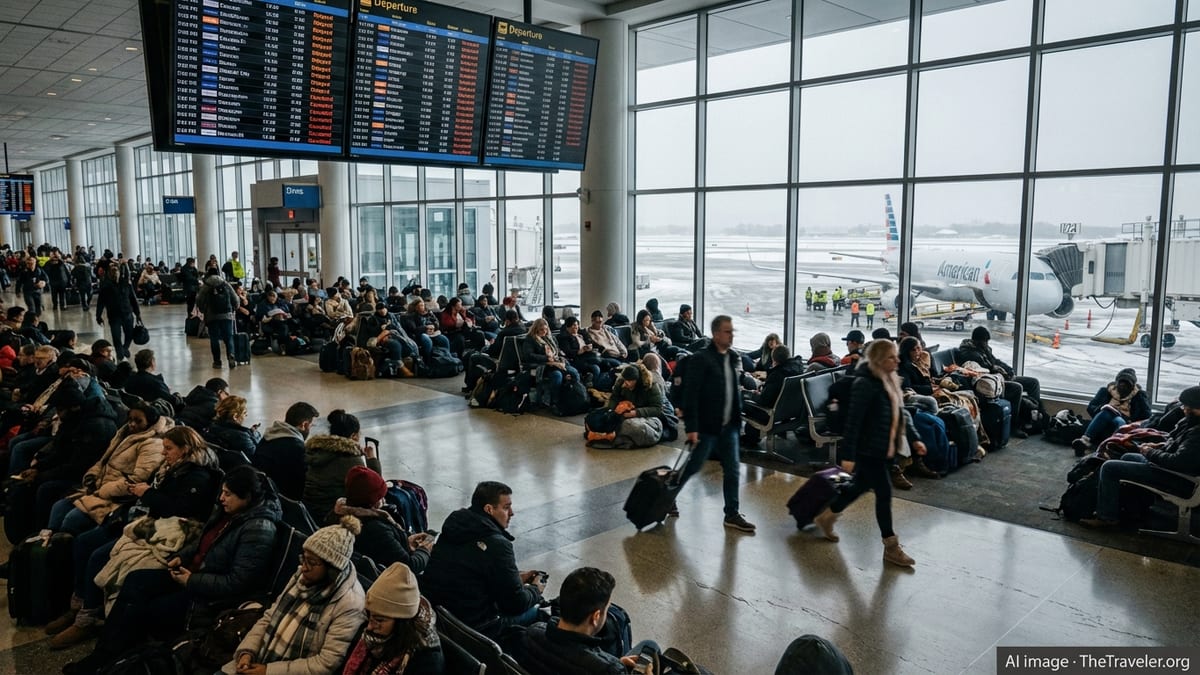
A systemwide technology outage at American Airlines caused cascading delays and cancellations at Charlotte Douglas International Airport on Tuesday, stranding travelers at one of the carrier’s largest hubs and rippling across the airline’s domestic network.
Get the latest news straight to your inbox!
Nationwide disruption hits key American hub
Publicly available flight tracking data and passenger reports indicate that American Airlines experienced a broad systems outage on Tuesday, July 28, affecting airport operations across the United States. Charlotte Douglas International Airport, where American operates its second‑largest hub, was among the most heavily impacted locations as departures were held and boarding processes stalled.
Posts from travelers at Charlotte described gate areas filling with waiting passengers as departure times repeatedly slid later into the day. Several reports referenced a “nationwide system outage,” with some customers told that check‑in and gate systems were intermittently unavailable, complicating efforts to move aircraft and rebook disrupted itineraries.
Charlotte typically handles hundreds of American and American Eagle flights each day, connecting smaller communities throughout the Southeast and East Coast with larger domestic and international destinations. That density can amplify the effect of a disruption, as even short ground stops or technical issues have the potential to create longer queues of delayed aircraft and tight connection windows.
Data from aviation analytics platforms and airport status boards showed widespread delays around the time of the outage, with some departures from Charlotte pushed back by more than an hour while others were eventually canceled. The pattern was reflected at other American hubs, pointing to a centralized technology problem rather than weather or local operational issues alone.
Delays, cancellations and missed connections at CLT
Passengers connecting through Charlotte reported a mix of extended gate holds, last‑minute gate changes and cancellations as American worked through the outage and the resulting backlog. Some travelers described sitting on board aircraft at the gate while crews waited for clearance to depart, while others reported flights that initially showed minor delays ultimately being scrubbed when the disruption dragged on.
Charlotte’s role as a connecting hub magnified the impact for travelers who were not originally scheduled to start or end their journey in North Carolina. Missed connections became a particular pain point, with customers recounting itineraries that were rebooked multiple times as downstream flights from Charlotte also faced schedule changes.
Available data suggests that the outage did not affect all American flights at Charlotte uniformly. A number of departures eventually pushed back and took off after extended delays, while others were canceled outright when projected disruptions made same‑day operations impractical. The uneven recovery created a patchwork of outcomes, with some passengers able to complete trips hours late and others needing overnight stays or new routing altogether.
The disruption came amid an already busy summer travel period, a time when Charlotte routinely operates near capacity. Industry analyses of the airport’s recent performance highlight that tight scheduling and ongoing construction leave limited margin for error during peak hours, increasing the likelihood that a systems issue will quickly cascade into significant delays.
Technology vulnerability highlights wider industry risk
The American outage at Charlotte underscored how reliant modern airline operations have become on centralized technology platforms, from crew scheduling and aircraft routing to check‑in systems and mobile apps. When those systems falter, even briefly, large hubs like Charlotte can see operations slow dramatically as manual workarounds are introduced and staff wait for updated information.
Analysts studying delay propagation in the U.S. air transport network have repeatedly found that disruptions at major hubs can spread quickly through the system, particularly when a single airline dominates operations at an airport. Charlotte fits that profile, with American handling the vast majority of departures and arrivals, which concentrates both the benefits of efficient hubbing and the risks of a centralized failure.
Recent history provides several examples of how quickly technology problems can trigger operational breakdowns. Industry observers have pointed to past nationwide outages and software incidents that produced ground stops and thousands of cancellations across multiple carriers, reinforcing calls for more resilient systems and clearer contingency plans when core platforms fail.
In the wake of Tuesday’s events, travel commentators noted that airlines have been investing heavily in digital tools for customers, but that back‑end infrastructure remains vulnerable to cascading failures. The American outage at Charlotte is likely to renew questions about redundancy, testing and the ability of carriers to isolate and contain problems before they spread across their networks.
What affected travelers at Charlotte can do
For passengers whose flights from or through Charlotte were delayed or canceled during the outage, customer guidance from American and federal transportation resources highlights several practical steps. Travelers are generally encouraged to use airline apps or airport kiosks when available to rebook, as these tools often show alternative options more quickly than in‑person customer service lines during large‑scale disruptions.
Affected customers can also review American’s published customer service commitments to understand what assistance may be available in the case of long delays or cancellations. Policies typically distinguish between events within the airline’s control and those caused by factors such as weather or air traffic constraints, with different provisions for meal vouchers, hotel accommodations and refunds depending on the underlying cause.
Industry consumer advocates often recommend that passengers document the timing of delays, keep receipts for any out‑of‑pocket expenses and monitor subsequent schedule changes, since recovery operations can continue into the following day. At a large hub like Charlotte, rebooking options may be more plentiful than at smaller airports, but high demand can also mean that remaining seats on later flights fill quickly.
Travelers with flexibility in their plans may consider rerouting through alternative hubs or adjusting departure dates, especially if residual delays continue as American works through its Charlotte schedule. For those with imminent connections, airport displays and gate announcements remain important sources of real‑time information, even as the airline’s systems return to normal operations after the outage.
Ongoing recovery and implications for summer travel
By later in the day, publicly shared flight status information suggested that American’s operation at Charlotte was slowly stabilizing, with more flights departing close to revised schedules. However, the earlier disruptions left a trail of missed connections and displaced aircraft that may take additional time to fully resolve, particularly on tightly scheduled regional routes.
Given Charlotte’s central role in American’s domestic network, analysts expect some knock‑on effects across the carrier’s schedule, including potential aircraft and crew imbalances that could surface as minor delays on routes far from North Carolina. The extent of these ripples will depend on how quickly the airline can reposition resources and align its timetable with available capacity.
The outage arrives amid broader concerns about operational resilience during the peak summer season, when strong demand and constrained fleets leave little room for error. Industry research into delay patterns notes that large hubs can recover from weather events and routine congestion, but that technology failures pose a distinct challenge because they can affect every stage of the operation simultaneously.
For travelers planning upcoming trips through Charlotte, recent events serve as a reminder to build extra time into connections, keep a close eye on flight status updates and have contingency plans in mind. While systemwide outages of this scale remain relatively rare, the disruption at American’s Charlotte hub illustrates how quickly a single technology issue can upend travel plans for thousands of passengers in a single day.