


Urho Kekkonen National Park in Finnish Lapland is one of Europe’s great wilderness areas, yet it is surprisingly accessible if you know where to start. Whether you are planning a gentle half day walk from Saariselkä or a multi day backpacking or ski tour deep into the fells, having the right trail maps and visitor information is essential. This guide pulls together the most up to date practical details to help you plan a safe and memorable visit.
Get the latest updates straight to your inbox!
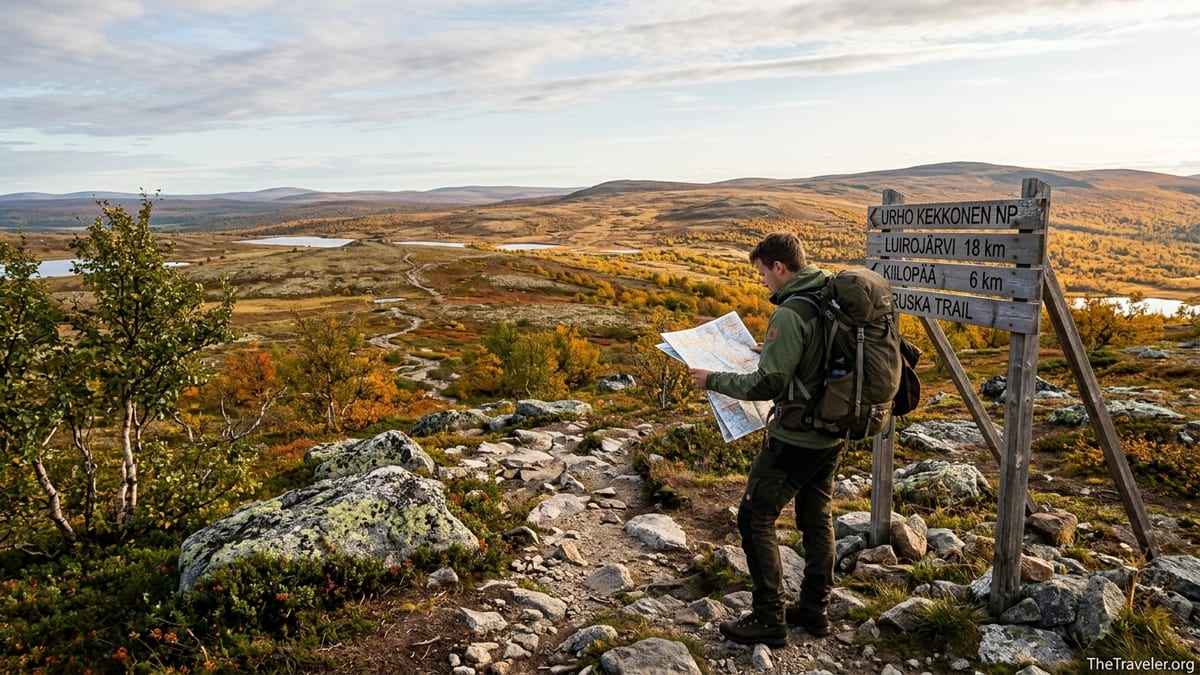
Understanding Urho Kekkonen National Park
Urho Kekkonen National Park, often shortened to UKK, covers about 2,550 square kilometres of fells, boreal forest and river valleys in northeastern Finnish Lapland. It stretches east from the resort village of Saariselkä almost to the Russian border, with trailheads scattered along the main E75 road and in more remote areas reached by gravel roads. The park is managed by the Finnish state forestry agency Metsähallitus and there is currently no entrance fee to visit.
The western side of the park near Saariselkä and Kiilopää is where most visitors start. Here you find a dense network of marked day trails, winter ski loops and clearly signposted routes to popular fell summits such as Kiilopää and Iisakkipää. The further east you travel, the wilder and less marked the terrain becomes, culminating in remote areas like the Sokosti region and the Nuortti River valley where navigation experience and good maps are vital.
The park is open year round, but the character of the trails changes drastically with the seasons. In June and July, hikers walk under the midnight sun through wet bogs and snow patches on the fells. In September the ruska autumn colours draw photographers and backpackers. From roughly December to April the park turns into a cross country ski paradise, with maintained ski tracks near Saariselkä and untracked wilderness routes further in. Your choice of map and route planning tools should match the season and style of trip.
Although UKK feels remote, it is not a roadless frontier. Saariselkä is about a 25 minute bus ride from Ivalo Airport, and regular coaches on the E75 stop in Saariselkä, Kiilopää and Tankavaara. This ease of access means you can land in Lapland in the afternoon and realistically be on a marked fell trail the same evening, as many weekend visitors from Helsinki and central Europe now do.
Where to Get Reliable Maps and Route Information
The single most important resource for planning is the official park pages operated by Metsähallitus on the Luontoon.fi service. These pages host the authoritative overview map, descriptions of marked summer and winter routes, current service notices and downloadable brochures in English, Finnish and often German. Before you freeze any itinerary, check the latest updates on trail work, closed bridges or hut maintenance, which are posted there when conditions change.
On the ground, your best first stop is usually a visitor or nature centre. For the western part of UKK, Saariselkä Customer Service Kiehinen in the village shopping area and the Fell Centre Kiilopää reception both provide free printed route leaflets, local scale maps around Kiilopää and Luulampi, and up to date information on snow conditions, river levels and hut usage. Further south, the Koilliskaira Nature Centre in Tankavaara, next to the gold panning museum, is the key information hub for routes in the central and southeastern parts of the park, including access towards Kemihaara and the Nuortti River.
Digital navigation is widely used, but should be treated as a complement rather than a replacement for a paper map. Many hikers download GPX tracks for classic routes like the Luirojärvi circuit or the UKK Trail from services such as AllTrails and Komoot, then carry a 1:50,000 or 1:25,000 topographic map from a Finnish cartography publisher as backup. In practice, a typical visiting hiker might buy a waterproof topographic sheet covering Saariselkä and Urho Kekkonen from a local outdoor shop in Saariselkä for around 20 to 25 euros, then load GPX files into a smartphone app for on trail reference.
For winter visitors, it is worth seeking out the seasonal ski route maps produced locally. Hotels and rental shops in Saariselkä often hand out printed maps of the prepared cross country track network that shows distances, difficulty grades and café stops. These maps clearly indicate which routes run inside the national park boundary and which stay in the resort area, helping skiers understand where national park rules about camping and open wilderness huts apply.
Key Day Hikes and Short Trails
For many visitors, the first encounter with Urho Kekkonen National Park is a half day or full day walk from Saariselkä or Kiilopää. The western part of the park is threaded with marked circular routes, waymarked with coloured symbols on wooden poles. These routes are specifically designed so that casual walkers can follow them without constant map checks, while still getting a real taste of the Arctic fell landscape.
One of the most popular introductory hikes is the Ahopää or Kiilopää fell loop starting from the Fell Centre Kiilopää. This moderate route gains the bare summit plateau of Kiilopää, with views across rolling tundra like fells and distant wilderness. In summer, many families walk a shorter out and back section from Kiilopää to Luulampi day hut, where there is a fire ring and simple shelter. In winter, parts of this route are converted into waymarked snowshoe or ski trails, clearly signed at the trailhead.
Closer to Saariselkä village, easy waymarked routes lead to fell tops such as Kaunispää and Iisakkipää. From the village centre it is possible to walk to the main park gate in about 15 minutes, then follow a well trodden loop over Iisakkipää that rewards hikers with broad views over the park’s western boundary. This loop is a favourite with visitors who have limited time or who are nervous about venturing far from the resort infrastructure, as you are almost never out of sight of other day hikers in high season.
In the southern part of the park, the Nuortti River hiking trail offers a well marked 40 kilometre circle route along cliffs and riverbanks near the remote eastern border. Although access requires a long drive on gravel roads, it has become popular with experienced hikers seeking a two or three day trip that still follows a marked path and connects several managed campsites and lean to shelters. Here, a detailed topographic map plus the official route leaflet from the Koilliskaira Nature Centre are highly recommended, as the path sometimes disappears on rocky sections or floodplain meadows.
Classic Multi Day Routes and Wilderness Travel
Beyond the day walk network, Urho Kekkonen National Park is renowned for multi day backpacking and ski tours that venture deep into nearly roadless terrain. A well known example is the route to Luirojärvi, a remote lake ringed by fells and serviced by simple wilderness huts and a public sauna. Hikers typically start from the trailheads at Kiilopää, Aittajärvi or Raja Jooseppi, then spend three to five days making a circuit through river valleys and over low passes. Although parts of the route follow marked trails, there are longer sections where navigation relies on map reading, terrain interpretation and occasional rock cairns.
Another long route used by experienced hikers and skiers is the UKK Trail, which broadly follows the length of the park from the Kiilopää area in the west to Raja Jooseppi on the eastern border. Outdoor enthusiasts often walk or ski sections of this trail as part of longer Lapland traverses, combining nights in open wilderness huts, reservable cabins and tent camps. In winter, some groups tow pulks loaded with gear and spend a week travelling hut to hut, aiming for legendary locations such as the riverside cabins near Anterinmukka that are about two to three days from the road by ski.
In the northern and central wilderness zones of the park, there are few or no marked summer trails. Here the expectation is that visitors are self reliant and capable of making route decisions based on weather, river crossings and snow cover. For example, backpackers aiming for the highest peak Sokosti, at about 718 metres above sea level, usually design their own approach based on topographic maps, choosing safe river crossing points and camping on dry, wind exposed knolls above the tree line. Digital satellite imagery can help identify boggy areas or late lying snow patches before setting out.
Because these trips take you far from roads and phone coverage can be patchy, most Finnish hikers carry at least a map, compass and paper copy of hut locations, along with a charged phone and power bank. Renting a satellite messenger or personal locator beacon from an outdoor shop in Rovaniemi or Helsinki has become more common for international visitors planning solo trips. Guided multi day expeditions, both on foot in summer and on skis in winter, are offered by local companies based in Saariselkä, usually including maps, group safety gear and pre booked hut reservations where required.
Visitor Centres, Huts and On the Ground Services
Although UKK is primarily a wilderness park, it has a well developed network of visitor services at the edges and simple backcountry facilities inside. The main access village of Saariselkä offers supermarkets, outdoor shops, accommodation from budget cabins to glass igloo style hotels, equipment rental and restaurant options. For many travellers, stocking up in Saariselkä and getting information from Customer Service Kiehinen is the practical first step before entering the park.
Near the trails themselves, the Fell Centre Kiilopää operates as both a hotel and a trailhead hub, with a large parking area, café, sauna and ski and snowshoe rentals in winter. From here, marked summer and winter routes fan into the park. About 40 minutes’ drive south on the E75, Tankavaara provides the Koilliskaira Nature Centre, a small shop and seasonal café, plus access to shorter themed trails around an old gold panning area and to longer routes heading into the park’s central sectors.
Inside the park, Metsähallitus maintains a network of open wilderness huts, reservable huts, lean to shelters and designated campfire sites. Open huts are usually free to use and operate on a first come, first served basis, with simple wooden bunks and a stove. Reservable huts must be booked in advance for a nightly fee, which in recent years has typically been under 20 euros per person per night. In practice, many hikers mix hut nights with tent camping to keep costs manageable and to retain flexibility if weather or river levels require a change of route.
At some iconic huts such as those near Luirojärvi or Anterinmukka, there are simple wood heated saunas that have become almost pilgrimage sites for Finnish hikers. Here you might find a group of local skiers and an international pair of backpackers sharing stove space and trail stories in the evening. However, it is essential to remember that these facilities are in remote terrain. You must carry your own food, cooking equipment, first aid kit and emergency supplies, and you should treat huts as a safety net rather than a guaranteed bed for the night.
Navigation, Safety and Seasonal Considerations
Even though the western parts of Urho Kekkonen National Park feel welcoming and well mapped, conditions can change quickly. In summer, streams that are knee deep in the morning can swell after heavy rain, turning a simple crossing into a serious obstacle. In May and early June, melting snow can make trail sections extremely wet, and there can still be snowfields on shaded fell slopes. In September and early October, night frosts and sudden storms are common, and winter conditions can arrive rapidly.
From late autumn to late spring, darkness and cold become the dominant challenges. In December and early January, the sun barely rises above the horizon, meaning you may be walking or skiing in twilight even at midday. Daytime temperatures in the interior of the park often drop well below minus 15 degrees Celsius, and wind on exposed fells can push the apparent temperature much lower. For this season, navigation requires confidence in following snow covered markers and recognising terrain shapes in flat, low contrast light, which can be disorienting even for experienced Nordic skiers.
Before setting out, always check the latest weather forecast for the Saariselkä region and ask staff at visitor centres about current conditions. After heavy snowfall, some unmaintained winter routes may be slow to travel, while in spring thaw periods ski tracks can deteriorate in the afternoons. Avalanche risk is generally lower than in true mountain ranges, but cornices and wind loaded slopes on steeper fell flanks can still be hazardous. It is sensible to avoid very steep gullies and to keep ski or snowshoe routes on broad ridges and gentle slopes.
Wildlife risks are relatively low compared with many other wilderness parks, but you should still take basic precautions. Reindeer are common and may appear unexpectedly on the trail; give them space, especially in calving season. Brown bears and lynx are present but rarely seen, and encounters are extremely uncommon. A more practical concern is biting insects in midsummer. In July, mosquitoes and blackflies can be intense in forest and bog areas, so local hikers routinely carry head nets and strong insect repellent and often choose campsites on breezy fell tops where insects are fewer.
Practical Planning Tips for First Time Visitors
For a first visit focused on hiking, many travellers choose to base themselves in Saariselkä for three or four nights and make a combination of day hikes and perhaps a single one night hut trip. A realistic example itinerary might include a half day walk to the top of Kaunispää from the village on arrival day, a full day loop from Kiilopää to Luulampi and back, then a two day out and back to an open hut such as Suomunruoktu with an overnight stay. This allows you to test your gear, understand local trail markings and hut etiquette, and adjust to Nordic weather without committing immediately to a remote, multi day route.
Budgeting is important, as Lapland is not cheap. Accommodation in Saariselkä in peak seasons like Christmas, New Year, February ski holidays and September ruska can be significantly more expensive than in shoulder seasons. Self catering cabins with simple kitchenettes can help you keep meal costs under control, as supermarket prices, while higher than in southern Finland, are still far below restaurant dining. Rental prices for snowshoes, skis or fatbikes from local outfitters are typically on par with other Nordic resorts, so if you already own specialised equipment it may be worth bringing it, bearing in mind airline baggage fees.
Packing should be conservative and oriented toward self sufficiency. Even on day hikes from Saariselkä you should carry extra layers, a waterproof jacket, food, water, a small first aid kit and at least a simple paper map of the local trail network. For overnight trips, a three season or winter rated sleeping bag depending on the season, insulating sleeping mat, reliable stove and fuel, and tested footwear are minimum essentials. Many trails cross boggy ground, so waterproof boots or trail shoes that dry quickly, combined with wool socks, are standard among local hikers.
Finally, it is worth familiarising yourself with Finnish outdoor customs such as everyman’s rights and hut etiquette. While the national park has specific rules about where you may camp or light fires, there is generally a high level of trust and a culture of leaving huts and campsites cleaner than you found them. Writing a brief note in a hut guestbook about your route plan is common practice and can provide useful information for parties following behind you, as well as a record for rangers if conditions deteriorate.
The Takeaway
Urho Kekkonen National Park offers a rare combination of accessible trailheads, solid visitor infrastructure and vast, genuine wilderness. The key to enjoying it safely is to match your ambitions with up to date maps and route information, use visitor centres and local knowledge, and respect the realities of Arctic weather and distance. With a few days of thoughtful preparation, even first time visitors can experience fell top views, quiet riverside camps and the simple pleasure of warming up in a wilderness hut after a long day on the trail.
Whether your goal is a family friendly stroll from Saariselkä, a hut to hut ski tour under the northern lights, or a self planned trek to remote valleys and summits, the groundwork is the same: study the terrain, choose the right maps, and ask questions before you go. Do that, and Urho Kekkonen National Park will reward you with a sense of space and silence that is increasingly rare in Europe, and memories that linger long after your boot prints and ski tracks have vanished from the snow and tundra.
FAQ
Q1. Do I need a special permit to hike in Urho Kekkonen National Park?
Permits are not generally required for regular hiking or skiing in the park, and there is no entrance fee. However, some activities such as commercial guiding, large organised events or research may require permits from Metsähallitus. Always check current rules before planning anything beyond normal recreational use.
Q2. What is the best map scale for hiking in the park?
For most trips a 1:50,000 topographic map that covers the Saariselkä and Kiilopää area is sufficient, while those heading into more remote valleys often prefer 1:25,000 sheets for greater detail. Many hikers carry a printed map plus GPS tracks on a smartphone app as backup.
Q3. When is the best time of year to visit for hiking?
The main hiking season typically runs from late June to late September. July and August offer the warmest temperatures but also more insects, while early September brings colourful autumn foliage and cooler, often clearer weather. In May and early June, snowmelt can make trails very wet and rivers more difficult to cross.
Q4. Can beginners manage the trails around Saariselkä?
Yes. The western part of the park around Saariselkä and Kiilopää has several short, clearly marked day trails suitable for beginners and families. Routes to viewpoints such as Kaunispää and shorter loops from Kiilopää are popular first hikes, provided you carry basic gear and pay attention to weather changes.
Q5. Are there shops and rentals near the park?
Saariselkä village has supermarkets, outdoor shops and several rental companies offering equipment such as hiking poles, snowshoes, cross country skis and fatbikes. The Fell Centre Kiilopää also rents gear and provides trail information. It is wise to reserve winter rentals in advance during peak holiday periods.
Q6. How do I reach the main trailheads without a car?
Most visitors without a car fly into Ivalo Airport and then take a scheduled bus or pre booked transfer to Saariselkä or Kiilopää. From Saariselkä you can walk to the main park gate or use local transport and taxis to reach more distant trailheads such as Kiilopää or Tankavaara. Always check current bus timetables when planning.
Q7. Is it safe to drink water from streams and lakes?
Many local hikers and skiers drink untreated water from clear upland streams and lakes, especially above the tree line, but there is always some risk. Visitors who prefer caution often carry a lightweight filter or purification tablets and still refill regularly from natural sources to reduce the amount of water they need to carry.
Q8. What kind of accommodation is available inside the park?
Inside the park there are simple open wilderness huts, reservable huts, lean to shelters and tent sites, but no serviced lodges or hotels. Open huts are basic shelters with bunks and a stove that operate on a first come basis, while reservable huts must be booked and paid for in advance. Most visitors combine huts with tent camping for flexibility.
Q9. Can I visit the park in winter if I do not ski?
Yes. In winter there are snowshoe trails and short walking routes from Saariselkä and Kiilopää, and some visitors join guided northern lights or fatbike excursions that enter the edge of the park. However, deep winter conditions are demanding, so non skiers should stay on marked winter routes and consider guided trips for safety.
Q10. How many days do I need to experience the park properly?
With two or three days you can sample several day hikes or ski loops from Saariselkä and still get a clear sense of the landscape. A four to seven day trip allows for at least one overnight journey to a wilderness hut or remote campsite and a deeper experience of the park’s quieter valleys and fells.