


Far above the Arctic Circle in Finnish Lapland, Urho Kekkonen National Park offers one of Europe’s wildest yet most accessible wilderness areas. Stretching from the resort village of Saariselkä to the Russian border, it is a place of open fells, slow rivers, northern lights and long-distance trails where reindeer outnumber people. For travelers wondering whether it is worth the journey this far north, Urho Kekkonen delivers a rare combination: genuine backcountry adventure, but with well-managed trails, wilderness huts and visitor services that make it approachable even for first-time hikers.
Get the latest updates straight to your inbox!
Why Urho Kekkonen National Park Stands Out in Lapland
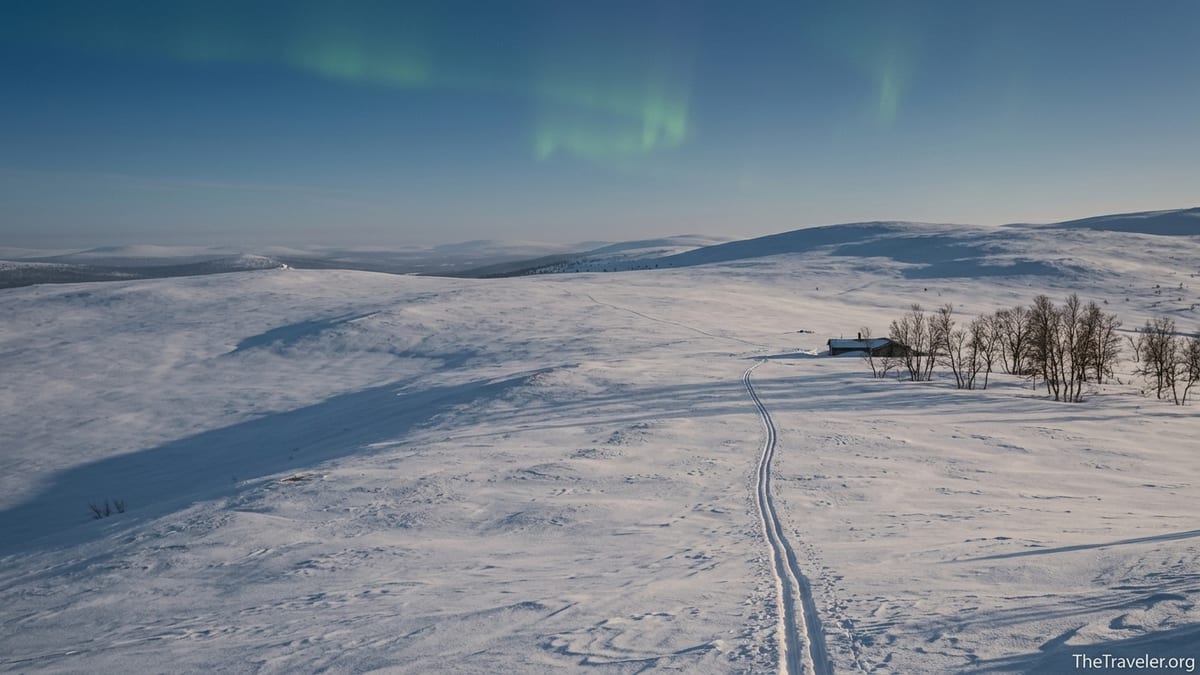
Urho Kekkonen National Park is Finland’s second-largest national park, covering nearly a thousand square miles of protected wilderness in the municipalities of Inari, Sodankylä and Savukoski. Unlike many alpine destinations in central Europe, the landscape here is shaped by rounded fells, wide marshes, and slow, tea-colored rivers such as the Suomujoki. The scenery is dramatic but not intimidating, which is a big part of its appeal for hikers and skiers looking for a sense of remoteness without sheer rock faces or technical mountaineering.
Most visitors base themselves on the park’s northern edge, around the villages of Saariselkä and the Fell Centre Kiilopää. From here, you can literally step out of your cabin and onto waymarked trails that lead straight into the park. The Kiehinen visitor centre in Saariselkä provides current trail conditions, hut information and safety advice, so even first-time Arctic travelers can plan routes with confidence. Day hikers, cross-country skiers and serious backpackers all share the same gateway, which gives the area an energetic but still low-key outdoor atmosphere.
Another reason Urho Kekkonen stands out is the way it balances wildness with comfort. There are around 200 kilometers of marked trails in the Saariselkä–Kiilopää area, about half of which lie inside the national park itself. Many routes link to open wilderness huts, reservable huts and simple campfire sites, so you can design anything from a two-hour sunset walk to a week-long hut-to-hut trek without carrying a tent. For many travelers, this combination of solitude and infrastructure is exactly what makes the park worth the detour north from Rovaniemi or Helsinki.
Easy Access to Big Wilderness Experiences
Reaching Urho Kekkonen is easier than its remote reputation suggests. Most international travelers fly into Ivalo Airport, about 30 minutes by road from Saariselkä. Several local bus companies usually run transfers timed with flights, so you can be in your lodge or cabin without needing to rent a car. From Rovaniemi, the main city in Finnish Lapland, long-distance buses follow Highway 4 north to Saariselkä, a journey of around four hours in winter conditions.
Once there, the transition from village to wilderness is remarkably quick. In Saariselkä, trailheads for popular park routes begin just beyond the last line of cabins, and the main gate into Urho Kekkonen is only a short walk from the central hotels. At Fell Centre Kiilopää, one of the best-known gateways to the park, the official national park gate literally sits in the yard. Visitors staying in the on-site hotel or cabins can walk out of the breakfast room, buckle snowshoes or skis on the terrace, and be in open fell country within minutes.
This ease of access means that even travelers with just a couple of spare days in their Lapland itinerary can still experience real wilderness. A family staying two nights in Saariselkä in March, for example, might spend one morning on a groomed ski loop and the next afternoon snowshoeing a short section of the Iisakkipää or Kiilopää trails, returning each evening to hot showers and restaurant meals. You do not have to commit to a full expedition to get a sense of the park’s scale and quiet.
Hiking, Skiing and Classic Routes Travelers Love
What visitors tend to remember most about Urho Kekkonen are its trails. In summer and early autumn, hikers gravitate toward fell routes like Kiilopää–Niilanpää–Luulampi, a classic loop starting from the Kiilopää gate. The path climbs onto open ridges with wide views of rolling fells, then drops to a day-use hut at Luulampi where you can boil coffee on the stove before heading back. For many travelers, this half-day or full-day circuit becomes the highlight of a northern Finland road trip.
For those with more time, the park’s hut-to-hut routes offer a deeper dive into the wilderness. A common multi-day loop for experienced hikers runs from Kiilopää to the wilderness huts at Suomunruoktu, Tuiskukuru, Luirojärvi and Lankojärvi before returning to Kiilopää. Distances between huts are typically in the range of 8 to 20 kilometers per day, manageable for fit walkers carrying moderate packs. Near Luirojärvi, many hikers add a day trip to the top of Sokosti, the park’s highest fell at about 717 meters, for wide-open, treeless vistas that feel far from roads and villages.
Winter brings a different but equally rewarding network of cross-country ski routes. March and early April are peak skiing months, with long daylight hours, usually stable snow and groomed trails radiating from Saariselkä and Kiilopää into the park. Visitors on a weeklong trip might spend alternate days on prepared skiing loops and in the less-trodden backcountry, navigating along marked poles to wilderness huts for lunch breaks. For many Nordic ski enthusiasts from continental Europe, a hut-to-hut ski tour in Urho Kekkonen is the trip that makes them fall in love with Lapland.
Arctic Seasons: When to Go and What to Expect
Urho Kekkonen is a true year-round destination, but your experience will change dramatically with the seasons. In winter, roughly from December through April, the park is a world of deep snow, frozen rivers and pale, low-angle light. The cold can be intense, and nights long, but this is also prime time for northern lights and cross-country skiing. Many travelers target February and March, when the combination of dark nights and increasing daylight gives good chances for aurora sightings and comfortable daytime activities.
Summer brings the opposite extremes. From late May until late July, the midnight sun means it never gets fully dark. Trails are largely snow-free by June, and fells are covered in low birch and shrubs rather than dense forest, so hiking is straightforward even for occasional walkers. Families often choose July and early August, when temperatures can be mild by Arctic standards and services in Saariselkä and Kiilopää run at full swing, from guided day hikes to rental bikes and canoes on nearby lakes.
For many experienced hikers, however, early autumn is the favorite season in Urho Kekkonen. In September, the tundra turns shades of red and gold, mosquitoes largely disappear, and the first night frosts and occasional snow showers bring a crisp edge to the air. Visitor surveys indicate that this is the busiest month for hikers, and with good reason: you can still complete hut-to-hut treks without full winter gear, but the fells already have a wild, end-of-season atmosphere. By late October, conditions can turn wintry, with short days and mixed snow and ice on trails, so route choice and equipment need more careful planning.
Wilderness Huts, Saunas and the Social Side of the Park
One of the most distinctive features travelers love about Urho Kekkonen is its network of wilderness huts. Scattered across the park, these simple log cabins are usually equipped with bunks, a wood stove and basic cooking facilities. Some are open huts, free to share on a first-come, first-served basis, while others are bookable in advance for a modest nightly fee. The system is managed to spread visitor impact and offer shelter in a climate where weather can change quickly.
Hut-to-hut travel here is not luxurious in the conventional sense, but it feels surprisingly comfortable compared with tent camping in Arctic conditions. A typical day might see you ski 15 kilometers across frozen marshes, then arrive in late afternoon at a cabin like Luirojärvi or Tuiskukuru. You chop firewood, fetch water from a hole in the ice, cook a simple dinner on a gas stove and share the room with a handful of Finnish hikers, a German ski group and perhaps a solo traveler testing a new winter tent outside. Conversations around the stove often become a memorable part of the trip, and many repeat visitors say the hut culture is what keeps them coming back.
Several huts in the park even have public saunas, including at Luirojärvi and a few other locations, which adds a distinctly Finnish twist to the wilderness experience. There are few travel moments quite like shoveling a path to a lakeshore in sub-zero temperatures, sweating in a wood-fired sauna, and then stepping outside under a clear Arctic sky while steam rolls off your shoulders. It is not a spa in the luxury-hotel sense, but a form of comfort very much in tune with the landscape and local traditions.
Northern Lights, Silence and Other Intangible Rewards
Many travelers come to Lapland with the northern lights at the top of their wish list, and Urho Kekkonen offers good conditions to see them, especially from late August to early April. The key advantages here are relatively low light pollution and easy access to open horizons. From Saariselkä or Kiilopää, you can walk a short distance onto nearby fells in the evening, away from cabin lights, and wait for auroras with unobstructed views in several directions.
That said, auroras are never guaranteed. You need clear skies, solar activity and darkness all at the same time. Travelers who leave feeling the park was worth it generally appreciate it for more than just the lights. On a cloudless March night, for example, simply standing in the middle of a frozen lake inside the park, surrounded by silent fells and a sky full of stars, can be as powerful as a strong aurora display. The absence of road noise, city lights and crowds is itself a rare luxury.
Another intangible reward is the sense of gradual immersion that comes with spending several days in the park. On a four- or five-day hut tour you start noticing small details: tracks of ptarmigan skittering across wind-packed snow, the way snowdrifts form on the lee side of dwarf birch, or the rich brown color of river water against fresh ice. Travelers often describe returning home with a calmer mindset and a feeling of having been “away” in a much deeper sense than a typical short city break provides.
Is It Right for You? Matching the Park to Your Travel Style
Whether Urho Kekkonen is worth visiting depends on your expectations and experience level. For travelers who love nature, quiet and non-commercial experiences, the park is often a highlight of their time in Finland. If your idea of a winter trip is more about shopping and nightlife, you may find Saariselkä and Kiilopää very quiet outside peak holiday dates. There are restaurants, a small shopping center and tour operators offering snowmobile safaris and husky rides, but the overall feel remains that of a small resort built around outdoor activities rather than entertainment.
Families with children or travelers who prefer comfort can still enjoy the park through half-day excursions and guided tours. In winter, local companies rent snowshoes, cross-country skis and fat bikes, and many offer beginner-friendly trips with instruction. In summer, guided day hikes onto nearby fells or to gold panning sites near Tankavaara make the area more engaging for younger visitors. Sleeping in a hotel in Saariselkä and doing day hikes into the park is a common compromise for those not ready for wilderness huts.
On the other hand, if you are looking for your first real wilderness trek, Urho Kekkonen is an excellent training ground. Distances between huts are manageable, terrain is mostly non-technical, and phone signal is often weak or absent deeper in the park, which encourages you to be self-reliant. At the same time, the hut system and clear zoning rules offer safety nets that are not present in truly roadless, unmarked regions. Many experienced European hikers use a week here to prepare for longer expeditions in places like Sarek National Park in Sweden or the more remote parts of northern Norway.
Practical Tips: Costs, Safety and Planning
Costs in Finnish Lapland are generally on the higher side by global standards, and Urho Kekkonen is no exception. Accommodation in Saariselkä or at Fell Centre Kiilopää often ranges from simple hostel-style rooms to mid-range hotel rooms and cabins, with prices varying significantly between high winter season, autumn foliage weeks and quieter shoulder months. While there is no separate entrance fee for visiting the national park, some wilderness huts require a paid reservation, and transport from Ivalo or Rovaniemi adds to the budget. Self-catering in cabin kitchens and packing trail snacks from supermarkets in Ivalo or Rovaniemi can help keep daily costs manageable.
Safety in the park relies heavily on preparation. Weather in Lapland can change quickly at any time of year, and even waymarked trails cross exposed fells where wind and visibility become serious issues in bad conditions. The visitor centre staff in Saariselkä are a valuable resource for up-to-date advice on snow conditions, river crossings and hut status. Sensible steps like carrying a map and compass even if you have a GPS, leaving your route plan with someone trustworthy, and packing extra warm layers and high-energy food are strongly recommended.
Travelers should also respect park regulations around camping, fires and waste. In the main recreational zones near Saariselkä, Kakslauttanen and the Nuortti River, camping is usually restricted to designated campfire sites and near huts and shelters. Firewood is provided at many official sites, but you are expected to use it sparingly and follow local guidelines. Carrying out all non-burnable waste, including food packaging and hygiene products, is standard practice. Following these rules helps keep the park feeling pristine even as visitor numbers have gradually increased.
The Takeaway
So is Urho Kekkonen National Park worth visiting? For travelers who value space, silence and authentic outdoor experiences more than big-resort energy, the answer is almost always yes. The park combines extensive, genuine wilderness with an unusually helpful support system of marked trails, huts and visitor services. You can tailor your experience from a single afternoon snowshoeing above Saariselkä to a week-long hut-to-hut journey that feels far removed from everyday life.
What visitors tend to love most are the small but powerful moments: boiling coffee on a hut stove while snow taps the window, watching faint auroras build into shifting green curtains over a frozen lake, or standing on a windswept fell and seeing nothing but empty hills and sky in every direction. Reaching this corner of Finnish Lapland takes effort, but for many, Urho Kekkonen becomes the place they think of first when they imagine real, accessible wilderness in Europe.
FAQ
Q1. Where is Urho Kekkonen National Park and how do I get there?
Ivalo Airport in Finnish Lapland is the closest airport, about a 30-minute drive from Saariselkä on the park’s northern edge. Regular buses and seasonal transfers usually connect flights to Saariselkä and the nearby Fell Centre Kiilopää, which are the most common gateways into the park.
Q2. Do I need a car to visit Urho Kekkonen National Park?
A car is convenient but not essential. Many visitors rely on buses between Ivalo, Rovaniemi and Saariselkä, then walk or join guided tours from their accommodation. Trailheads into the park start right from Saariselkä village and Kiilopää, so it is entirely possible to hike or ski without your own vehicle.
Q3. Is the park suitable for beginners or families with children?
Yes, provided you choose routes and seasons carefully. Around Saariselkä and Kiilopää there are short, well-marked trails and groomed ski loops that work well for families and first-time hikers. Overnight hut trips and long winter tours require more experience, so many beginners start with guided day excursions.
Q4. When is the best time to visit for hiking?
Hiking conditions are typically best from late June through September. July and August bring milder temperatures and long days, while September offers colorful autumn foliage and fewer insects. Early summer can still have lingering snow patches on higher fells, and by late October conditions can turn wintry.
Q5. Can I see the northern lights in Urho Kekkonen National Park?
Yes, the park is a good place to see auroras between roughly late August and early April, weather permitting. Low light pollution and open horizons on the fells make it easier to watch the sky, though sightings are never guaranteed and depend on both clear skies and solar activity.
Q6. Do I need to pay an entrance fee to visit the park?
There is generally no separate entrance fee for visiting Finnish national parks, including Urho Kekkonen. However, some services such as reservable wilderness huts, guided tours and local transport do have costs, so it is wise to budget for those even if trail access itself is free.
Q7. What kind of accommodation is available near the park?
Most visitors stay in Saariselkä or at Fell Centre Kiilopää, where you will find hotels, cabins, apartments and hostel-style rooms. In the park itself, simple open and reservable wilderness huts provide shelter for hikers and skiers. Many travelers combine nights in village accommodation with one or two nights in huts.
Q8. How challenging are the trails in Urho Kekkonen?
Difficulty ranges from short, easy walks near Saariselkä to demanding multi-day treks across remote fells. Terrain is usually not technical, but distances, weather and navigation can be challenging. In winter, cold, wind and limited daylight significantly increase the difficulty, so route choice and equipment need to match your skills.
Q9. Is it safe to hike solo in the park?
Many experienced hikers and skiers do travel solo, especially on well-used routes near Saariselkä and Kiilopää. However, the park is still real wilderness, so solo visitors should be cautious: carry proper navigation tools, share your route plan, check conditions with the visitor centre, and be prepared for sudden weather changes.
Q10. How many days should I plan for Urho Kekkonen National Park?
If you only want a taste of the park, two or three nights in Saariselkä or Kiilopää allows for a couple of day trips. To experience a hut-to-hut route or explore deeper into the wilderness, many travelers plan five to seven days, which gives time to adapt to the conditions and immerse yourself in the landscape.