


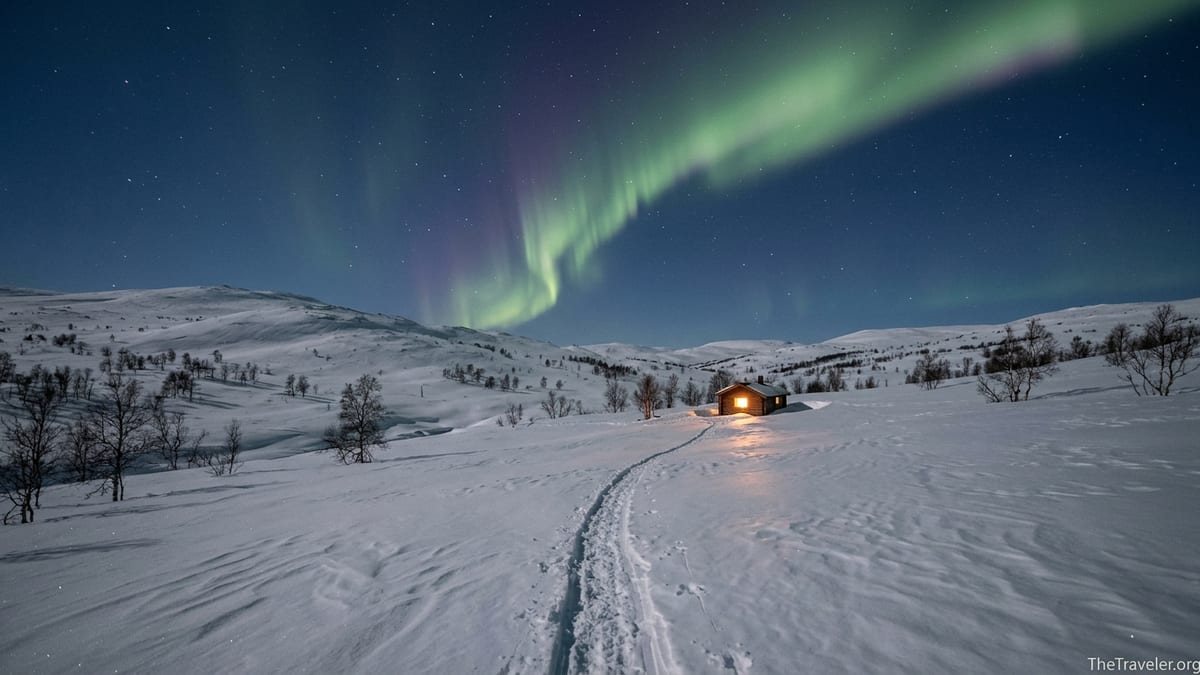
Far above the Arctic Circle in Finnish Lapland, Urho Kekkonen National Park offers one of Europe’s wildest landscapes: rolling fells, silent spruce forests, reindeer pastures and pitch-black winter skies often painted by the northern lights. This is a place where you can hike for days without seeing a road, watch willow ptarmigan erupt from the tundra and soak in a hot sauna after tracking auroras across the snow. This guide explains, in practical detail, how to explore the park for hiking, wildlife and northern lights, with real-world examples to help you plan a smooth and memorable trip.
Get the latest updates straight to your inbox!
Understanding Urho Kekkonen National Park and When to Go
Urho Kekkonen National Park lies in northeastern Lapland, next to the Russian border, and is one of Finland’s largest protected areas. Most visitors base themselves in the fell resort of Saariselkä, the outdoor center at Kiilopää or the small mining-historical village of Tankavaara on the park’s western edge. From these gateways, marked trails lead quickly into open tundra, birch forest and boggy lowlands where reindeer graze and, further out, true wilderness begins. The park is managed as a low‑impact backcountry area, so infrastructure is intentionally sparse once you leave the trailheads.
The best time to visit depends on your priorities. For extended hiking, late June to early September works well, with July and August bringing the warmest temperatures and mostly snow-free trails. Expect daytime highs around 10 to 20 degrees Celsius, cooler on windy felltops. If your goal is peak autumn color and dark skies for auroras while trails are still mostly dry, aim for early to mid September. The birch forests turn a deep gold and the fells are carpeted in red and orange dwarf shrubs, making even short walks feel spectacular.
Winter transforms the park into a deep-snow landscape ideal for ski touring, snowshoeing and northern lights hunting. From roughly December to March, Saariselkä and Kiilopää operate extensive cross-country ski networks that connect to the park’s huts. January can be extremely cold, with temperatures sometimes dropping below minus 25 degrees Celsius, but the long, dark nights give more time for aurora watching. For a balance of daylight, snow cover and aurora chances, many visitors choose February or March, when days start to lengthen but nights are still properly dark.
Spring and late autumn are shoulder seasons that can be rewarding but require flexibility. In May, snow may linger on higher fells while valley bottoms turn slushy. In late October and November, trails can be icy with little snow cover, limiting hiking and making off‑road travel tricky. If you plan to travel during these times, bring microspikes, warm waterproof boots and be prepared to adjust your route or activities on arrival.
Getting There and Choosing a Base
For most international visitors, the easiest gateway is Helsinki. From Helsinki, direct flights to Ivalo Airport typically take about 1 hour 45 minutes. Several Finnish carriers operate this route in both winter and summer. From Ivalo, a scheduled bus or prebooked shuttle runs south along the E75 highway, stopping at Saariselkä, Kiilopää and nearby resorts. The bus ride from Ivalo to Saariselkä is usually around 25 to 35 minutes, and to Kiilopää a few minutes longer, which makes it realistic to fly in the morning and be on a short afternoon hike the same day.
If you prefer to travel overland, you can take an overnight train from Helsinki to Rovaniemi and then connect by long‑distance bus up to Saariselkä or Kiilopää. This route is slower but often cheaper than flying, especially in peak winter when flights to Ivalo are in high demand for northern lights tourism. As an example, travelers might book a cabin on the evening train, arrive in Rovaniemi the next morning, then catch a midday bus that reaches Saariselkä by late afternoon.
Where you base yourself in or near the park affects the style of trip you can realistically manage. Saariselkä is a small but well‑developed resort village partly within the national park boundary. It offers a full range of hotels, cabins, grocery shops, rental shops for skis and snowshoes, and tour operators running guided aurora hunts and day hikes. This is a practical choice if you want comfort and easy logistics, especially in winter. Kiilopää, about 15 kilometers away, is centered on an outdoor hotel and hostel complex that literally sits at the park gate, with trails beginning from the courtyard. This is ideal for hikers who want to step out the door directly into the fells, with simple rooms, shared kitchens and an on‑site smoke sauna.
For something quieter, Tankavaara to the south offers smaller guesthouses and a gold‑mining museum, plus direct access to a network of shorter hiking routes. Wild campers and hut‑to‑hut hikers often treat any of these bases simply as launching points, spending a night in a guesthouse to pack food and fuel before heading out for several nights in the park’s wilderness huts and tent sites. When you choose your base, consider how many day hikes you want to do, your budget and whether you prefer to rely on local restaurants or cook for yourself using supermarket supplies.
Hiking the Park: From Day Walks to Multiday Expeditions
Urho Kekkonen has an unusually flexible trail system that supports everything from family-friendly day walks to remote expeditions lasting more than a week. Around Saariselkä, Kiilopää and Tankavaara you will find well‑marked loop trails with signposts and duckboarded sections over wetlands. A popular first hike is the Ahopää or Kiilopää summit circuit, a moderate half‑day loop that begins at Kiilopää’s main car park. The route climbs to open felltops with wide views across the park and then descends past shallow valleys and birch forest; many visitors complete it in 4 to 5 hours at a relaxed pace, stopping at a day hut such as Rumakurun Tupa for a snack break.
Another good entry‑level route is the Luulampi loop from Saariselkä, which passes through open heath and bog to the Luulampi day hut and café, often open in peak season. This route can be tailored from about 7 to 17 kilometers depending on which connecting trails you take, making it easy to shorten if the weather turns. Around Tankavaara, signposted trails lead to local fells and viewpoints, such as the Tankavaara Nature Trail and hikes up Pikku Tankavaara, with interpretive signs about gold‑mining history and boreal ecology along the way.
For experienced hikers seeking immersion in the park’s interior, multi‑day routes head deep into trackless terrain. One classic trip begins at Kiilopää and runs east toward Lake Luirojärvi, a scenic fell‑ringed lake that can be reached in roughly two long days on foot. Many backpackers plan a three or four night loop that includes Luirojärvi’s open wilderness hut and the nearby reservable hut, then climb Sokosti, at about 718 meters the highest fell in the park, as a day trip from the lake. Another notable route is the Nuortti hiking trail in the eastern part of the park, a roughly 40‑kilometer circuit along the canyon of the Nuorttijoki River, usually walked in three to four days and popular with both hikers and anglers.
Infrastructure within the park is intentionally simple. Along major routes you will encounter a network of open and reservable wilderness huts maintained by the park authorities. Open huts are free to use, shared with whoever else arrives, and meant for one-night stays; reservable huts charge a modest per‑person, per‑night fee that you book in advance, often online or via national park customer service. On many popular loops, hikers combine both, maybe reserving a hut at Luirojärvi for one night and then using open huts for the rest. Food, however, is entirely your responsibility. Typical practice is to shop at the supermarket in Saariselkä or Ivalo, then pack lightweight foods like oats, pasta, dried soups, nuts and chocolate for the full duration of the hike.
Wildlife Watching in a Subarctic Wilderness
Urho Kekkonen’s wildlife is shaped by its position between boreal forest and Arctic tundra. The most visible animals for visitors are almost always reindeer, which are semi‑domesticated and managed by local Sámi herders. Herds wander across the fells and along valley bottoms, sometimes appearing right outside huts or beside the trail. In summer, you might see calves trotting after their mothers between dwarf birch shrubs. Drivers on the E75 between Ivalo and Saariselkä frequently encounter reindeer standing or walking on the road, which is another reason bus and shuttle transfer can be a stress‑free option.
Larger carnivores such as brown bears, wolverines, lynx and wolves live within the park but are elusive and rarely seen, especially near popular hiking corridors. Instead, keen wildlife watchers are more likely to notice signs such as tracks in spring snow, scat on game trails or clusters of feathers where a predator has taken a bird. More commonly observed mammals include mountain hares, red squirrels in the forested areas and occasional moose in boggy valleys and along lake edges. Early morning and late evening are the best times to scan open marshes with binoculars for a moose moving through the mist.
Birdlife offers some of the park’s most rewarding wildlife encounters. Over the open fells, hikers often hear the croaking calls of willow ptarmigan or see them bursting from the heather in camouflage plumage. Golden eagles soar over ridgelines, particularly in less crowded eastern zones, while rough‑legged buzzards hover over open ground hunting for voles. In conifer forests closer to Saariselkä and Kiilopää, Siberian jays sometimes approach picnic spots hoping for crumbs, and in late summer the calls of cranes and whooper swans drift from wetlands and lakes.
To maximize your chances of meaningful wildlife sightings, plan your daily schedule with longer quiet periods in good habitat. For example, on a three‑day hike to Luirojärvi, you could set out early and take a long breakfast break near a boggy meadow, watching with binoculars while keeping your noise level low. In summer, carry lightweight insect head nets and repellent; the same wetlands that attract birds and moose can host dense clouds of mosquitoes from late June to late July, especially in calm, warm weather. A wide‑brimmed hat and long‑sleeved shirts help keep bugs from spoiling slow, observant wildlife watching sessions.
Chasing the Northern Lights in and around the Park
With almost no light pollution once you leave the villages, Urho Kekkonen is an excellent place to look for the northern lights. The park sits well inside the auroral oval, meaning that on clear nights between roughly late August and early April there is always some chance of activity. In practice, visitors often combine staying in accommodation around Saariselkä or Kiilopää, where they can check local aurora forecasts and step outside when conditions look promising, with one or two nights deeper in the park in a wilderness hut or tent for a true dark‑sky experience.
A realistic example itinerary might be three nights in a cabin in Saariselkä in February, followed by two nights on skis between Kiilopää and nearby huts. In the village, you could join a guided aurora tour that uses a minibus to access darker viewpoints on the edge of the park, complete with warm overalls, hot berry juice and photography guidance. These tours typically last 3 to 4 hours and depart after dinner, with prices varying based on group size and inclusion of equipment. On your ski tour, you might step outside the hut around 10 p.m., walk a short distance onto the open fell and simply wait, letting your eyes adjust to the darkness while you scan the sky for arcs and bands of pale green.
Conditions matter as much as latitude. Clear skies, cold air and minimal moonlight all help make auroras appear brighter. Even under good forecasts, displays come and go in waves; you might see only a faint arc for an hour, followed by an intense, fast‑moving curtain of light around midnight. Practical strategies include setting an alarm to wake you every hour or two during likely periods and dressing warmly enough to wait outside without rushing back indoors. That means insulated boots, wool socks, thermal base layers, a thick midlayer and a well‑insulated parka, plus mittens, a balaclava and perhaps chemical hand warmers.
Photography is a major draw. Many friendly debates in Saariselkä cafés revolve around whether it is worth carrying a tripod on multi‑day hikes simply to shoot auroras from remote locations. For most visitors, a compromise works: take your main aurora shots from one of the road‑accessible viewpoints or from near Kiilopää’s summit, where you can haul a tripod in for the evening and return to a warm room or sauna afterwards. If you do decide to shoot from inside the park on a multi‑day route, packing a light carbon‑fiber tripod and a camera with good high‑ISO performance makes the difference between blurry, unusable images and sharp, detailed shots that match your memories.
Practical Logistics, Safety and Respecting Sámi Culture
Weather in Urho Kekkonen can change rapidly, and distances between shelters can be long. Before undertaking any serious route, visit a local information point in Saariselkä or contact national park customer service to discuss current conditions: snowpack, river levels, trail maintenance and any temporary restrictions. For example, in early summer, meltwater can make stream crossings and low‑lying bogs more challenging, while in late winter, soft afternoon snow can slow ski travel significantly. Carry a paper map and compass and know how to use them, even if you also rely on GPS or mapping apps, as mobile coverage in the park interior can be patchy.
Safety gear should match the season and remoteness of your plans. Summer hikers on well‑marked day trails can usually manage with sturdy waterproof boots, a light waterproof jacket, warm layer, hat, gloves, food, water and a basic first‑aid kit. Those planning multi‑day trips should add a tent or rely on a clearly planned sequence of huts, plus a stove, fuel, extra warm clothes and repair items for gear. In winter, equipment becomes more critical: backcountry touring skis or snowshoes, appropriate bindings and boots, avalanche awareness if venturing into steeper, less‑frequented terrain, and a sleeping bag rated well below expected nighttime lows if you are using unheated huts or tents.
The park lies within the Sámi homeland, and traditional reindeer herding remains active. Visitors are asked to avoid disturbing herds and to keep drones away from animals. When you see reindeer near a trail or track, slow down and give them space; on skis, that might mean waiting quietly until they move away rather than pushing through the middle of a group. In hut logbooks, you may read entries from local herders who use the same shelters during seasonal movements. Respecting this long‑standing way of life is part of traveling responsibly in Urho Kekkonen.
Rules on camping and fires are designed to protect the fragile tundra ecosystem. Dispersed camping is generally allowed, but visitors are encouraged to use existing tent sites near huts and marked fireplaces whenever possible to minimize impact. Fires are allowed only at designated fire sites and may be restricted during dry spells; always check local guidance before lighting one, and use supplied firewood sparingly. Pack out all non‑burnable waste, and in snow season, be careful about where you relieve yourself in relation to huts and water sources, as spring thaw concentrates winter waste in small areas.
Suggested Itineraries for Different Types of Travelers
First‑time visitors often benefit from a structured plan that balances comfort with genuine wilderness experiences. A realistic long weekend in summer might look like this: fly from Helsinki to Ivalo on Thursday, transfer to Kiilopää and check into a simple twin room. On Friday, hike the Ahopää or Kiilopää summit loop, relax in the smoke sauna and take an evening stroll to watch the midnight sun brush the horizon. On Saturday, travel to Saariselkä for the Luulampi loop, stopping at a café or restaurant in the village afterwards. On Sunday, squeeze in a short morning walk on local nature trails before your bus back to Ivalo Airport.
For experienced hikers seeking a deeper immersion, a 5 to 7 day itinerary could focus on a hut‑based traverse. One option is to start at Kiilopää, hike via Suomunruoktu and Tuiskukuru huts to Luirojärvi, spend a rest day climbing Sokosti, then loop back along different huts such as Sarvioja and Rautulampi before exiting near Saariselkä. Each leg typically ranges from 12 to 20 kilometers, which in good summer conditions is a full but manageable day. At Luirojärvi, many hikers treat themselves to a sauna session if it is available at the hut complex, a memorable luxury deep in the wilderness.
Winter travelers who prioritize northern lights above all else may design a mixed itinerary. For example, spend two nights in a glass‑roofed cabin or aurora‑focused lodge near Saariselkä, where you can watch the sky from a warm bed and book one guided aurora chase with a local operator; then move to Kiilopää for two more nights centered on daytime cross‑country skiing and evening self‑guided aurora watching from the fells. Renting gear locally often makes more sense than flying with your own; many shops in Saariselkä rent cross‑country skis, snowshoes, warm overalls and even tripods for photographers.
Budget travelers can keep costs down by staying in hostel‑style rooms or shared cabins, shopping at the supermarket and using wilderness huts instead of private accommodations during multi‑day trips. Cooking pasta or rice dishes on a camp stove and sharing hut spaces with Finnish hikers is part of the experience. Even so, it is worth budgeting for at least one local restaurant meal in Saariselkä or a session in a high‑quality sauna, as these small splurges often become a highlight of the journey, especially after several nights of simple backcountry living.
The Takeaway
Exploring Urho Kekkonen National Park is less about ticking off a list of sights and more about embracing a rhythm of slow travel in a vast, subarctic landscape. With careful planning, you can combine accessible day hikes from Saariselkä and Kiilopää with multi‑day backcountry journeys, encounter reindeer on windswept fells and watch auroras brighten the winter sky. The key is to match your route and season to your experience level, respect the park’s Sámi cultural landscape and fragile ecosystems, and build in enough time for weather changes and serendipitous wildlife encounters.
Whether you visit in the endless light of midsummer or the deep darkness of February, the park rewards those who come prepared yet open to improvisation. A sturdy pair of boots, a reliable map, realistic expectations and a willingness to slow down go further here than any elaborate gear list. With these elements in place, Urho Kekkonen can offer some of the most memorable hiking, wildlife watching and northern lights experiences in Northern Europe.
FAQ
Q1. Where is Urho Kekkonen National Park located?
Urho Kekkonen National Park is in northeastern Finnish Lapland, east of the E75 highway between Sodankylä and Ivalo, with common access points at Saariselkä, Kiilopää and Tankavaara.
Q2. How do I get to the park from Helsinki without a car?
The most straightforward option is to fly from Helsinki to Ivalo and then take a scheduled bus or prebooked shuttle to Saariselkä or Kiilopää. Alternatively, you can take an overnight train to Rovaniemi and connect by long-distance bus north to the park gateways.
Q3. What is the best time of year to visit for hiking?
For hiking, late June to early September generally offers snow-free trails and milder temperatures. July and August bring the warmest weather, while early September combines autumn colors with cooler, often clearer conditions.
Q4. When is the best season to see the northern lights?
The northern lights are visible on dark, clear nights roughly from late August to early April. Many travelers choose February or March for a combination of good snow conditions, reasonable daylight and long enough nights for aurora watching.
Q5. Do I need a guide to hike in Urho Kekkonen?
You do not need a guide for marked day trails around Saariselkä, Kiilopää and Tankavaara if you have basic hiking experience and navigation skills. For multi-day routes in the park interior, experienced backpackers often travel independently, but less experienced visitors may benefit from guided trips or local advice when planning routes and hut stays.
Q6. What kind of wildlife might I realistically see?
Reindeer are very common and often seen from both roads and trails. Birdlife such as willow ptarmigan, Siberian jays, cranes and whooper swans is also frequently observed. Large predators like bears, wolves, lynx and wolverines live in the park but are rarely seen by typical visitors.
Q7. Can I camp anywhere in the park?
Dispersed camping is broadly allowed, but visitors are encouraged to use existing tent sites near huts and designated fire sites to minimize environmental impact. Always follow current park guidelines on camping and campfires, and avoid sensitive habitats such as wet meadows when pitching a tent.
Q8. Are there shops and rentals near the park?
Yes. Saariselkä has grocery shops, outdoor stores and rental outlets for gear such as cross-country skis, snowshoes and warm clothing. Kiilopää and Tankavaara have more limited services but typically offer basic rentals and meals through their accommodation providers.
Q9. How difficult are the hiking trails?
Difficulty varies. Short nature trails and loops near the main villages are suitable for most reasonably fit walkers, though some include rocky or boggy sections. Longer routes and multi-day trips into the park interior require good fitness, navigation skills and the ability to cope with rapidly changing weather.
Q10. Is it safe to travel alone in Urho Kekkonen National Park?
Solo travel is common, especially on well-used routes, but it requires careful preparation. Inform someone of your itinerary, carry a map, compass and communication device, pack appropriate clothing and emergency gear for the season, and be prepared to turn back or change plans if conditions worsen.