


More news on this day
The United States Embassy in Jerusalem is urging Americans to avoid travel to northern Israel and parts of the broader Middle East, as ongoing hostilities involving Iran keep border areas and regional transport networks on a volatile footing.
Get the latest news straight to your inbox!
Heightened Warnings for Israel’s Northern Border
Updated travel advisories from the US government highlight northern Israel as a particular area of concern, with guidance cautioning against travel close to the borders with Lebanon and Syria. Publicly available State Department material classifies areas within roughly a few kilometers of these frontiers as locations to avoid due to the risk of rockets, cross-border fire and sudden military escalations.
The advisory follows months of incidents along Israel’s northern frontier, where reports indicate intermittent exchanges of fire between Israeli forces and armed groups based in Lebanon and Syria. International travel guidance, including from allied governments, notes past shootings and rocket fire in northern communities and recommends that visitors avoid non-essential journeys near the demarcation lines.
The US Embassy in Jerusalem has also pointed to an earlier authorization for non-emergency US government personnel and family members to depart Israel, underscoring continuing safety concerns. While much of Israel remains open to visitors in principle, official notices emphasize that conditions in northern districts can change quickly and that shelter instructions or movement restrictions may be introduced at short notice.
Regional advisories further stress that any renewed exchange of long-range missiles between Iran and Israel could place northern Israeli cities and infrastructure at higher risk. Travelers are encouraged, through publicly available guidance, to reconsider plans that involve extended stays near the Lebanese and Syrian borders or reliance on small regional airports and roads that might be closed during security incidents.
Broader Middle East on Cautious Footing
The warning regarding northern Israel is part of a wider pattern of heightened alerts across the Middle East since large-scale hostilities involving Iran escalated earlier this year. The US State Department’s worldwide caution notice, issued in the context of the Iran conflict, highlights a potential for attacks on US-linked interests and crowded public places in multiple countries around the region.
Travel advisories for several Middle Eastern states now range from "reconsider travel" to "do not travel," reflecting concerns over missile and drone strikes, protests near diplomatic facilities and pressure on local security services. Public summaries from international travel services describe volatile conditions in parts of Iraq, Lebanon, Syria, Yemen and Iran, alongside periodic airspace closures that have disrupted commercial flights.
Security alerts monitored by regional observers indicate that US embassies across the Middle East have repeatedly urged American citizens to remain alert to sudden changes, limit non-essential movement and identify nearby shelters in case of renewed strikes. These notices often reference the possibility of indirect risks to travelers, including debris from intercepted missiles, misdirected drone attacks and crowd surges near key infrastructure.
Governments in Europe and Asia have echoed many of these concerns, with their own travel advice generally urging citizens to avoid border zones, protest areas and locations associated with foreign military activity. For travelers, the result is a patchwork of overlapping warnings that collectively portray a region where unexpected escalations can still disrupt itineraries on short notice.
Impact on Air Travel and Regional Mobility
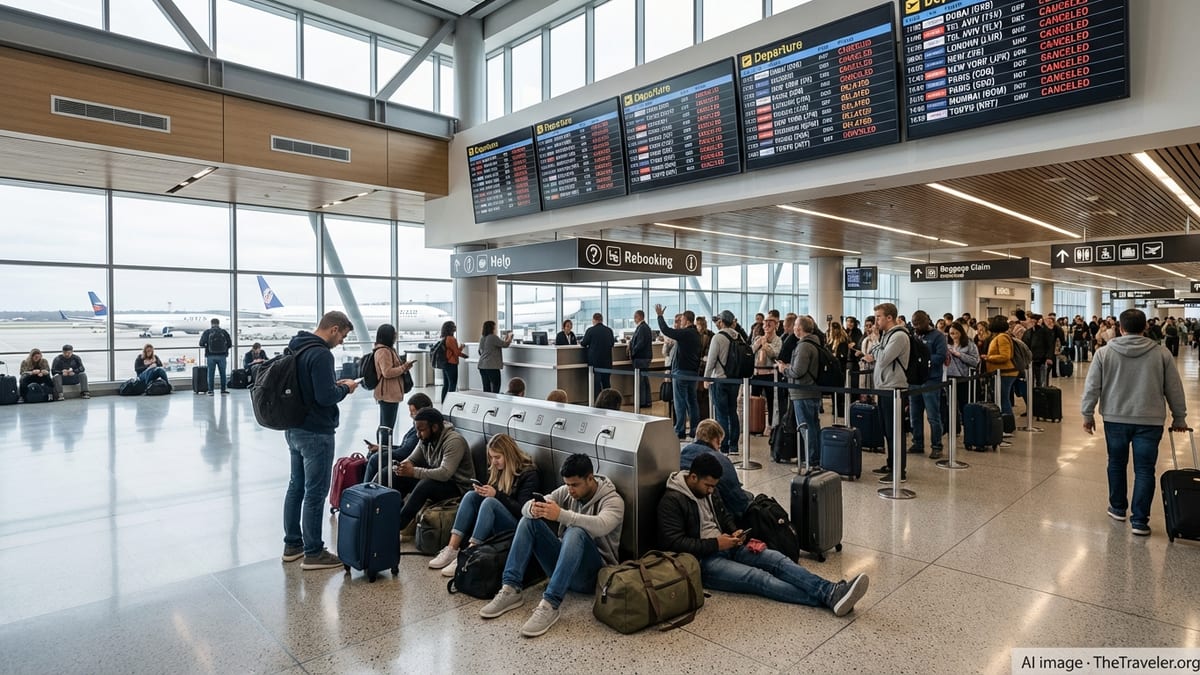
Air travel across the Middle East remains particularly sensitive to the security climate. Past rounds of missile and drone fire in the current Iran-related crisis have prompted temporary closures of airspace in affected countries, rerouting of major flight corridors and delays at regional hubs. These disruptions are reflected in State Department alerts that caution Americans about the potential for sudden airline cancellations and limited options for departure.
According to publicly available aviation and government notices, national carriers and international airlines have periodically adjusted schedules or diverted aircraft to avoid perceived risk areas. This has reduced direct connectivity on some routes linking North America and Europe with Gulf and Levant destinations, complicating multi-stop itineraries that transit through traditional hubs.
In several Gulf states, earlier advisories ordered or authorized departures of non-essential US government staff following threats of Iranian strikes. Such steps have signaled to private travelers that the security assessments used by governments can change rapidly, even in destinations that typically market themselves as stable stopover points. Travel experts who track these notices recommend building in flexibility, such as refundable tickets and alternative routings via Europe or Asia.
Beyond aviation, overland links have also been affected. Reporting on regional conditions notes periods when road crossings between some Middle Eastern countries were constrained by increased security checks or closures tied to nearby military activity. Travelers are being urged in public guidance to verify the status of land borders and to have contingency plans in case preferred routes become inaccessible.
Practical Advice for US Travelers Considering the Region
For Americans weighing travel to Israel or neighboring countries, publicly available guidance places strong emphasis on careful advance planning. Prospective visitors are encouraged to consult the latest country-specific advisories, paying close attention to regional maps that distinguish between safer urban centers and higher-risk border zones, including northern Israel.
Security experts and official advisories alike recommend that travelers maintain situational awareness by checking local news and registering their trip with government alert systems where available. In the US context, information from consular services highlights the value of receiving real-time notifications about missile warnings, demonstrations or transport disruptions.
Insurance and itinerary flexibility have also become central considerations. Travel industry analyses point out that many standard policies exclude coverage for war-related incidents, making it important for visitors to verify what is covered before committing to flights and accommodations in or near conflict-affected areas. Choosing lodging with robust shelter options and clear emergency procedures can further reduce risk.
Despite the challenging backdrop, some tourism activity continues in parts of Israel and the wider region that are viewed as relatively insulated from direct confrontation. However, the latest US Embassy message on northern Israel, aligned with a broader pattern of Middle East security alerts, signals that the margin for miscalculation remains narrow. Travelers are being asked, through cumulative public guidance, to balance personal risk tolerance with the persistent possibility of renewed clashes involving Iran.