


More news on this day
Travelers moving through some of the United States’ busiest air hubs faced another difficult day as a mix of severe weather and airspace congestion contributed to 321 cancellations and 2,189 delays centered on Boston, New York, and Chicago, according to aviation tracking data and published reports.
Get the latest news straight to your inbox!
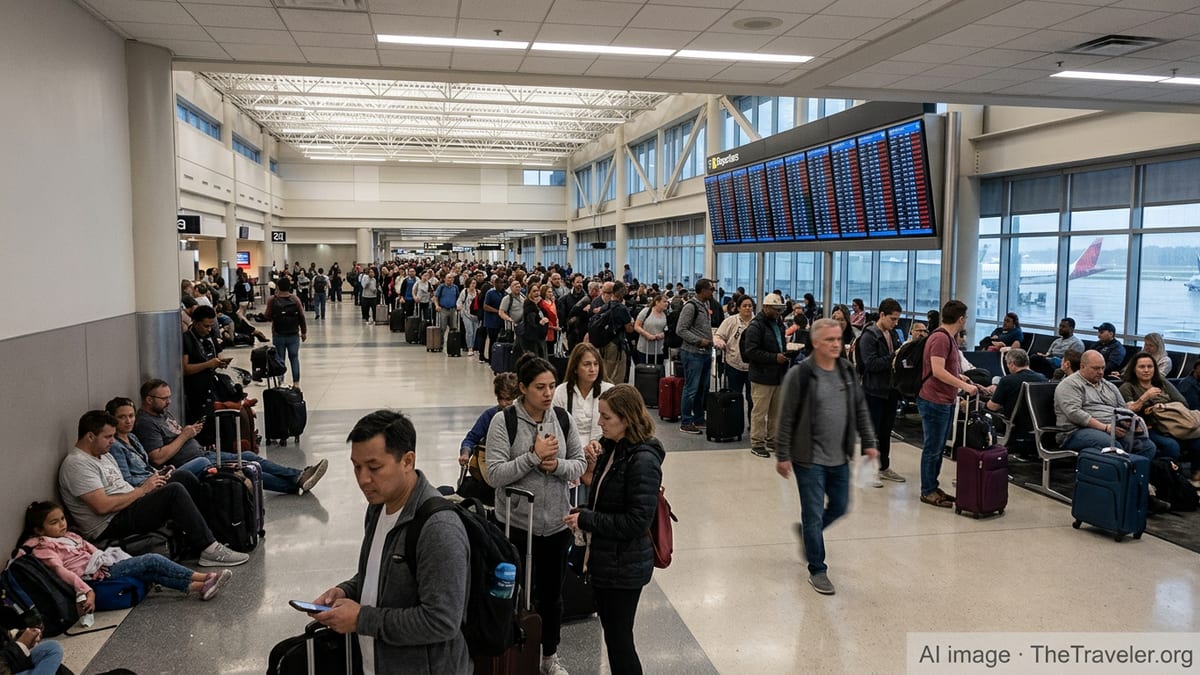
Storm Systems and Tight Schedules Converge on Key Corridors
Published coverage of today’s operations indicates that unsettled late‑summer weather over the Northeast and Midwest intersected with heavily used air corridors, triggering widespread disruption around Boston Logan International Airport, New York–area airports, and Chicago O’Hare. Thunderstorms and low clouds periodically reduced visibility and required increased spacing between aircraft, reducing the volume of traffic that air traffic managers could safely move through already congested airspace.
Aviation tracking services cited in industry reports show that the 321 cancellations and 2,189 delays were spread across multiple domestic and international carriers but concentrated at these three hubs, which serve as primary connection points for itineraries across the United States and to Europe. The pattern of disruption suggests a cascading effect, as a delayed or canceled aircraft in one city removed capacity from subsequent rotations elsewhere in the network.
Historical analyses by transportation researchers highlight that Boston, New York, and Chicago consistently rank among the US airports most vulnerable to weather‑related schedule disruptions, in part because of their coastal or lakeside locations and dense daily flight schedules. When storms settle over these regions, even brief ground stops or required reroutes can ripple outward for hours, driving up national cancellation and delay counts.
Boston Logan Sees Persistent Weather‑Related Strains
Boston Logan International Airport has experienced a series of weather‑linked challenges this year, and today’s figures reinforced that pattern. Tracking data and recent local coverage point to recurrent thunderstorms, shifting winds, and infrastructure work as contributors to longer gate holds and a rising number of late arriving and departing flights at the airport.
Flight performance statistics collected by third‑party services show that Logan has repeatedly posted elevated totals of daily delays and cancellations compared with many peer airports, particularly on days with unstable coastal weather. In addition, runway and airfield projects, including safety‑related construction, have periodically constrained available capacity, increasing the likelihood that modest weather complications will translate into more significant disruptions.
Publicly available guidance from Logan and regional carriers urges passengers to monitor flight status frequently, use airline mobile apps for real‑time updates, and build additional buffer time into itineraries, especially when planning evening departures. For travelers connecting through Boston on transatlantic or cross‑country routes, same‑day misconnections have become a recurring risk when thunderstorms or low ceilings move in during peak hours.
New York’s Multi‑Airport System Feels the Pressure
New York’s complex multi‑airport system, anchored by John F. Kennedy International, LaGuardia, and Newark Liberty, also figured prominently in today’s disruption totals. The region’s airspace is among the most tightly choreographed in the world, handling dense flows of arrivals and departures that are particularly sensitive to even minor reductions in capacity.
Industry reports referencing today’s conditions describe periods of ground delay programs and flow restrictions as storms skirted coastal New York and nearby states. When such measures are in place, aircraft are held at their origin airports or slowed en route to prevent excessive stacking near New York’s approach fixes, which can quickly inflate delay statistics across multiple carriers.
Recent experiences shared by travelers and airline employees, as reflected in public forums and travel advisories, also point to the compounding role of staffing limitations in air traffic control and at airline operations centers. These structural constraints can reduce flexibility to reassign crews, reposition aircraft, or open additional departure slots when weather threatens to disrupt tightly packed schedules in the New York area.
Chicago O’Hare Disruptions Echo Across the Midwest
Chicago O’Hare International, a central hub for both domestic US and transborder flights, rounded out the trio of airports most affected by today’s disruptions. As one of the country’s primary connecting hubs, O’Hare plays an outsized role in national on‑time performance, and operational constraints there tend to reverberate across the Midwest and beyond.
Airport status tools and tracking portals show that O’Hare experienced periods of arrival and departure delays as weather systems moved across the Great Lakes region. For airlines using Chicago as a central connecting point, late inbound aircraft reduced the availability of equipment for onward flights, contributing to additional cancellations and missed connections even after local conditions began to improve.
Flight history and performance data for key routes between Chicago and East Coast cities, including New York, indicate that this corridor is particularly prone to knock‑on effects when either region encounters thunderstorms or strong frontal systems. When both Chicago and the New York area experience unsettled conditions, same‑day recovery options narrow rapidly, often forcing airlines to trim schedules or consolidate flights.
Nationwide Knock‑On Effects and Traveler Takeaways
Although the disruption was concentrated in Boston, New York, and Chicago, flight‑tracking visualizations and industry summaries show that secondary airports across the United States also recorded elevated delay counts as a result of missed connections and aircraft repositioning challenges. Smaller cities that rely on a limited number of daily flights to these hubs were particularly exposed to cancellations and extended delays when inbound aircraft failed to arrive on time.
Transportation research on the economic impact of weather‑related flight disruptions underscores the broader cost of such events, estimating that each cancellation can generate significant direct and indirect expenses for airlines, airports, and passengers. These range from crew and aircraft repositioning to accommodation, rebooking support, and lost productivity for travelers.
Airports and airlines continue to promote a set of practical steps for passengers moving through historically delay‑prone hubs. Publicly available guidance emphasizes confirming flight status before leaving for the airport, signing up for text or app alerts, traveling with flexible itineraries when possible, and considering earlier departures on days when storms are forecast along key corridors. While such strategies cannot eliminate the risk of disruption, they can improve the odds of reaching a destination on the intended day of travel.
FlightAware live delay and cancellation statistics
Boston.com coverage of recent Logan Airport disruptions
US transportation research on the cost of weather‑related cancellations