


More news on this day
Air travel across Asia is facing a fresh wave of disruption, with real time aviation data showing more than 3,600 delays and about 470 cancellations recorded across 39 major airports in a single 24 hour period, unsettling schedules for tens of thousands of passengers on one of the region's busiest early September travel days.
Get the latest news straight to your inbox!
Network Wide Disruptions Concentrated at Major Asian Hubs
Published coverage drawing on live flight tracking dashboards indicates that 39 airports across East, South and Southeast Asia collectively logged 3,618 delays and 471 cancellations over a recent 24 hour window in early September 2026. The disruption was most acute at large connecting hubs that handle dense waves of domestic and international departures.
Jakarta Soekarno Hatta International Airport and New Delhi's Indira Gandhi International Airport rank among the hardest hit, according to open datasets summarised by travel and aviation outlets. Jakarta alone accounted for more than 200 delayed flights and just over 50 cancellations, the highest cancellation total attributed to any single airport in the current data snapshot.
Additional pressure is reported at Chinese and Northeast Asian gateways, including Guangzhou, Shenzhen, Beijing and Hong Kong, which together move some of the highest passenger volumes in the region. These hubs play a central role in connecting intra Asian routes with long haul services to the Middle East, Europe and North America, amplifying the knock on effects when operations slow.
Airport disruption indices published by real time tracking platforms show several of these hubs moving into ranges typically associated with minor to moderate operational problems at various points in the day, reflecting a mix of elevated delay shares, longer average waits and pockets of cancellations.
Weather, Haze and Congested Airspace Combine
Reports from recent weeks indicate that no single cause is driving Asia's latest disruption spike. Instead, aviation analytics firms and industry publications point to an overlapping set of factors, including seasonal storms, cross border haze, and capacity constraints that leave little slack in the system when conditions deteriorate.
Across parts of Southeast Asia, recurring smoke haze linked to Indonesian forest and land fires has reduced visibility at times, slowing operations at Jakarta and several secondary Indonesian gateways as crews adjust runway use and spacing between arrivals and departures. In South Asia, monsoon related thunderstorms over northern India have periodically forced holding patterns and diversions around New Delhi and other busy cities.
In parallel, aviation data from August 2026 shows that many of the same airports were already operating close to their limits during peak hours, with earlier days in the month also registering several thousand delays and hundreds of cancellations across multiple countries. Analysts cited by regional media have described this pattern as a "4,000 delay days" dynamic, where even routine weather or temporary runway closures can tip an already crowded schedule into widespread disruption.
Constraints in surrounding airspace add another layer of complexity. Reroutes around conflict affected corridors linking Asia with the Middle East and Europe have lengthened some journeys and compressed traffic into narrower bands of usable airspace, contributing to congestion on certain trunk routes.
Strain on Airlines and Passengers Across the Region
The spike in delays and cancellations is hitting airlines operating large narrowbody and widebody fleets across China, India and Southeast Asia, as well as international carriers threading long haul services through the region. Previous disruption tallies from aviation rights platforms show that Asian operators have shouldered a significant share of global schedule volatility through 2026, with the Asia Pacific region accounting for a high proportion of worldwide cancellations during earlier high pressure months.
In the current episode, Chinese carriers feature prominently in the disruption tables, with data cited by travel industry reports indicating that some mainland airlines recorded several hundred delayed flights and dozens of cancellations over recent comparative events. Indian and Indonesian airlines have also faced rolling operational challenges on dense domestic networks that leave little room to re accommodate passengers when aircraft and crews fall out of position.
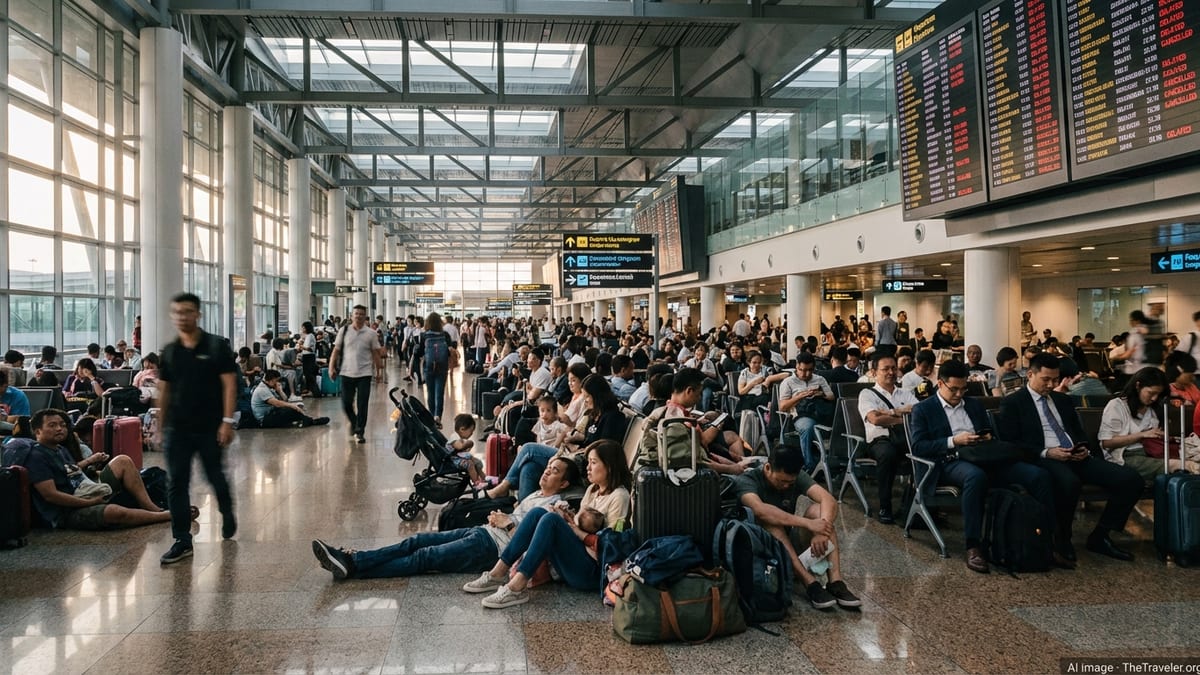
For travelers, the immediate impact is visible in long queues at check in counters, crowded departure halls and last minute gate changes across multiple hubs. Aviation consumer research from recent months highlights how irregular operations can quickly lead to surges in terminal passenger numbers, stretching airport services, baggage systems and ground transport links beyond their normal design loads.
Some carriers have been able to preserve portions of their schedules by selectively canceling lower demand flights, consolidating services and prioritizing long haul rotations. However, the scattershot nature of disruption across dozens of airports makes it difficult for passengers to predict where problems will surface next, driving reliance on airline apps and airport displays for up to the minute information.
Data Underscores a Broader Capacity and Resilience Challenge
The latest figures arrive against a backdrop of broader questions about how quickly Asia's airport and air traffic infrastructure can keep pace with returning demand. Industry assessments released over the northern summer noted that Asia Pacific carriers and airports have restored traffic levels close to or above pre pandemic benchmarks on many routes, even as staffing, stands and runway capacity lag in some markets.
Research from aviation analytics providers and regional airport associations shows that Asia Pacific has absorbed a rising share of global flight cancellations in 2026, reflecting both its rapid traffic recovery and its exposure to weather, geopolitical events and route restructuring through the Middle East. When delays and cancellations cluster at a handful of highly connected hubs, the resulting ripple effects can distort itineraries far beyond the original problem airports.
Experts quoted in these studies argue that building more resilience into the system will require a mix of infrastructure investment, improved airspace management and operational buffers. Suggested measures include additional rapid exit taxiways, expanded apron space, and collaborative decision making tools that help airlines and air navigation providers respond to storms and surges before they cascade across the network.
At the same time, the growing use of real time disruption indices by flight tracking platforms is providing a more granular picture of how stress propagates through airport systems. These composite scores, which blend cancellation rates, delay shares and average delay length, are increasingly used by travel planners and corporate travel managers to assess which hubs are most likely to experience problems on a given day.
What Travelers Can Expect in the Coming Weeks
While the current count of 3,618 delays and 471 cancellations captures a single intense disruption window, recent reporting suggests that volatility is likely to persist through the tail end of the monsoon and typhoon seasons. Aviation news outlets tracking day by day performance across Asia point to recurring patterns of afternoon and evening congestion as storms flare and busy departure waves stack up.
Airlines have encouraged customers in public advisories and social media posts to monitor flight status closely, arrive earlier than usual for departures from known hotspots and remain flexible about routings where possible. In markets with passenger rights frameworks, travelers affected by long delays or cancellations may be eligible for rebooking or other forms of assistance, depending on the cause of disruption and local regulations.
For now, the latest cross regional snapshot underlines how interconnected Asia's aviation network has become. A cluster of delays in Jakarta, New Delhi or southern China can quickly reverberate through itineraries touching the Gulf, Europe or North America. With demand still strong and infrastructure under strain, aviation watchers expect similar disruption spikes to remain a recurring feature of the travel landscape across the region.
Sources: Travel And Tour World; Nomadlawyer; AirMedia24; Flightradar24 airport disruption index; Cirium on time performance analysis