


More news on this day
United States air travelers encountered another day of significant disruption as operational data logged 79 flight cancellations and 2,993 delays across airports nationwide, straining airline schedules and testing passenger patience in the peak summer period.
Get the latest news straight to your inbox!
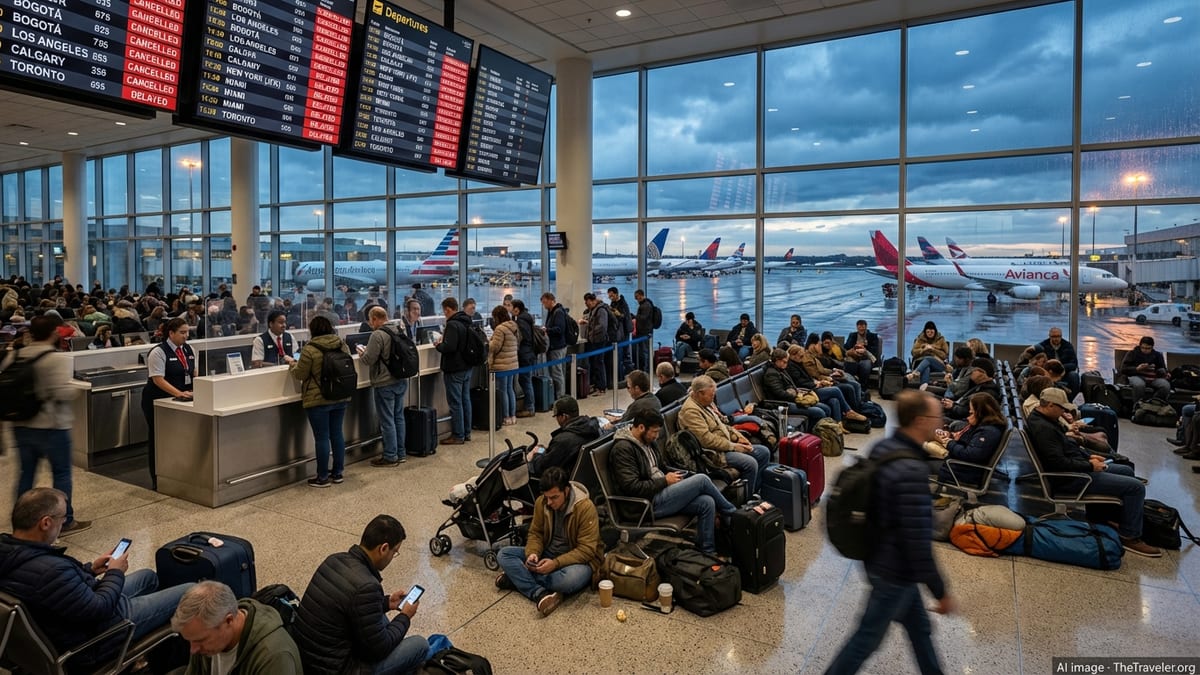
Snapshot of a Disrupted Travel Day
The latest figures, compiled from live tracking platforms and aviation data providers, indicate that most disruptions were concentrated on busy domestic routes, where tight schedules and high load factors left little room for operational slack. The imbalance between flight volume and available airspace capacity continues to be a defining feature of the 2026 summer travel season.
Reports indicate that the 79 cancellations represent a relatively small share of the day’s total scheduled departures, yet the 2,993 delays signal a broad, systemwide slowdown. Even short delays ripple through carrier networks, reducing aircraft and crew availability for subsequent legs and increasing the likelihood of missed connections for travelers.
Industry analytics show that delays within, into, or out of the United States routinely number in the thousands on peak days, underscoring how sensitive the system is to weather patterns, congestion, and staffing levels. The current disruption totals fall within that pattern but illustrate how quickly operational performance can deteriorate when multiple pressure points coincide.
Publicly available information from aviation dashboards suggests that some hubs experienced more acute strain than others, with large coastal and Midwest airports again featuring prominently in delay statistics. For passengers, this translated into crowded boarding areas, rebooked itineraries, and extended onboard waits on arriving or departing aircraft.
Weather, Volume, and Network Complexity Drive Delays
While each delayed or canceled flight has its own specific cause, broad data sets from the Bureau of Transportation Statistics and the Federal Aviation Administration highlight recurring drivers: non-extreme weather, air traffic volume, airport operations, and airline-controlled factors such as crew and maintenance planning. When several of these elements coincide on the same day, the result is a noticeable uptick in disruptions across the country.
Summer travel patterns amplify these vulnerabilities. High demand pushes airlines to operate dense schedules at major hubs, leaving minimal buffer time between flights. Any disruption, such as a ground stop due to thunderstorms or temporary restrictions in a congested airspace sector, forces carriers to reset departure sequences, which can cascade into rolling delays that last well beyond the initial weather event.
According to published coverage and federal data, a significant share of delays nationally is frequently attributed to the national aviation system category, which includes heavy traffic volume and airspace constraints, rather than severe weather alone. This means that even on days without widespread storms, relatively modest weather or operational issues can still trigger hundreds or thousands of delayed departures.
Complicating matters further, airlines often rely on aircraft that operate multiple short- and medium-haul segments per day. When an early-morning flight arrives late, subsequent departures using the same aircraft can start the day behind schedule, adding to the nationwide tally of delayed flights by evening.
Impact on Major Hubs and Regional Airports
The distribution of the 79 cancellations and 2,993 delays is not uniform. Major hub airports handle the bulk of daily traffic, so they naturally appear more often in disruption statistics. However, the impact can be particularly acute at smaller regional airports that depend on a limited number of daily flights and connections through larger hubs.
Published tracking data frequently show that delays at large connecting hubs can strand passengers far from their final destination, especially when later flights are fully booked. For travelers at smaller fields served by regional affiliates, a single cancellation can eliminate the only nonstop option of the day, forcing lengthy re-routings and overnight stays.
Airports in the Northeast corridor, the upper Midwest, and major Sun Belt hubs have all periodically faced high volumes of delayed departures in recent months. Factors such as runway construction, localized storms, and temporary airspace flow programs can lead to departure metering and airborne holding, which are then reflected in day-end disruption tallies.
Despite ongoing efforts to modernize air traffic management and improve scheduling discipline, the combination of aging infrastructure in some regions and persistent demand growth means that large hubs remain structurally vulnerable to knock-on effects from even short-lived operational challenges.
Passenger Rights and Airline Response
As disruption figures climb, passenger awareness of rights and remedies has become an integral part of the travel experience. Guidance from the U.S. Department of Transportation emphasizes that airlines are responsible for providing refunds when flights are canceled or significantly changed and the traveler chooses not to fly, particularly when the cause is within the carrier’s control.
Regulatory documents and consumer reports highlight an important distinction between disruptions caused by airline operations and those attributed to the broader national aviation system or severe weather. Compensation policies, meal vouchers, or hotel accommodations can vary depending on how an airline categorizes the disruption, leading travelers to scrutinize public statements and contract-of-carriage provisions more closely.
In response to repeated disruption cycles over recent summers, a number of carriers have announced schedule adjustments, investments in crew reserves, and technology upgrades designed to improve recovery from irregular operations. Publicly available information indicates that these measures can reduce the number of last-minute cancellations but may not fully shield travelers from the type of widespread delay totals recorded in the latest data.
Consumer advocates regularly encourage passengers to track their flights using multiple tools, monitor real-time gate and schedule changes, and understand refund and rebooking options before arriving at the airport. On days when national delay counts reach into the thousands, such preparation can be crucial in minimizing missed connections and unplanned overnight stays.
What the Latest Totals Signal for the Rest of Summer
The logging of 79 cancellations and 2,993 delays on a single day serves as a barometer of how stretched the U.S. air travel system remains in mid-2026. While the figures do not represent an extreme outlier compared with previous high-demand seasons, they reinforce concerns that even moderate operational strain can produce large numbers of affected passengers.
Aviation analysts who track historical performance note that late July and early August are typically among the busiest periods of the year for domestic travel, with family vacations, business trips, and major events all contributing to elevated passenger volumes. When schedules are near capacity, weather-related reroutings or short-term staffing gaps can quickly erode on-time performance metrics.
Looking ahead to the remainder of the summer, published forecasts from industry and government sources point to continued strong demand, with little sign of a sustained slowdown in bookings. Unless carriers and infrastructure managers are able to carve out more operational resilience, travelers may see more days characterized by several thousand delays and dozens of cancellations across the national network.
For now, the latest disruption tally underscores a familiar message for U.S. air travelers: even when outright cancellations are relatively contained, widespread delays remain a defining feature of the modern flying experience, and planning itineraries with extra time and flexibility is often the most practical response.