


More news on this day
Flight operations across Brazil experienced a fresh wave of disruption as 68 domestic services were delayed and 14 were canceled, affecting passengers at several of the country’s busiest airports and adding pressure to an already strained aviation network.
Get the latest news straight to your inbox!
Operational Turbulence Across Key Brazilian Hubs
Publicly available data from airport monitoring platforms and local media reports indicate that the disruptions were concentrated at major hubs serving Brazil’s densest air corridors, including São Paulo and Rio de Janeiro. Congonhas Airport in São Paulo, one of the country’s busiest domestic terminals, reported a cluster of delayed departures alongside a series of cancellations that rippled through airline schedules.
The 14 cancellations were primarily domestic services, amplifying the impact on business travelers and commuters who rely on frequent shuttle flights between major cities. While the number of canceled operations remained limited relative to the total schedule, the pattern of 68 delays compounded the effect, as knock-on rescheduling and aircraft repositioning issues extended disruption throughout the day.
Monitoring data show that delays were unevenly spread across the timetable, with early morning interruptions triggering a cascade that left mid-morning and afternoon services operating off-slot. For passengers attempting tight connections, even modest initial delays translated into missed onward flights and extended airport stays.
Published coverage from Brazilian news outlets noted that similar clusters of disruptions have occurred several times in recent months, underscoring persistent fragility in domestic flight operations and the difficulty airlines face in restoring punctuality once the system is stressed.
Weather, Airspace Constraints and Network Knock-on Effects
Reports indicate that a combination of meteorological restrictions and airspace management constraints contributed to the latest episode. Low visibility and localized adverse weather in southeastern Brazil have, on several recent occasions, forced temporary adjustments in runway use and approach procedures at key airports, which in turn reduce capacity during peak periods.
When arrival and departure rates are curtailed, airlines often respond by holding flights on the ground, leading first to delays and, in more severe instances, to selective cancellations. Network carriers operating tight turnarounds on high-frequency domestic routes are particularly vulnerable. A delayed inbound aircraft can quickly push subsequent rotations behind schedule, even after conditions begin to improve.
Published information from Brazil’s highway concessionaires and traffic bulletins has also highlighted episodes of heavy fog and low visibility affecting transport links in and out of São Paulo’s metropolitan region in July 2026, further complicating day-of-operation planning. These external factors, when combined with internal airline constraints, can result in a fragile balance where relatively small disruptions cascade into substantial timetable disorder.
Aviation analysts cited in local coverage have repeatedly stressed that Brazil’s rapid recovery in air travel demand, without corresponding increases in operational buffers, has left domestic networks more exposed to disruption, particularly during busy weekdays and holiday peaks.
Passenger Impact and Rights Under Brazilian Rules
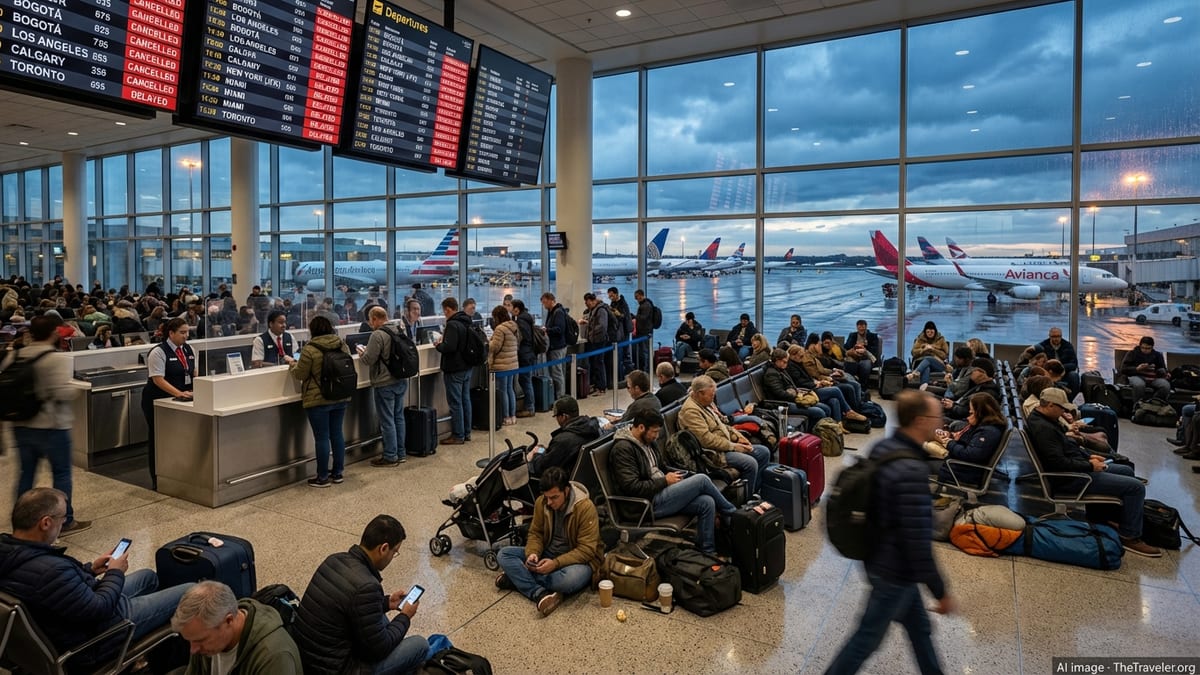
The disruptions left many travelers facing extended waits at terminals, missed connections, and the need to rebook itineraries at short notice. Social media posts and forum discussions from affected passengers described long queues at service counters, limited real-time information on revised departure times, and challenges securing alternative flights on the same day.
Under Brazilian aviation consumer rules, publicly available guidance from the National Civil Aviation Agency explains that airlines must provide different forms of assistance depending on the length of delay and the circumstances involved. These measures can include access to communication, food vouchers, and, in cases of longer disruptions, accommodation and ground transport between the airport and hotel.
Where cancellations or significant delays are linked to factors within the airline’s control, such as crew or maintenance planning, passengers may have additional options, including rebooking at no extra cost or seeking reimbursement. However, if disruptions are attributed to force majeure events like severe weather or air traffic restrictions, obligations may differ, which can lead to disputes over classification of the cause.
Recent clarifications from Brazil’s higher courts and regulatory bodies, summarized in legal and judicial bulletins, emphasize that protections linked to airline fault remain in force even as broader legal debates continue over mass litigation related to flight delays and cancellations. Travelers are encouraged by consumer advocates to retain boarding passes, receipts, and any written communication from airlines to support potential claims.
Airlines Face Mounting Operational and Cost Pressures
The latest wave of delays and cancellations comes at a time when Brazilian carriers are navigating rising fuel costs and a competitive market for both domestic and regional routes. According to recent parliamentary and regulatory reports, higher jet fuel prices have already prompted airlines to trim capacity on some routes and rationalize underperforming services, resulting in thousands of pre-planned cancellations over recent months.
Network optimization efforts, while intended to improve long-term reliability and financial performance, can create short-term strain when unexpected disruptions occur. With fewer spare aircraft and crew available, carriers have less flexibility to recover from irregular operations, making it more likely that early delays snowball into broader network instability.
Industry observers note that Brazil’s aviation sector has been undergoing structural adjustments since the pandemic, with airlines consolidating routes, renegotiating fleet plans, and adapting to shifting demand patterns between leisure and corporate travel. These transitions, combined with infrastructure constraints at crowded airports, mean that even moderate spikes in demand or unplanned outages can push operations close to their limits.
Publicly available statements and financial disclosures from carriers over the past year have highlighted investments in digital tools to improve disruption management, including automated rebooking and enhanced passenger notifications. However, recent incidents suggest that implementation remains uneven, with many travelers still reporting a reliance on traditional service counters during major irregular operations.
What Travelers Should Expect in the Near Term
Given the interplay of weather risks, infrastructure constraints, and ongoing industry restructuring, analysts following Brazil’s aviation sector suggest that intermittent pockets of disruption are likely to persist, particularly during busy travel periods and in regions prone to low-visibility conditions. Domestic routes connecting São Paulo, Rio de Janeiro, Belo Horizonte, and other large centers are expected to remain the most sensitive due to their high utilization and tight scheduling.
Passenger advocacy groups and consumer organizations recommend that travelers build in additional buffer time for connections within Brazil, especially when itinerary legs involve separate tickets or different carriers. Monitoring flight status closely on day of travel, arriving early at the airport, and preparing contingency plans for overnight stays are also commonly suggested strategies.
While airlines and regulators continue to refine contingency protocols and invest in systems designed to minimize disruption, the latest series of delays and cancellations underlines the importance of clear communication and consistent application of passenger rights. For international visitors unfamiliar with local regulations, consulting official passenger guides and reputable consumer resources before travel can help clarify entitlements if plans are unexpectedly upended.
As Brazil moves through the remainder of the austral winter and into traditionally busy spring holiday periods, the performance of domestic flight networks will remain a closely watched barometer of the sector’s resilience, with travelers hoping that recent turbulence will give way to more stable operations in the months ahead.