


More news on this day
Air travel across the United States faced another day of turbulence as live tracking data showed 321 flight cancellations and 2,189 delays within, into, or out of the country, disrupting plans for thousands of passengers and straining operations at major hubs such as Boston and New York.
Get the latest news straight to your inbox!
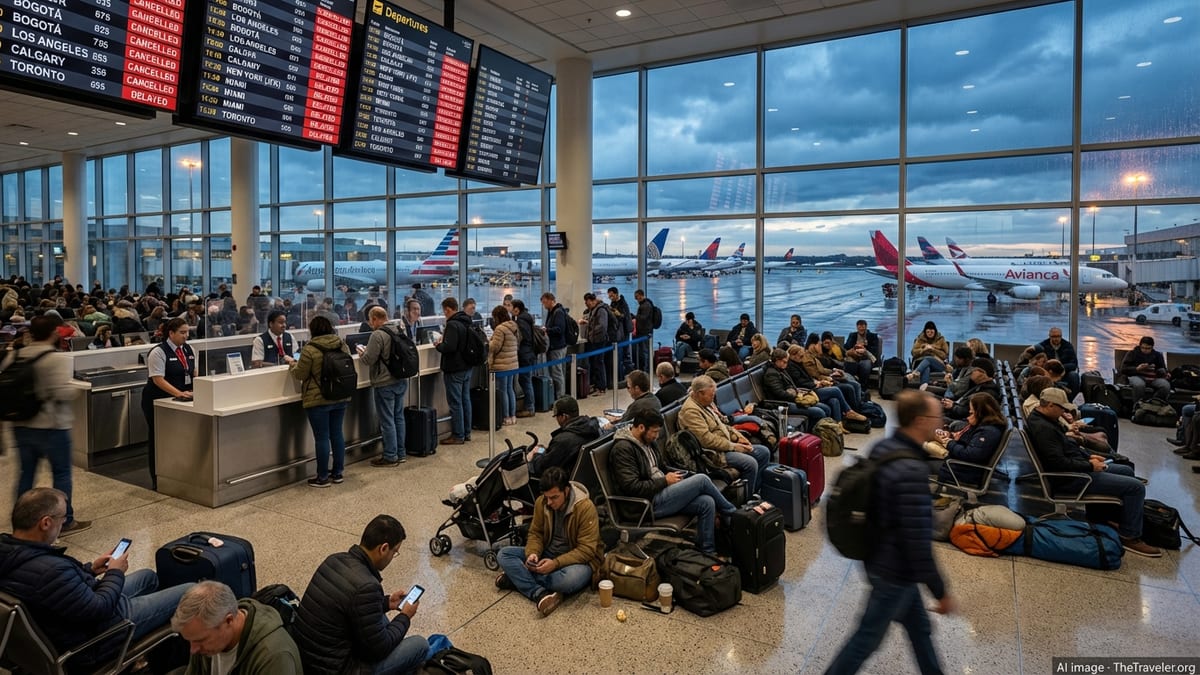
National Totals Point to a Strained Air Travel System
Publicly available tracking data indicates that, by early afternoon, there were 321 cancellations and more than 2,100 delays affecting flights within, into, or out of the United States. These figures sit within a larger global picture of nearly 15,000 delays and close to 1,000 cancellations worldwide, underscoring how quickly localized weather and operational issues can ripple through the broader network.
While the raw numbers fluctuate throughout the day, the pattern shows U.S. travelers bearing a disproportionate share of disruptions relative to global totals. Flight monitoring tools highlight how cascading delays in key metropolitan areas cause knock-on effects that stretch into the evening, as aircraft and crews struggle to return to their scheduled rotations.
The cumulative impact is felt not only by passengers facing missed connections and rebookings but also by airports and airlines working to manage congestion at gates, taxiways and in the air. The latest data reflects a system that remains vulnerable whenever several high-traffic hubs encounter challenging conditions on the same day.
Boston Logan Sees Elevated Delays and Cancellations
Boston Logan International Airport has again emerged as a focal point in the latest round of disruptions. Flight-tracking pages dedicated to Boston report a steady climb in delay and cancellation counts over the course of the day, with totals rising from single digits in the early morning to several dozen cancellations and hundreds of delays by evening.
The Boston figures mirror a pattern seen repeatedly this summer, when weather systems and congestion in the Northeast combined to generate “hundreds of delays” and “dozens of cancellations” at Logan on particularly stormy days. Local coverage in late July documented similar disruption when heavy rain triggered nearly 300 arrival delays and more than 30 cancellations in a single day, illustrating how quickly operations can become constrained when conditions deteriorate.
Recent weeks have also seen travelers and aviation workers describe Boston as a challenging base this season, with some reporting that what should have been routine journeys stretched into marathon travel days involving multiple rebookings and long waits in terminals. The latest statistics suggest that Logan continues to sit near the center of regional turbulence whenever weather and airspace constraints converge.
New York–Area Airports Amplify the Disruption
The New York aviation corridor, one of the busiest in the world, also appears prominently in the current wave of disruptions. Flight-tracking dashboards and traveler reports point to intermittent ground stops, reroutes and holding patterns when storms or low visibility sweep through the region, particularly around LaGuardia, John F. Kennedy International and Newark Liberty.
In recent weeks, passengers using these airports have described extensive gate holds and tarmac waits as thunderstorms and wind prompted air traffic management measures. Accounts shared publicly refer to multi-hour ground delays, late-night cancellations and missed connections across the New York metro area, reinforcing the sensitivity of the local network to even short-lived bouts of severe weather.
Because New York airports anchor so many domestic and transatlantic routes, disruptions there tend to propagate quickly. Aircraft arriving late into the region are often turned around behind schedule, creating subsequent delays on outbound flights to other parts of the United States. When combined with constraints at other Northeast hubs such as Boston, the result can be a broad wave of delays that extends far beyond the immediate storm zone.
Weather, Airspace Congestion and Operational Limits Intersect
Today’s figures highlight how multiple factors typically intersect to produce large-scale disruption. Real-time flight maps show weather systems moving through the Northeast, a region already prone to congestion because of dense air traffic and limited runway capacity. When storms cross major corridors, air traffic managers often space out departures and arrivals for safety, immediately reducing throughput at affected airports.
These weather-driven restrictions interact with operational limitations such as tight crew scheduling and high summer load factors. Traveler accounts in recent weeks describe flights canceling late in the evening when pilots or cabin crews approach federally mandated duty limits after earlier delays. In such cases, an aircraft may be available but cannot depart without a legal crew, turning what began as a weather delay into an operational cancellation.
Once disruption takes hold during peak travel periods, recovery can be slow. Airlines must reposition aircraft and crews, secure overnight accommodations for stranded passengers and adjust schedules for subsequent days. That dynamic is apparent in recent patterns from Boston, New York and other hubs, where weather on one afternoon has translated into elevated cancellation and delay counts well into the following morning.
What Travelers Can Expect and How to Adapt
The latest cancellation and delay statistics suggest that U.S. travelers should continue to prepare for volatile conditions, especially when flying through the Northeast. Flight monitoring services and federal aviation dashboards emphasize that airport-wide status indicators may still show only modest average delays, even as individual flights experience significant hold times during busy periods.
Passenger experiences collected publicly over recent weeks underline the importance of building extra time into itineraries, particularly for connections involving Boston, New York or other high-traffic hubs. Travelers have reported that itineraries originally designed as straightforward one-stop journeys sometimes expanded into multi-leg, all-day efforts after rolling delays and late-night cancellations.
Given today’s reported totals of 321 cancellations and more than 2,000 delays across the United States, similar patterns of disruption are likely to continue whenever storms, staffing constraints and airspace congestion coincide. While conditions can improve quickly once weather clears and traffic management initiatives are lifted, the immediate outlook for many passengers today involves longer lines, shifting departure times and a heightened need to monitor flight status up to the moment of boarding.
FlightAware live global cancellations and delays
FlightAware United States cancellations and delays today
FlightAware Boston Logan cancellations and delays
FAA airport status: Boston Logan International Airport
Boston.com: Delays and cancellations at Logan amid heavy rain