


More news on this day
Passengers across Kenya have faced days of disruption after an aviation workers’ strike brought operations at major airports to a near standstill, leaving travelers stranded, itineraries upended and airlines scrambling to clear a mounting backlog of flights.
Get the latest news straight to your inbox!
Strike halts operations at Kenya’s main aviation gateways
Kenya’s aviation network has been severely disrupted since Sunday, August 30, when members of the Kenya Aviation Workers Union (KAWU) began a nationwide stoppage affecting key facilities including Nairobi’s Jomo Kenyatta International Airport (JKIA), Moi International Airport in Mombasa, Eldoret International Airport and Kisumu International Airport. Published coverage indicates that the industrial action started as a go-slow that quickly escalated, slowing ground handling, security screening and air traffic control support, and forcing airlines to delay or cancel services.
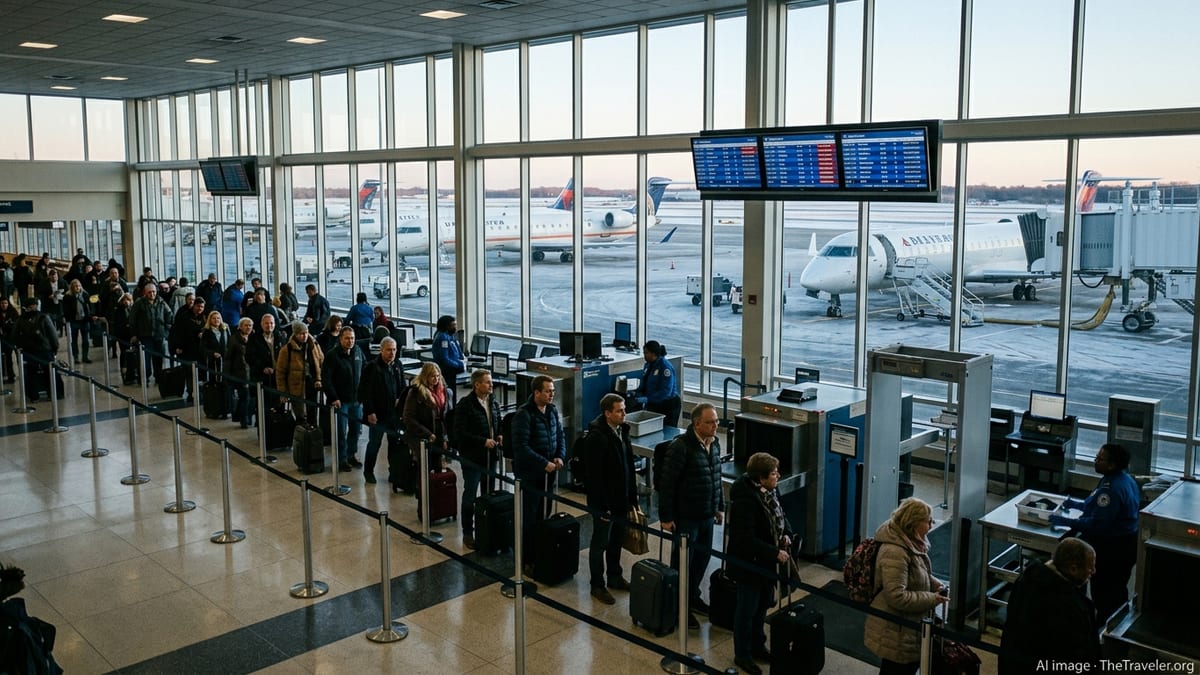
Reports from Kenyan and regional media describe crowded terminals at JKIA, where thousands of travelers were left waiting for hours as departure boards filled with cancellations. Images showed passengers seated on pavements outside the main terminal and sleeping on benches and café chairs overnight as they waited for updated information on their flights.
The disruption has been particularly acute at JKIA, a major gateway for East and Central Africa and a key transit point for long-haul flights between Europe, Asia and the Americas. With staff shortages and reduced processing capacity, operations at one of the continent’s busiest hubs slowed dramatically, affecting both domestic connections and international routes.
Local outlets also highlighted knock-on effects at secondary airports, where regional flights were delayed or grounded while airlines reassessed their schedules. Travel industry associations warned that the stoppage risked wider impacts on tourism and time-sensitive cargo, particularly for Kenya’s flower and fresh-produce exports that rely heavily on overnight air freight.
Pay, staffing and labour disputes at the heart of the walkout
Publicly available information attributes the strike to a series of long-running labour grievances between aviation employees and several state-linked aviation agencies. KAWU has cited stalled negotiations over a collective bargaining agreement with the Kenya Civil Aviation Authority, disputes over agency fees and concerns about staffing levels and working conditions at airports as central triggers for the industrial action.
Union statements referenced in local reporting indicate that aviation workers have been pressing for the implementation of earlier agreements that temporarily averted a strike earlier in the year. With those commitments perceived as unfulfilled, employees moved ahead with the current stoppage after issuing formal strike notices in line with Kenyan labour law.
Coverage from Kenyan newsrooms notes that the dispute involves not only regulator staff but also personnel at the Kenya Airports Authority and employees linked to major carriers, including a low-cost subsidiary serving domestic and regional routes. The breadth of participation broadened the impact from airport support functions to key operational roles, including those working around the runway and in terminal operations.
Analysts quoted in regional aviation publications have pointed to the February 2026 industrial action, which similarly stranded passengers at JKIA, as a sign of deepening tensions in the sector. They argue that repeated stoppages reflect structural strains in Kenya’s aviation system, where rising passenger volumes and increased airline competition have not always been matched by investment in staffing and infrastructure.
Travelers stranded, rerouted and forced to improvise plans
For passengers, the effect of the strike has been immediate and highly disruptive. News reports from Nairobi describe families camping out in airport cafés and hotel lobbies while they waited for word on rescheduled flights, with some travelers reportedly unable to afford overnight accommodation and forced to seek makeshift shelter within terminal buildings.
Accounts in Kenyan newspapers and online platforms recount missed safaris, abandoned business trips and disrupted journeys home as flights were delayed or canceled with little notice. Some travelers connecting through Nairobi reported being stranded at outstation hubs, including Abu Dhabi and regional African airports, after onward flights to Kenya were removed from schedules amid uncertainty over operations at JKIA.
Several airlines serving Kenya have issued public advisories urging customers not to travel to airports without first confirming their flight status and have relaxed rebooking rules. According to published guidance, passengers on affected services are being allowed to change travel dates without penalty, and in some cases refund fees have been temporarily waived to ease the disruption.
Travel forums and social media posts highlighted frustrations over communication at airport terminals, with some passengers reporting long queues at service desks and limited staffing to handle rebookings. Others raised concerns over perceived unequal treatment in the allocation of hotel accommodation and meal vouchers, suggesting that stranded Kenyan travelers sometimes struggled to access the same support as foreign visitors.
Strike called off but recovery expected to take days
By Tuesday, September 1, the immediate crisis began to ease after KAWU and Kenyan authorities announced a return-to-work agreement following overnight talks. Multiple outlets report that the union has directed members to resume duties and that aviation agencies have committed to progress on collective bargaining issues and union recognition disputes.
Officials’ statements summarized in local coverage indicate that the agreement includes a framework to re-open negotiations on staff pay and conditions at the civil aviation regulator, along with provisions intended to protect workers who participated in the strike from disciplinary action. Further details are expected to emerge as the text of the agreement is circulated among stakeholders.
Even with the strike officially suspended, aviation experts caution that flight operations are unlikely to normalize immediately. Airlines must reposition aircraft and crew, accommodate stranded passengers and adjust schedules to clear the backlog created by days of disruption. Kenya’s flag carrier has advised customers to continue checking flight status before heading to the airport and has discouraged walk-in travelers without confirmed departures.
Local news reports suggest that clearing the accumulated passenger queues at JKIA and other airports could take several days, especially on popular regional and long-haul routes. Industry observers note that the pace of recovery will depend on factors such as aircraft availability, airport slot constraints and the ability of ground staff to safely handle elevated passenger volumes once full operations resume.
Regional travel and tourism feel the impact
The timing of the strike has raised concern within East Africa’s travel and tourism sector, given Kenya’s role as a regional transit hub and gateway to safari destinations. Travel trade groups have warned in past disruptions that multi-country itineraries built around Nairobi connections are especially vulnerable when JKIA’s operations are curtailed.
Initial feedback from safari operators and tour companies, reported in local business coverage, indicates that some visitors have been forced to shorten or reconfigure their trips, while others have postponed travel altogether. The ripple effects extend beyond Kenya’s borders, affecting neighboring countries that rely on Nairobi for long-haul links from Europe, North America and the Middle East.
Kenya’s broader economy may also feel short-term pressure. Previous aviation stoppages have highlighted the vulnerability of high-value exports such as cut flowers and fresh vegetables, which depend on reliable overnight air freight. While detailed cargo data from the latest strike is not yet available, commentators in regional aviation media suggest that even brief disruptions can translate into significant financial losses for exporters.
Policy analysts argue that the latest crisis underscores the need for more robust contingency planning in Kenya’s aviation sector, including mechanisms to maintain essential services during labour disputes and clearer communication protocols for passengers and airlines. As normal flights gradually resume, attention is likely to turn to whether the new agreement between workers and authorities can deliver a more stable environment for one of Africa’s most important aviation hubs.
Standard Media: JKIA grinds to a halt leaving passengers stranded
The Star: JKIA strike chaos and passenger disruption
Kenyans.co.ke: Aviation workers call off strike after disruptions