


More news on this day
Air travel across the United States was thrown into chaos on Friday, November 13, 2026, after the Federal Aviation Administration ordered an unprecedented nationwide ground stop, halting virtually all departures and leaving thousands of passengers stranded at airports from coast to coast.
Get the latest news straight to your inbox!
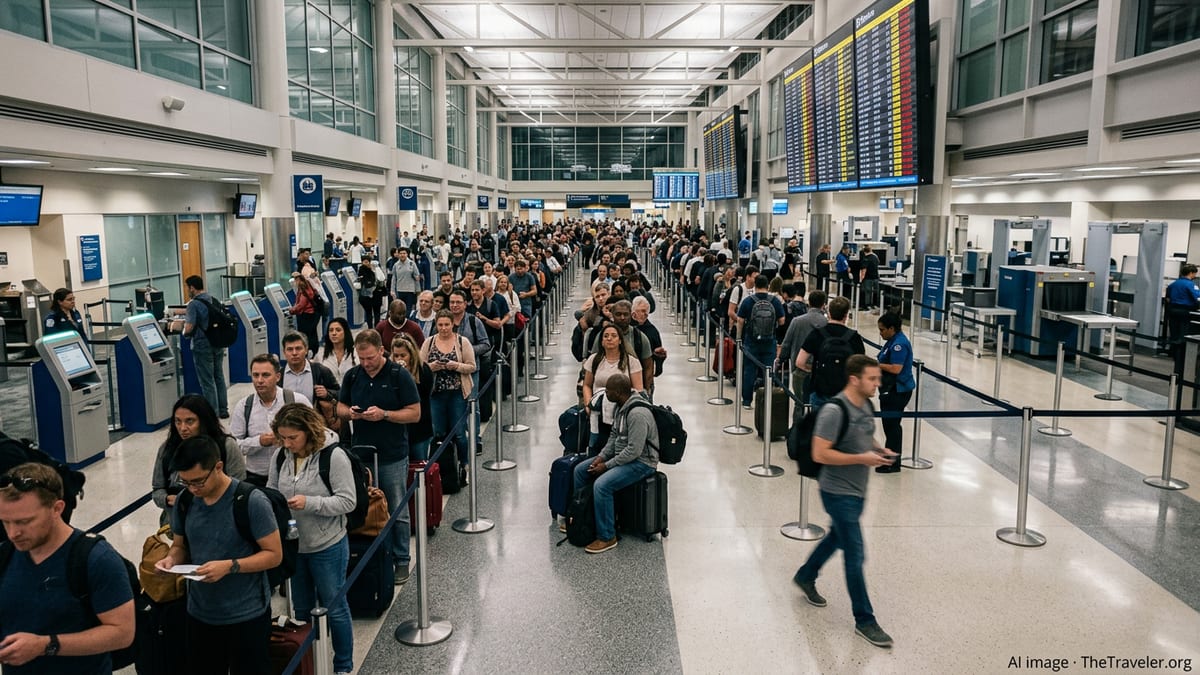
Nationwide departures halted after communications failure
According to publicly available alerts from the Federal Aviation Administration’s Air Traffic Control System Command Center, an advisory issued Friday afternoon directed that “all airports are ground stopped,” citing “extraordinary circumstances and for reasons of safety” following a widespread communications disruption affecting multiple air route traffic control centers.
Coverage by major US outlets indicates the order followed what the FAA later described as a “temporary telecommunications outage” that interfered with the ability of controllers to communicate reliably with aircraft in key parts of the national airspace system. The decision effectively froze most departures at every commercial airport in the country while inbound international flights were managed on a case by case basis.
Live tracking services such as Flightradar24 and other aviation data firms reported that more than 30,000 departures and arrivals had been scheduled for the remainder of the day, with roughly 1.5 million passengers booked on flights departing after the halt took effect. While some flights already airborne were allowed to continue to their destinations, the order brought normal airport departure banks to an abrupt standstill.
The Federal Aviation Administration has issued only one similar system wide halt in the past two decades, in January 2023, when a failure in the agency’s safety-alerting system led to a brief national ground stop. Analysts note that the current disruption is broader in scope, as it appears tied to the communications backbone used by multiple air traffic control centers rather than a single software platform.
Scenes of disruption at major US hubs
From New York’s John F. Kennedy and LaGuardia airports to Chicago O’Hare, Atlanta, Denver and Los Angeles, arrival and departure boards quickly filled with delay notices as airlines held aircraft at gates and on taxiways. Local television coverage from Chicago and New York showed security lines slowing to a crawl as travelers learned of the ground stop from overhead monitors and airline app notifications.
Reports from airport operators in cities including Gainesville, Atlanta and Miami described departure banks effectively wiped out for much of the afternoon as aircraft scheduled to leave were ordered to remain on the ground. In Gainesville, local coverage described all commercial departures delayed, with airport staff bringing in food for stranded travelers while they awaited updates.
At large hubs, the disruption rippled well beyond departing flights. Aircraft waiting to reach gates after landing in Los Angeles and other airports were forced to hold on taxiways because the gates they were assigned to were occupied by planes that could not depart under the FAA order. Passengers arriving on domestic connections found themselves stuck in terminals overnight as missed connections piled up.
Sports teams, cargo operators and charter flights were also swept up in the halt. Regional news reports and team statements described professional and college teams stranded on the tarmac or forced to rearrange travel plans ahead of weekend games, while logistics analysts warned that time sensitive freight shipments would face knock-on delays through the weekend.
Passengers stranded and scrambling for alternatives
Aviation discussion forums and social media feeds quickly filled with accounts from travelers sitting on stationary aircraft for extended periods, lining up at customer service counters or attempting to rebook flights through airline apps. Many described crew members relaying that they were waiting for word from operations as to when, or whether, their flights would be cleared to depart.
Publicly available estimates from industry data providers suggest that by early evening at least several hundred flights had been diverted and thousands more delayed or canceled outright as the ground stop cascaded through airline schedules. With departure slots compressed into the remaining hours of the day, carriers began prioritizing longer haul and international departures, leaving some shorter domestic segments pushed into Saturday.
Travelers at some regional airports reported that rental car counters were quickly depleted as passengers sought to drive to nearby major hubs or to complete trips by road. Hotel prices near large airports climbed as stranded passengers looked for overnight accommodation, particularly in cities such as Chicago, New York and Dallas where connecting traffic is heavy.
Consumer advocates noted that normal US passenger rights rules remain in effect despite the extraordinary scope of the disruption. Airlines are not generally required to provide compensation for delays caused by air traffic control issues, but many carriers routinely offer meal vouchers or hotel assistance when large numbers of customers are stranded, and travelers were urged to check airline apps and notifications for specific policies.
Investigations focus on aging systems and new technology
Early reporting from national outlets indicates that investigators are examining whether the outage originated with network or routing equipment serving air traffic control facilities in the Chicago region before cascading to other centers. Some analyses have pointed to longstanding concerns about aging communications infrastructure in the US air traffic system, which in some locations still relies on decades old hardware.
The disruption comes as the FAA works on a multi year modernization effort that includes replacing legacy systems and, according to recent technical briefings, retiring the last of the floppy disk based components in its infrastructure by 2028. Industry observers noted that the outage could intensify scrutiny of how new, more centralized platforms are rolled out and tested, particularly any cloud based or AI supported tools intended to manage traffic flows.
Commentary in national media stressed that there is no publicly available indication at this stage that the outage was caused by a cyberattack or malicious interference. Transportation and homeland security leaders have emphasized in prior incidents that safety protocols are designed to favor conservative decisions, meaning traffic is halted whenever communication reliability is in doubt, even if the root cause is later found to be a technical fault.
Regulatory filings and policy documents published in recent years describe ground stops as among the most restrictive traffic management initiatives available to the FAA, intended for use only in situations where destination airports, airspace sectors or critical systems cannot safely handle additional arrivals. The scale of Friday’s action, covering virtually every departure point in the United States, underscores how central communications networks have become to the entire system.
What travelers should expect in the coming days
By late Friday evening, live delay dashboards maintained by third party services indicated that the nationwide ground stop had been formally lifted, but that many airports would continue to experience significant delays as airlines worked through backlogs of aircraft and crews displaced by the halt. Some carriers warned that irregular operations could continue into the weekend as planes and staff returned to their normal positions.
Travel experts recommend that passengers with flights scheduled through the weekend monitor their airline’s app or website closely, as same day schedule changes remain likely while departure banks are rebuilt. For those already at the airport, airline representatives at gates and customer service counters remain the primary channel for rebooking and for assistance with meal or hotel arrangements where available.
Travelers with flexible plans have been advised in public guidance to consider rebooking for later dates if possible, particularly on heavily traveled routes through major hubs such as Atlanta, Dallas Fort Worth, Newark and Chicago O’Hare that were heavily affected by the halt. Those still at home but holding tickets for Friday evening departures were encouraged by some airlines to delay heading to the airport until they had received confirmation that their flights were operating.
While the immediate priority for aviation authorities and airlines is restoring normal operations, policy analysts suggest that the incident is likely to fuel renewed debate in Washington about the pace of investment in air traffic control technology and resilience. For the millions of passengers whose trips were upended, the focus for now is simply on getting to their destinations, often a day or more later than planned.