


More news on this day
A rare nationwide ground stop ordered by the Federal Aviation Administration on Friday sent shockwaves through the U.S. aviation system, with Rogue Valley International–Medford Airport in southern Oregon monitoring the fast-moving situation as stranded travelers scrambled to rebook flights and salvage weekend plans.
Get the latest news straight to your inbox!
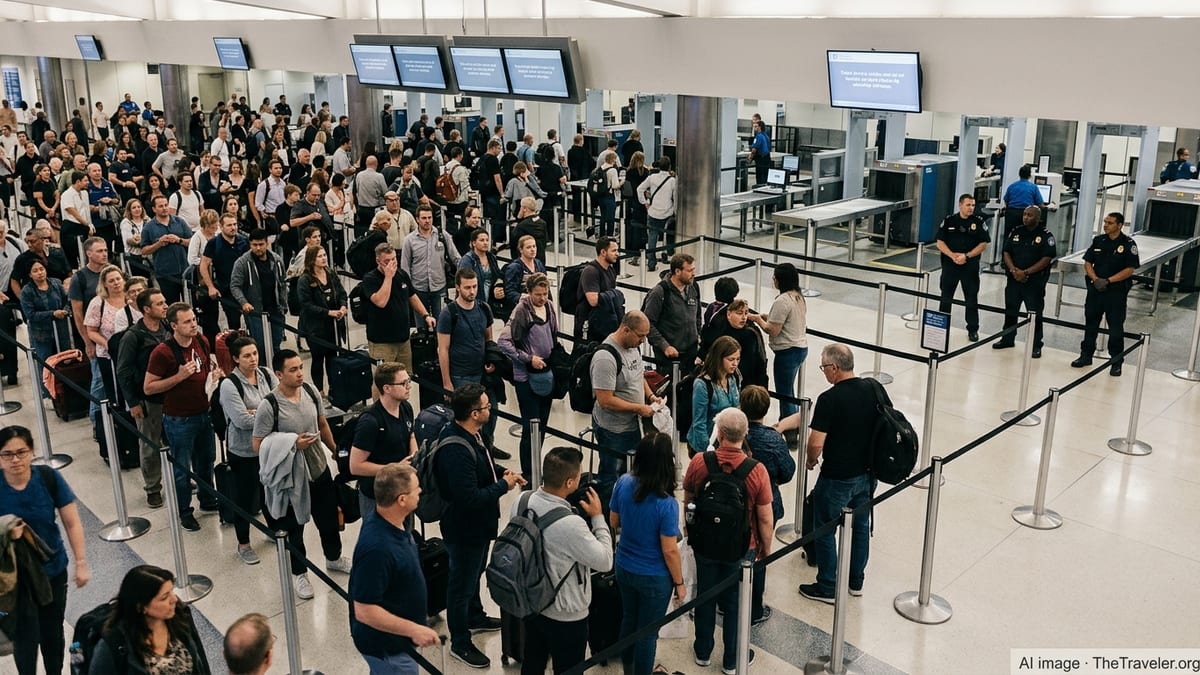
Nationwide FAA Ground Stop Disrupts U.S. Air Travel
The Federal Aviation Administration ordered all U.S. departures to halt on Friday afternoon after a communications failure affected regional air traffic control centers, triggering one of the most sweeping interruptions to the nation’s air system in decades. Publicly available advisories described the action as a nationwide ground stop issued for “extraordinary circumstances” and safety reasons, temporarily freezing takeoffs at airports across the country.
National coverage indicates the halt began in the early afternoon Eastern time and was lifted only after several hours, but the disruption left aircraft, flight crews and passengers badly out of position. Airlines warned that the knock-on effects would continue into the weekend even after the FAA cleared departures to resume. Carriers reported extensive delays and cancellations as they attempted to reset schedules, reposition planes and reconnect crews to assigned routes.
The move marked one of the very few times since the September 11, 2001 attacks that the federal government has effectively stopped nearly all civilian departures nationwide. Previous systemwide interruptions have been associated with critical aviation technology failures, including a January 2023 outage of a key pilot-alert system, and Friday’s incident similarly centered on air traffic control communications infrastructure.
While investigations into the exact cause were still unfolding, analysts quoted in national outlets noted that any widespread failure within the communications network can rapidly cascade, forcing regulators to slow or halt traffic so controllers can focus on safely guiding aircraft already in the air to their destinations.
Medford’s Regional Role and Operational Status
Rogue Valley International–Medford Airport, which serves southern Oregon and northern California, remained under the same federal airspace restrictions as larger hubs, and departures from Medford were subject to the nationwide ground stop order. Flight-tracking and delay-monitoring services showed that the FAA had not issued a Medford-specific ground delay or closure program in the weeks preceding the incident, underscoring how abruptly the nationwide halt changed conditions for local flyers.
Medford is a relatively small but critical regional facility, with a handful of gates and several daily departures on mainline and regional partners of major U.S. airlines. Transportation Department performance data for 2026 shows that Medford’s on-time departure rate had been competitive with national averages, which meant many local travelers were unaccustomed to wide-scale, system-driven disruptions of the kind seen during the ground stop.
Airport planning documents available from Jackson County indicate that Medford maintains an emergency contingency and tarmac delay plan for extended irregular operations, including provisions for deplaning, access to restrooms, and basic services if aircraft are held away from gates for long periods. Those measures are designed for exceptional circumstances such as severe weather, major diversions or national-level disruptions that keep passengers on the ground longer than scheduled.
On Friday, the airport’s immediate task centered on monitoring the evolving FAA directives, relaying information from airline partners and coordinating with ground crews as carriers adjusted departure times. With no authority to override federal airspace restrictions, local operations depended on when and how quickly the FAA relaxed the nationwide ground stop order.
Stranded Passengers Grapple With Missed Connections
As at larger hubs, passengers at Medford confronted a mix of delays, rolling departure estimates and cancelled trips as the ground stop took hold. Regional travelers often connect in cities such as Seattle, Portland, Denver, San Francisco or Salt Lake City, so even short holds on Medford departures risked breaking tightly timed itineraries for those heading to the East Coast, the Midwest or international destinations.
National reporting from major airports illustrated what many Medford passengers likely faced on a smaller scale. At large hubs, information screens shifted rapidly as departure times were pushed back, hundreds of flights were delayed and thousands of travelers looked for alternative routings. Those with tight layovers saw same-day connections evaporate, while others confronted the possibility of overnight stays as airlines worked through backlogs once the FAA allowed departures to resume.
Similar patterns tend to emerge at regional airports during systemwide events. When a nationwide halt is in place, passengers who have already boarded may be required to remain on aircraft at the gate or return to the terminal, depending on airline decisions and available gate space. Travelers who have not yet checked in or passed security often congregate near ticket counters, where agents can rebook itineraries and provide updated estimates based on the latest FAA guidance.
At Medford, the limited number of daily departures can increase the stakes for stranded passengers. A missed evening flight to a hub city might mean waiting until the next morning or even later for another seat, particularly at busy times of year. For visitors headed to the Rogue Valley’s wine country, outdoor areas, or nearby national parks, the ground stop reshuffled arrival plans; for local residents traveling outward for business, medical appointments or family events, it introduced new uncertainty and costs.
How the Ground Stop Unfolded and Was Lifted
According to national broadcast and wire-service coverage, the FAA’s command center issued its ground stop order with language instructing all aircraft operators that departing traffic should remain grounded until further notice. The directive applied broadly across commercial and, in practice, much general aviation traffic that relies on the national air traffic control system for controlled airspace operations.
Reports indicate that the communications breakdown affected multiple Air Route Traffic Control Centers, the large regional facilities that guide aircraft once they have departed local terminal airspace. With controllers facing degraded communications, regulators moved to halt new departures so that staff could concentrate on managing planes already airborne, reducing complexity until backup systems and workarounds could be established.
As technicians worked on the underlying issues, airlines and airports across the country entered a holding pattern, waiting for updates from federal aviation authorities. Some flights already in the air were permitted to continue to their destinations using available communication channels, but departures at the gate remained frozen. In Medford and at other regional airports, this meant that some passengers could still expect inbound aircraft to arrive, while outbound flights could not be released until the ground stop was eased.
Later in the day, the FAA began lifting the nationwide restriction, allowing airports to resume departures in stages. Aviation-focused outlets reported that even after the formal ground stop ended, capacity constraints persisted as air traffic managers slowly rebuilt normal flows, taking into account weather, staffing and the accumulated queues of delayed aircraft. For travelers, the resumption did not immediately translate into normalcy; many still faced rolling delays, misaligned connections and the prospect of rebooking for another day.
What Travelers Through Medford Can Expect Next
With the nationwide order lifted but residual disruptions continuing, passengers using Rogue Valley International–Medford Airport in the hours and days after the event could expect changing departure times and higher-than-usual load factors on flights that did operate. Airlines were likely to prioritize getting aircraft and crews back into position, which can lead to schedule swaps, equipment changes and occasional consolidations of lightly booked flights.
Consumer guidance from federal transportation agencies and airline customer-service advisories generally encourages passengers affected by a nationwide disruption to check their flight status frequently, use mobile apps or automated systems for rebooking where available, and keep boarding passes and receipts in case compensation or expense reimbursement is later offered under carrier policies. During large-scale events tied to air traffic control issues, some airlines voluntarily waive change fees or fare differences for certain date and route changes, though policies vary by carrier and booking class.
Medford’s scale means its terminal and parking facilities are more compact than those of major hubs, which can ease some crowding pressures during system outages. However, limited nearby flight options make it especially important for stranded passengers to understand whether it is more practical to wait in the Rogue Valley, drive to a larger West Coast airport, or adjust trip dates entirely. Publicly available transportation statistics for 2026 show that Medford has maintained solid on-time performance during normal operations, offering some reassurance that once the national system stabilizes, service levels are likely to return to their previous baseline.
For now, the episode underscores how closely even small regional airports are tied to national infrastructure. A technical failure hundreds of miles away can ripple quickly into local departure lounges from southern Oregon to the East Coast, turning a routine Friday flight out of Medford into a prolonged wait, an unplanned overnight stay or a scramble for a new itinerary.