


More news on this day
Rapid military escalation between the United States and Iran around the Strait of Hormuz is rippling across the Gulf, leaving many UAE residents and visitors asking what it means for flights, shipping, and day‑to‑day life on 25 July.
Get the latest news straight to your inbox!
Regional picture: A simmering conflict on multiple fronts
Published coverage on 25 July indicates that the United States and Iran remain locked in a multi‑week escalation centered on the Strait of Hormuz and nearby waters, with no durable ceasefire yet in place. Reports from international outlets describe continued U.S. air and naval operations targeting Iranian military assets along the southern coast, alongside Iranian missile and drone activity directed at U.S. interests and allied Gulf states.
In recent days, U.S. forces have reported disabling or firing on merchant vessels approaching Iranian ports, amid an expanded naval blockade designed to curb Iran’s ability to export oil and receive external supplies. Shipping analysts note that this has heightened tension in the Gulf of Oman and surrounding sea lanes that are critical to regional trade and energy flows.
Iran‑aligned groups have also intensified activity beyond the immediate Gulf. Houthi forces in Yemen have publicly claimed missile and drone attacks against Saudi energy infrastructure and shipping in the Red Sea, creating a second chokepoint of concern for maritime traffic linking the Suez Canal with Asian ports. This layered environment of risk forms the broader backdrop for anyone living in or traveling through the UAE today.
Commentary in regional and international media suggests that, for now, Iran appears to be calibrating its response, applying pressure on U.S. interests and partners while avoiding direct, large‑scale attacks on countries such as the UAE. However, policymakers and analysts widely describe the situation as volatile, with the potential for sudden shifts that could draw neighboring states more directly into the line of fire.
Impact on UAE security posture and public guidance
Publicly available information shows that the UAE has been recalibrating its security posture since the outbreak of hostilities earlier this year. In late April, the UAE Ministry of Foreign Affairs announced a travel ban on Emirati nationals visiting Iran, Lebanon and Iraq, citing heightened regional risks. That decision remains a key indicator of Abu Dhabi’s concern about spillover from the confrontation.
Foreign governments have also updated their view of the local threat environment. The United States raised its travel advisory for the UAE in March, ordering non‑emergency government personnel and family members to depart due to the possibility of missile and drone attacks and disruption to commercial aviation. The advisory stresses that locations associated with the United States, Israel and their partners could face elevated risk in the event of further escalation.
More recently, European travel advice has drawn attention to Iranian strikes on U.S. military and civilian infrastructure across the region since early July, including attacks on bases, ports and other facilities. These notices highlight the prospect of intermittent airspace closures, flight diversions and temporary shutdowns of airports in impacted states, although routine life in the UAE’s major cities has largely continued with visible but unobtrusive security measures.
Security analysts note that the UAE’s previous experience with cross‑border drone and missile incidents, particularly during earlier rounds of Yemen‑related tensions, has prompted investments in air defense and emergency response capability. While those measures cannot eliminate risk, they shape the way authorities prepare for and respond to any regional shock that might affect densely populated hubs such as Dubai and Abu Dhabi.
Flights, airspace and travel planning for residents
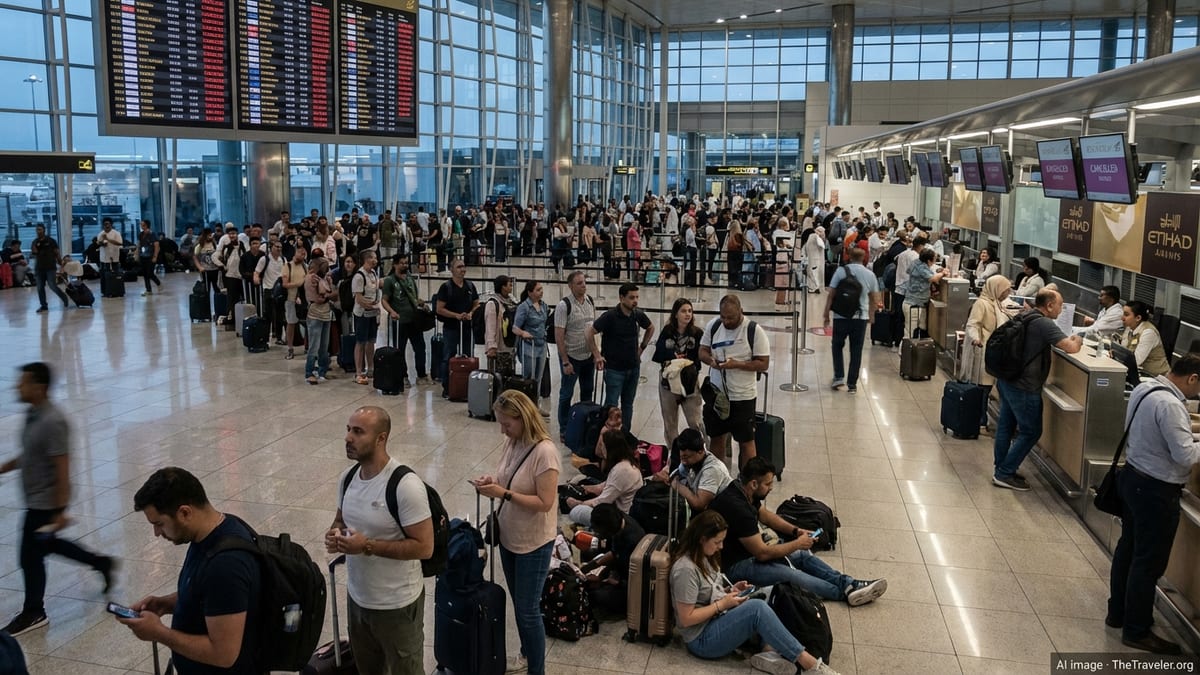
For residents and visitors, the most immediate practical question is whether it is safe to fly into or out of the UAE, and how itineraries might be disrupted. As of 25 July, major UAE airports continue to handle high volumes of traffic. However, airline schedules remain susceptible to rapid change because routes must avoid active conflict zones, missile trajectories and military operating areas over parts of the Gulf and neighboring countries.
Travel advisories from a range of governments consistently urge passengers to build flexibility into their plans, monitor airline notifications closely and be prepared for last‑minute delays, re‑routings or cancellations. Some carriers have already shifted flight paths to steer well clear of Iranian airspace and contested maritime corridors, which can lengthen journey times and increase congestion on alternative routes.
Industry commentary notes that Dubai and Abu Dhabi’s status as global hubs makes them a key part of many long‑haul connections, especially between Europe, Asia and Africa. Disruptions elsewhere in the region can therefore cascade through UAE airports even if local conditions remain calm. Travelers connecting onward to destinations closer to the front lines of the conflict, including certain Gulf and Levant states, may face additional screening or rebooking.
Residents planning leisure travel are being advised by several foreign ministries to verify the latest advisory level for every country on their itinerary, consider comprehensive travel insurance that covers security‑related disruption, and allow extra time at airports for security procedures. For U.S. citizens, the worldwide caution notice issued this week underlines the risk that groups sympathetic to Iran might target locations associated with Americans or Western interests, including in otherwise stable countries.
Maritime trade, oil flows and what it means on the ground
The conflict’s epicenter in and around the Strait of Hormuz has direct implications for a country like the UAE, whose economy is tightly linked to maritime trade and energy exports. Since late February, Iranian efforts to obstruct shipping through this narrow waterway, combined with U.S. military operations and a declared blockade, have constrained normal tanker traffic and raised insurance premiums for vessels transiting the region.
Shipping data and expert analysis suggest that some crude and liquefied natural gas exports have been rerouted via alternative pipelines and ports where possible, including facilities outside the immediate range of Iranian coastal systems. Even so, the combination of attacks on ships, drone incidents near key terminals and reported strikes on energy infrastructure in neighboring states has contributed to global oil price volatility over the past several weeks.
For UAE residents, these developments are more visible in financial markets and fuel costs than in day‑to‑day access to goods. The country’s well‑developed logistics sector and diversified import routes have so far cushioned consumers from major shortages. Retail and hospitality businesses in Dubai and Abu Dhabi continue to operate normally, although some report increased shipping costs and longer lead times for certain imports.
Analysts caution that a significant escalation at sea, such as a prolonged closure of both the Strait of Hormuz and key Red Sea passages, could have more noticeable knock‑on effects, ranging from higher airfares and freight rates to broader economic pressure. For now, however, the UAE remains positioned as a relatively resilient node in an increasingly stressed regional supply chain.
Practical guidance for staying informed and prepared
For people living in the UAE, the current phase of the U.S.–Iran confrontation is less about immediate danger on the streets and more about understanding a fast‑moving strategic environment. Security experts recommend that residents avoid speculation on social media and instead rely on official announcements from UAE authorities, reputable international news outlets and the travel advisories issued by their own governments.
Travelers are encouraged to register with their embassy’s citizen services programs, where available, so they can receive direct alerts if the security picture changes or if airspace restrictions affect departures. Keeping digital and printed copies of passports, residency permits and key contact numbers remains a standard precaution that can ease any unexpected disruption.
Businesses with regional operations, including those in logistics, aviation, tourism and energy, are closely following updates on shipping incidents, sanctions decisions and any talks aimed at de‑escalation. Corporate security briefings circulating in Dubai emphasize scenario planning for temporary airspace closures, cyber incidents linked to the conflict and localized protests or demonstrations that may emerge in response to new developments.
As of 25 July, publicly available information points to a tense but manageable situation inside the UAE itself, with robust infrastructure and emergency planning helping to absorb external shocks. Residents and visitors who stay informed, maintain flexible travel plans and follow local guidance are considered well placed to navigate the uncertainty around the U.S.–Iran crisis.