


More news on this day
As the US-Iran war continues to ripple across the Gulf, UAE residents face an evening of practical questions rather than political ones: whether flights will operate on schedule, which routes remain vulnerable to sudden changes, and what official travel guidance now says. Here is what to know on Saturday, September 19, 2026, based on the latest publicly available updates from travel advisories, aviation safety notices, and airline and airport reporting.
Get the latest news straight to your inbox!
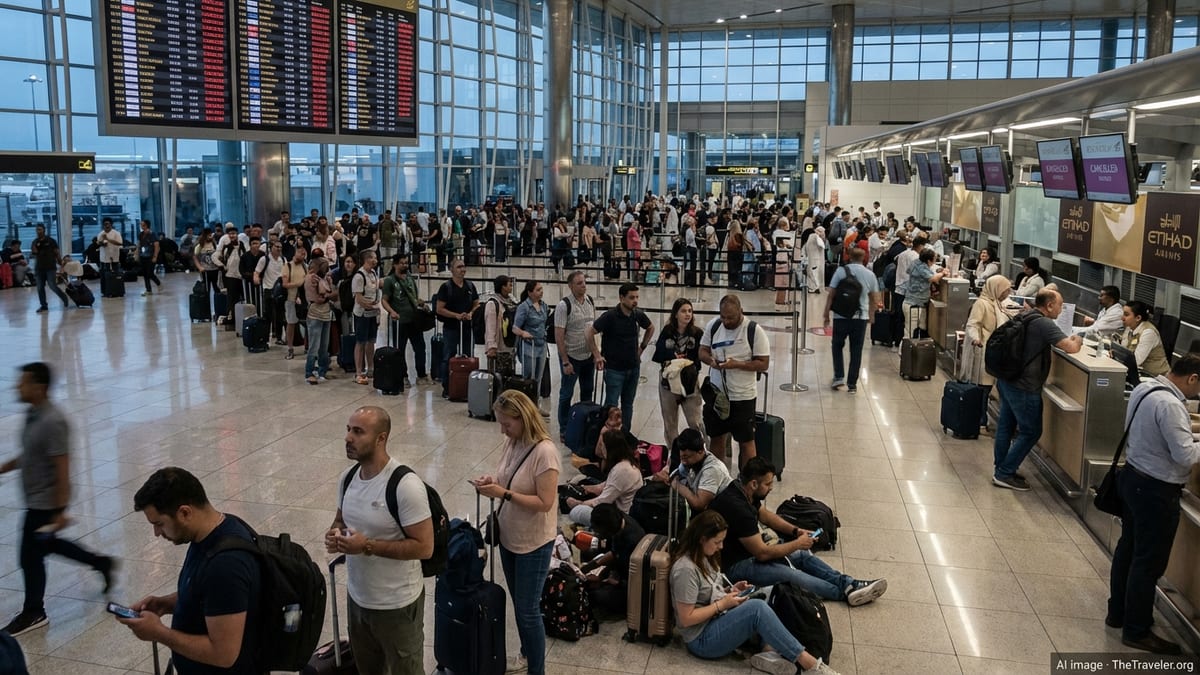
Flight disruption remains the most immediate risk
Across the UAE’s main hubs, the core issue for travelers remains operational uncertainty. Published coverage over the past two weeks has repeatedly pointed to last-minute delays, cancellations, and reroutes tied to regional security tensions, with Dubai International and Zayed International among the airports affected by knock-on impacts from airspace constraints and airline network adjustments.
Even when flights do operate, journey times can change if carriers reroute around higher-risk corridors. That can mean longer sectors, later arrivals, and missed onward connections, particularly for itineraries that would normally pass near Iranian, Iraqi, or other nearby flight information regions where conflict-related risk assessments can change quickly.
For this evening, travelers with departures tonight or early Sunday are best served by checking their airline’s flight-status tools shortly before leaving for the airport and again after arriving, because gate assignments, boarding times, and even aircraft types can shift if an inbound aircraft is delayed or diverted earlier in the day.
What official travel advisories are emphasizing right now
Government travel advisories being read closely by residents and visiting family members have highlighted two themes: the possibility of missile or drone-related incidents in the region and continuing disruption to commercial aviation. In late August, the US State Department kept the UAE at “Level 3: Reconsider Travel,” explicitly linking the elevated risk environment to the outbreak of hostilities between the United States and Iran on February 28, 2026, and noting ongoing flight disruption and the threat of attacks.
UK travel advice updated this month also frames the situation as unpredictable, with a specific warning that travelers should be prepared for flight cancellations and periodic airspace closures. That same guidance places added emphasis on maintaining situational awareness around sensitive sites, such as security or military facilities, and being ready to adjust plans if travel disruption escalates.
For UAE nationals specifically, the UAE Ministry of Foreign Affairs travel update page for Iran continues to display a clear restriction: it states that UAE citizens are banned from traveling to the Islamic Republic of Iran. Residents of other nationalities should also keep in mind that rules for entry, transit, and documentation can change fast during conflict, so the most reliable approach is to confirm eligibility and requirements directly through official government channels for your passport.
Aviation safety notices: why routes can change suddenly
Beyond day-to-day airline operations, aviation safety notices are a major reason schedules can shift with little warning. US aviation guidance has, in general terms, flagged heightened risk to civil aviation in and around the Persian Gulf and Gulf of Oman region in past notices and advisories, and carriers can respond by altering routings, adjusting fuel loads, or changing departure times to manage air-traffic flow constraints.
Separately, Europe’s aviation safety apparatus has also published conflict-zone guidance covering multiple flight information regions across the wider Middle East, including areas that matter for Gulf transits. For UAE residents, the practical effect is that some journeys may be re-planned to avoid certain corridors, and a flight that looks “on time” earlier in the day can become delayed later if air-traffic restrictions tighten or if airlines need to swap aircraft and crews to comply with updated routing plans.
If you are traveling with tight onward connections tonight or tomorrow, it is worth building extra buffer time for transit itineraries and being ready for rebooking options. This is particularly important for travelers heading toward destinations that have seen repeated schedule adjustments in recent coverage, including parts of the Gulf and near-region where airlines may temporarily suspend or reduce frequencies.
Visas, overstay issues, and what to do if travel is interrupted
For residents and visitors caught by sudden cancellations, immigration status can become a secondary stress point. Earlier this year, the UAE’s Federal Authority for Identity, Citizenship, Customs and Port Security announced an exemption from overstay fines for people unable to depart due to exceptional circumstances tied to airspace closures and flight suspensions, applying to fines incurred on or after February 28, 2026.
That policy remains relevant because conflict-related disruption can still prevent timely departures, especially when flights are suspended on short notice. Travelers who are approaching visa expiry dates, renewing residency-related documents, or planning border runs should treat tonight’s operational instability as a real planning factor and verify what documentation and grace provisions apply to their individual situation.
For travelers transiting through the UAE on short stays, the key practical takeaway is to retain proof of disruption where possible, such as airline notifications and booking change receipts, in case they are needed when addressing status questions with relevant official channels.
Practical planning for tonight and Sunday: what UAE residents should double-check
For this evening, the most useful steps are straightforward: re-check your booking status, confirm any schedule change messages, and allow extra time for airport arrival in case check-in and baggage flows are impacted by earlier delays. If your route involves connections, verify the minimum connection time at your transit airport and identify alternative routings in case your first sector slips.
Travelers should also keep an eye on whether their airline has adjusted baggage acceptance windows, check-in cutoffs, or rebooking rules for affected routes, as these details can change during prolonged disruption. If you have flexible travel, shifting to less connection-heavy itineraries can reduce exposure to missed onward flights.
Finally, residents making weekend plans should anticipate that disruption can extend beyond aviation. Public reporting and aviation-industry analysis in 2026 has linked the conflict to broader regional transport uncertainty, which can affect timings for freight, cruise or ferry planning in the wider Gulf, and even the availability of last-minute travel inventory on high-demand routes from Dubai and Abu Dhabi.