


More news on this day
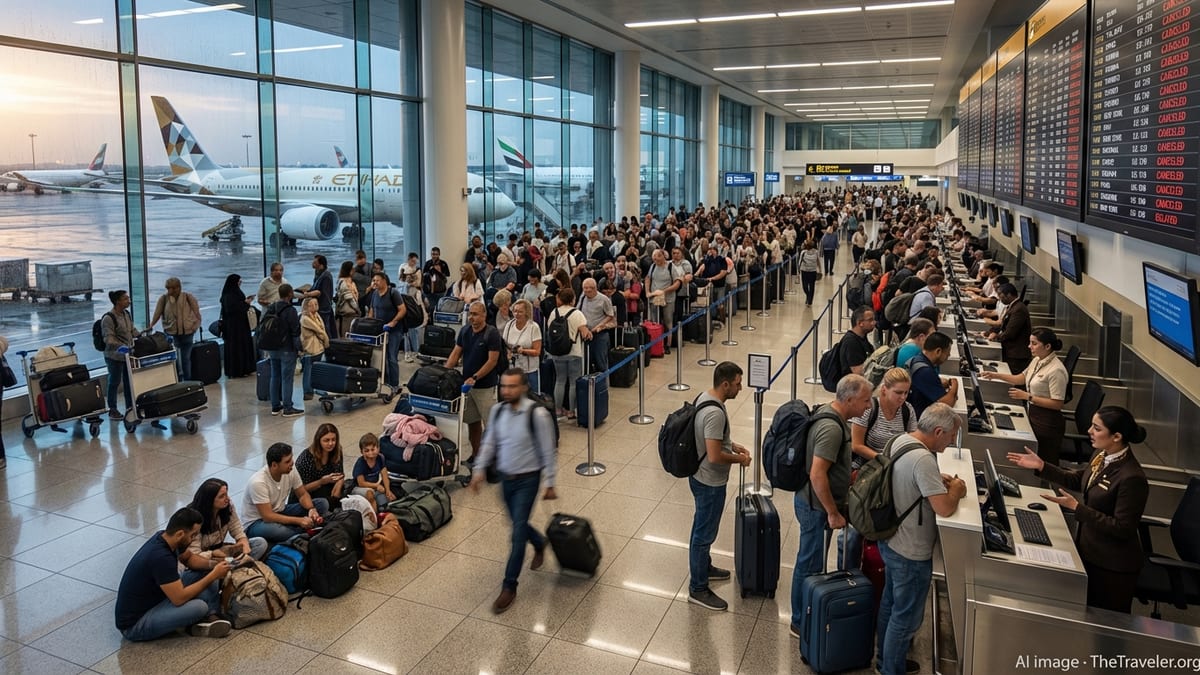
The US State Department has issued a fresh worldwide caution focused on the Middle East, warning US travelers to expect possible airspace closures, flight cancellations and broader security risks as conflict in the region intensifies.
Get the latest news straight to your inbox!
New Worldwide Caution Highlights Middle East Risks
Publicly available information on the State Department’s website shows that a renewed worldwide caution was posted in late July, emphasizing that tensions linked to the Iran conflict continue to shape the security environment across the Middle East. The alert states that conditions remain volatile and notes the potential for what it describes as unforeseen escalation, including incidents that could affect civilian infrastructure and transport.
The advisory underscores that Americans currently in the Middle East should exercise heightened vigilance and maintain a low profile in public spaces. It points travelers to country specific advisories, many of which already carry some of the department’s highest warning levels, including “Do Not Travel” notices for Iran, Iraq, Syria, Lebanon and Yemen, and “Reconsider Travel” guidance for several Gulf states, Israel and the Palestinian territories.
According to published coverage in outlets such as UPI and regional broadcasters, the updated messaging builds on a series of security alerts that have followed flare ups in fighting since the start of the year. The latest notice reiterates that US citizens remain potential targets for groups that may be motivated by the broader conflict and may view locations associated with the United States, including diplomatic facilities and commercial hubs, as potential venues for attacks.
The alert also emphasizes that the US government’s capacity to provide emergency services to citizens may be constrained in many locations where security conditions are deteriorating or where official personnel are subject to movement restrictions.
Warnings of Airspace Closures and Flight Disruptions
A central feature of the new caution is its explicit reference to air travel disruptions. The State Department’s notice advises US citizens to be prepared for periodic airspace closures that could affect major transit corridors over and around the Gulf, Levant and Red Sea. Travelers are urged to anticipate sudden schedule changes, extended layovers, and diversions, and to maintain flexible plans in case commercial routes are suspended with little advance notice.
Reports from international news outlets and aviation industry analyses indicate that some airlines have already adjusted routings to avoid conflict affected airspace, increasing flying times on certain long haul routes between North America, Europe and Asia. In previous phases of the current crisis, carriers temporarily suspended flights to airports in Israel and neighboring states while regional air defense systems responded to missile and drone attacks.
Current commentary from travel risk consultants notes that, even when airports remain open, heightened military activity and alert status can prompt short notice ground stops or rerouting orders from civil aviation authorities. Travelers transiting through hub airports in Doha, Dubai, Abu Dhabi, Jeddah and other regional centers are being advised to monitor their bookings closely and to keep critical items and medications in carry on bags in case checked luggage is delayed or separated during rapid rebooking.
Industry observers also point out that travel insurance policies may treat war related disruptions differently from weather or technical delays, making it important for travelers to review policy language before departure. Some insurers classify conflict and airspace closure as excluded events, limiting compensation for cancelled or rerouted flights.
Country Level Advisories Remain at Elevated Levels
The latest global alert sits on top of a Middle East advisory map that has remained at elevated levels since major hostilities erupted earlier in the year. The State Department’s travel advisory pages continue to list Iran, Iraq, Syria, Lebanon, Gaza and Yemen at Level 4, “Do Not Travel,” citing terrorism, missile and drone attacks, civil unrest, and risks of kidnapping or wrongful detention.
Neighboring states including Israel, the West Bank, Jordan, Bahrain, Kuwait, Oman, Qatar, Saudi Arabia and the United Arab Emirates remain at Level 3, “Reconsider Travel,” according to current public postings. These notices reference the potential for cross border attacks, unrest near sensitive sites and the possibility that violence in one theater could quickly spill over to others, affecting civilian areas and transit routes.
Security focused think tank papers published this year note that the layering of a worldwide caution on top of existing country advisories is intended to remind travelers that risks are not confined to officially designated conflict zones. In practice, however, the combination of blanket and destination specific warnings can be confusing for travelers trying to interpret whether a particular itinerary is viable.
Some analysts suggest that the persistence of Level 3 and Level 4 advisories across much of the region, combined with the history of sudden escalation in past Middle East crises, makes it more likely that additional flight suspensions or embassy drawdowns could occur with limited warning.
Guidance for Americans Considering or Already on Middle East Trips
In its public materials, the State Department urges Americans to carefully reassess nonessential travel to affected countries and to review the detailed guidance for each destination before purchasing tickets. Travelers who decide to proceed are encouraged to maintain contingency plans that account for both security incidents and logistical disruptions, including the possibility of being unable to depart on short notice.
Travel risk management firms advise that Americans already in the region should ensure travel documents are current, maintain access to funds in multiple forms, and keep mobile devices charged and loaded with local emergency numbers. They also recommend identifying multiple potential exit routes, including flights through alternative regional hubs that may be less exposed to airspace restrictions at any given moment.
Publicly available guidance also highlights the importance of enrollment in the Smart Traveler Enrollment Program, which allows US embassies and consulates to distribute security updates by email or text to citizens in their consular districts. Recent security alerts shared through that system have included location specific advice on avoiding demonstrations, steering clear of military or government sites, and monitoring developments through reliable local news sources.
Consular information pages state that, in the event of widespread airspace closures, the US government’s ability to organize assisted departure flights may be constrained by host nation permissions, the availability of commercial aircraft and crew, and the security conditions at airports. Travelers are therefore urged not to assume that government organized evacuations will be available in all circumstances.
Airlines and Tourism Sector Brace for Prolonged Uncertainty
Analysts tracking the travel and hospitality industries say the latest worldwide caution, combined with prolonged conflict in the region, is likely to weigh on bookings involving Middle Eastern transit points through at least the remainder of the northern summer season. Some travel data providers report early signs of a shift in passenger flows from Gulf hubs toward alternative routings via Europe or direct transatlantic and transpacific services that avoid the region entirely.
Hotel and tour operators in popular destinations that have so far been spared direct attacks nonetheless report increased cancellations from US travelers following past rounds of State Department alerts. Industry commentary suggests that the accumulation of advisories and media coverage can have a compounding effect on traveler sentiment, even where day to day life in certain cities remains relatively stable.
At the same time, aviation experts note that Middle Eastern carriers and airports play a central role in global connectivity, particularly between North America, Asia and Africa. A sustained reduction in flights through the region or tighter airspace controls would reverberate far beyond the immediate conflict zone, potentially driving up fares and travel times on a range of long haul routes.
For now, publicly available schedules show that many carriers continue to operate, albeit with adjusted routings and contingency plans. The State Department’s latest alert signals that travelers should not assume such conditions will remain static, and that the balance between open skies and emerging risks may continue to shift rapidly in the weeks ahead.