


More news on this day
The United States has updated its travel advisory for Mozambique, aligning more closely with recent guidance from Canada and South Korea that urges travelers to carefully weigh risks in parts of the southeastern African safari destination due to terrorism, crime, health concerns and sporadic unrest.
Get the latest news straight to your inbox!
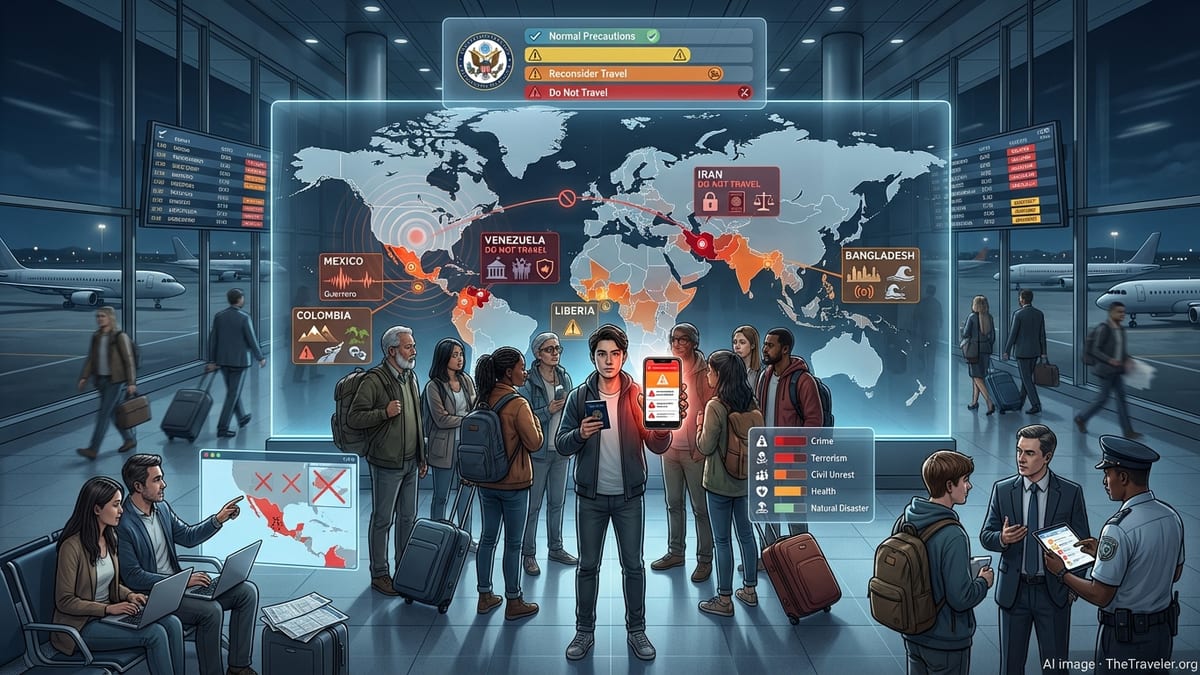
Popular safari hub faces stepped-up risk messaging
Mozambique, known for its vast Niassa Special Reserve and coastal wildlife areas bordering Tanzania, has drawn growing numbers of safari-goers looking for alternatives to more established destinations in East and Southern Africa. Recent changes in foreign travel advisories are now casting a sharper spotlight on security challenges in some of these remote regions.
The latest U.S. State Department advisory, updated in August 2026, keeps Mozambique overall at Level 2, meaning travelers are urged to exercise increased caution, but singles out certain areas as higher risk due to terrorism, crime, health system limitations and unrest. Publicly available information highlights specific no-go zones such as Cabo Delgado Province, the Niassa Special Reserve inside Niassa Province, and parts of northern Nampula Province, where attacks and clashes have been reported near tourism and transport corridors.
Canada’s government issues broadly similar guidance, advising travelers to exercise a high degree of caution in Mozambique as a whole while flagging regional advisories in the north. Canadian travel advice cites security incidents, banditry and local instability as reasons for heightened vigilance, particularly along routes that may be used by visitors heading to coastal parks and conservation areas in the north of the country.
South Korea’s foreign ministry lists Mozambique under differentiated warning levels, with information on its official safety portal indicating a stronger recommendation to depart or avoid Cabo Delgado while maintaining a lower, but still cautious, advisory for the rest of the country. Updates issued in mid and late 2026 draw attention to northern security incidents and remind Korean nationals to reconsider nonessential travel to the most affected districts.
Focus on Cabo Delgado and Niassa safari regions
Travel guidance from multiple governments converges around northern Mozambique, where a mix of militant activity, weak infrastructure and difficult terrain has complicated security responses. The U.S. advisory labels Cabo Delgado and the Niassa Special Reserve as areas to avoid, underscoring a pattern of attacks on villages, transport links and, at times, remote lodges that cater to international visitors and hunting parties.
Risk assessments from other countries echo these concerns. The United Kingdom, Australia and New Zealand, while not part of the trio highlighted in this latest development, also maintain warnings against travel to Cabo Delgado and sections of Nampula due to terrorism and kidnapping threats. These overlapping notices suggest a broad international consensus that safari tourism in some northern zones carries elevated security risks compared with southern and central parts of Mozambique.
For travelers, that means some of the country’s most remote wildlife experiences now sit inside areas where governments advise against all travel or against nonessential trips. Operators offering expeditions into northern reserves face not only on-the-ground security constraints but also insurance, liability and evacuation challenges, as many policies and corporate travel programs are tied directly to official advisory levels.
By contrast, better-known beach and marine destinations in the south, including areas near Maputo and around the Bazaruto Archipelago, currently fall under less restrictive guidance, though travelers are still urged to watch for crime and infrastructure gaps. This creates a patchwork of relative risk inside one country that visitors must navigate carefully when planning multi-stop safaris or overland journeys.
Crime, health and unrest add to traveler considerations
Beyond terrorism in the north, risk assessments emphasize crime and fragile health systems across much of Mozambique. The U.S. advisory notes that violent and petty crime can affect major cities and tourist areas alike, with reports of muggings, carjackings and theft targeting foreigners in urban centers and along transit routes.
Health care capacity is another recurring theme. Publicly available summaries of Mozambique’s medical infrastructure describe limited emergency services, inconsistent availability of medicines and the expectation of upfront cash payment in many facilities. Travelers are encouraged by multiple governments to obtain comprehensive travel insurance that includes medical evacuation, recognizing that serious injuries or illnesses in remote safari areas may require air transport to better-equipped hospitals inside or outside the country.
Recent foreign guidance also references the possibility of protests and localized unrest that can disrupt roads and airport access. Advisory pages from several governments describe unplanned demonstrations that may turn violent, with blockages affecting major highways and, at times, routes linking regional airports with nearby tourism hubs. While such events are not constant, they introduce additional uncertainty for tightly scheduled safari itineraries that rely on domestic flights and long overland transfers.
For travelers combining safaris in Mozambique with trips to neighboring countries such as Tanzania, South Africa or Zimbabwe, differing advisory levels can complicate regional planning, particularly when insurers or corporate travel programs set stricter internal rules than those applied to leisure visitors.
What the coordinated warnings mean for safari planners
The closer alignment of U.S., Canadian and South Korean guidance does not amount to a blanket call to avoid Mozambique, but it does raise the bar for advance planning. Travelers are increasingly advised to check not only their own country’s advisory but also common carrier, tour operator and insurance requirements before booking.
Publicly accessible risk ratings used by universities and multinational organizations, often based on a combination of government advisories and private security assessments, classify northern districts of Cabo Delgado as extreme-risk areas, frequently prohibiting nonessential staff travel. While leisure travelers are not bound by these institutional rules, the classifications influence how airlines, cruise lines and large tour consolidators structure their offerings, sometimes steering group itineraries away from higher-risk safari zones.
Smaller safari operators that continue to work in or near sensitive regions may respond by strengthening security protocols, limiting overland travel at night and relying more on charter flights to bypass insecure stretches of road. Potential visitors are encouraged in public guidance to closely review proposed routes, ask how emergency evacuation would be managed and verify that itineraries avoid districts subject to the strictest government warnings.
For travelers who prefer to avoid northern Mozambique altogether, many of the same wildlife species can be seen in southern reserves and neighboring countries with comparable or lower advisory levels. However, the relative novelty of Mozambique’s safari industry means that infrastructure, from airstrips to medical facilities, can still lag behind more established destinations, even in areas that are not specifically highlighted for terrorism concerns.
How prospective visitors can monitor evolving advice
Given that advisory levels and regional warnings can shift quickly in response to local developments, official sources recommend that travelers check for updates repeatedly in the weeks and days leading up to departure. Many foreign ministries provide email alerts or mobile notifications for changes to country pages, including Mozambique.
Enrollment services for citizens traveling abroad, such as voluntary registration programs, are also highlighted in public information as a way to receive security messages while in-country. These alerts can cover anything from sudden road closures and protest activity to shifts in terrorism risk assessments in the north.
Travelers planning safaris in Mozambique are further encouraged by governments and specialist risk services to maintain flexible itineraries, avoid over-reliance on a single road route, and build in time buffers to accommodate potential disruptions. Monitoring reputable international and local news outlets for developments in Cabo Delgado, Niassa and Nampula can also help visitors and operators make informed decisions about whether to proceed with, modify or postpone certain legs of a trip.
As the United States joins Canada and South Korea in sharpening their public messages about Mozambique, the overall picture is one of a destination that remains accessible for many types of tourism, but where certain safari regions now demand significantly greater scrutiny, preparation and risk tolerance from prospective visitors.
U.S. Department of State Mozambique Travel Advisory
Government of Canada Travel Advice for Mozambique