


More news on this day
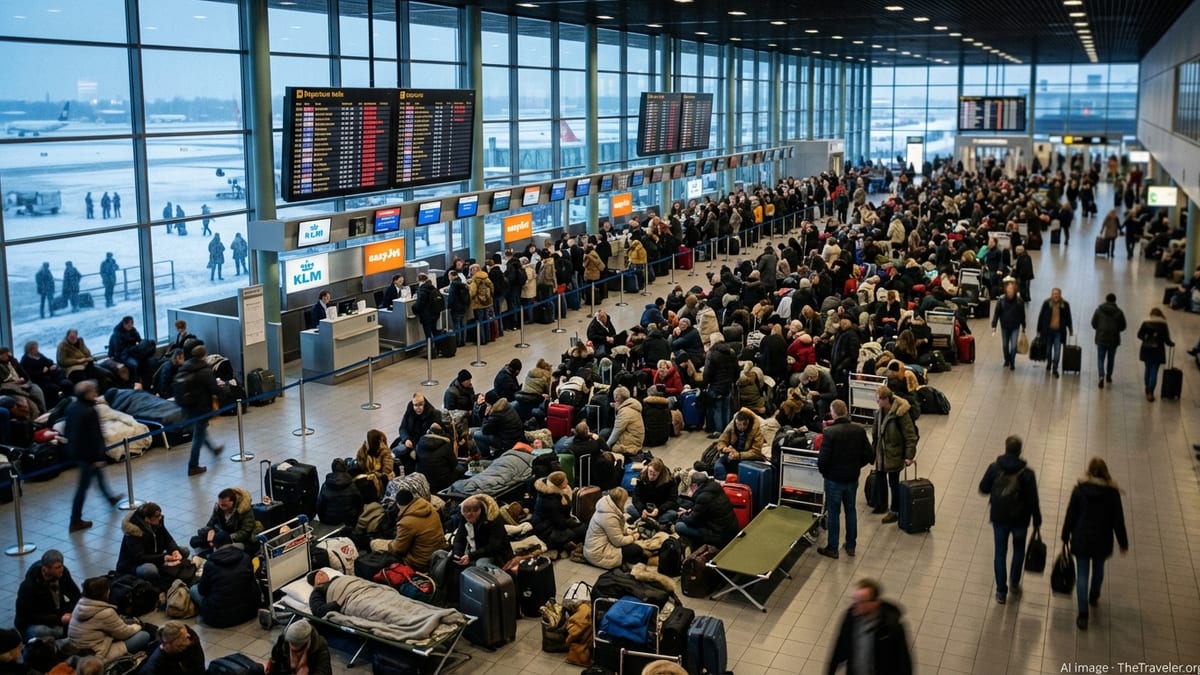
Thousands of passengers across Europe faced mounting disruption as Barcelona and 11 other major airports together recorded 92 flight cancellations and 2,079 delays in a single day, underscoring the fragility of the region’s peak-season aviation network.
Get the latest news straight to your inbox!
Barcelona Among Europe’s Most Affected Hubs
Live disruption data shows Josep Tarradellas Barcelona El Prat Airport among the continent’s most heavily affected hubs, with hundreds of services operating behind schedule. Real-time monitoring platforms that track punctuality at major European airports indicate that Barcelona has recently recorded one of the highest combined tallies of delayed and canceled flights in the region, putting additional strain on an already busy summer schedule.
Barcelona is one of Europe’s busiest airports and Spain’s second-largest, handling tens of millions of passengers per year and serving as a key gateway for holiday traffic to the Mediterranean. That scale means that even moderate percentages of delayed flights can quickly translate into large numbers of disrupted journeys and prolonged queues at security, check-in, and border controls.
Regional aviation performance reports point to Spain as one of the main contributors to en route air traffic flow management delays this summer. Network snapshots from Eurocontrol highlight Barcelona’s area control center as a persistent hotspot, placing additional pressure on arrivals and departures at the city’s primary airport when traffic peaks.
Operationally, the knock-on effect of delayed arrivals often ripples through outbound schedules later in the day, amplifying the impact for passengers who may not be flying through the worst weather or congestion windows but still experience late departures and missed onward connections.
Eleven Other European Airports Report High Disruption Levels
The latest figures grouping Barcelona with 11 other European airports underline that the disruption is not localized to a single country or carrier. Other major hubs, including Paris Charles de Gaulle, Amsterdam Schiphol, Frankfurt, and Madrid Barajas, have all reported significant numbers of late operations in recent days, contributing to the combined total of 92 cancellations and 2,079 delays.
Data from live airport disruption maps suggests that these large hubs frequently record triple-digit numbers of delayed flights on peak travel days, particularly during the morning and late afternoon waves when departure banks are densest. While the exact mix of cancellations and delays varies by airport and day, the aggregate impact across the network is substantial when viewed at European scale.
Secondary but still heavily used airports, such as London Luton or regional gateways in Italy and Greece, also contribute notable volumes of late operations. In some cases, route structures mean that delays originating at large hubs cascade into these smaller airports, where turnarounds can be more vulnerable to even minor schedule slippages.
For travelers, this broad geographic spread of disruption reduces the effectiveness of simple workarounds such as rerouting through a different hub on the same day. When multiple airports across the same region are affected at once, rebooking options can quickly narrow and seats on alternative flights become harder to secure.
Network Strain Driven by Capacity, Weather, and Summer Demand
Recent European aviation overviews point to a complex mix of factors behind the high disruption counts. Air traffic flow management data shows that capacity and staffing constraints in key control centers, including those overseeing airspace above France and Spain, remain a major driver of en route delays, even as overall punctuality has improved compared with some previous summers.
Adverse weather, including thunderstorms and high winds, continues to trigger temporary flow restrictions and reroutings across parts of the continent, particularly in the busy late afternoon period when convective weather is most common. These restrictions often translate into ground delays at departure airports as flights are held for updated slots, pushing back schedules and compressing turnaround times.
At the same time, summer demand remains robust, with traffic at many large European airports near or above pre-pandemic levels. When schedules are densely packed and runway or terminal capacity is operating close to the limit, even a small deterioration in punctuality can cause queues of aircraft waiting for stands, gate changes at short notice, and slower baggage delivery.
Industry analyses also note that jet fuel price volatility and broader geopolitical uncertainty can affect airline scheduling strategies, including how much buffer is built into timetables. In a tight operating environment, thinner margins for recovery make it harder for carriers to absorb disruptions caused by weather or temporary airspace constraints.
What the Disruptions Mean for Travelers This Season
For passengers, the combination of 92 cancellations and more than 2,000 delays in a single reporting period across a dozen European airports translates into missed connections, extended airport dwell times, and elevated stress during what is supposed to be peak holiday season. Travelers connecting through Barcelona, Paris, Frankfurt, Amsterdam, and other major hubs are particularly exposed, as any delay on the first leg can jeopardize onward journeys.
Consumer-rights organizations and air passenger advocacy groups continue to emphasize the importance of checking real-time flight status and allowing generous connection times when booking multi-sector itineraries in Europe this summer. Historical disruption data from recent months shows that days with several thousand late flights across the network are no longer rare events, especially during busy holiday weekends.
Where flights are significantly delayed or canceled, passengers on departures from or within the European Union may be entitled to compensation or assistance under EU air passenger regulations, depending on the cause of the disruption and the length of the delay. Publicly available guidance from specialist claims services outlines how travelers can document their cases, retain receipts for meals or accommodation, and submit claims once they are home.
Industry monitoring over recent weeks suggests that while overall network performance has improved compared with earlier in the year, pockets of severe disruption still occur when adverse weather overlaps with capacity bottlenecks at major hubs. Travelers planning late-summer or early-autumn trips through European airports may therefore wish to build in additional flexibility, whether by choosing earlier flights in the day, allowing longer layovers, or avoiding tight same-day connections where possible.
Flightradar24 Europe airport disruption live data