


More news on this day
The U.S. government has renewed warnings for Americans considering travel to Saudi Arabia, citing an elevated security environment in the region and the risk of drone and missile attacks linked to Iran-related tensions that can disrupt daily life, aviation, and consular operations.
Get the latest news straight to your inbox!
What the latest U.S. advisory says
Publicly available U.S. State Department guidance currently lists Saudi Arabia at Level 3, meaning travelers are urged to reconsider travel. The advisory highlights security concerns that can include attacks on civilian and infrastructure targets, as well as the possibility of disruptions to transportation and services.
The State Department’s Saudi Arabia advisory also calls out specific areas where travel is discouraged, including the Yemen border region due to terrorism risk. Alongside the general nationwide caution, the guidance reflects additional restrictions that apply to U.S. government personnel in-country, which can affect the scope and speed of assistance U.S. missions can provide during fast-moving incidents.
For travelers, the practical takeaway is that the overall risk picture is being treated as more serious than a routine “exercise normal precautions” destination. Even visitors headed to major hubs such as Riyadh, Jeddah, or the Eastern Province can face sudden changes in security posture, temporary movement limitations, or interruptions to public events and transportation.
Why the warning is focused on drones and missiles
The latest U.S. warning lands in a period when regional security concerns have repeatedly centered on long-range drones and missile threats. Published coverage in 2026 has described incidents in which drones reached high-profile locations in Saudi Arabia, underscoring that the threat is not limited to remote border zones.
One widely reported 2026 incident involved drones striking the U.S. Embassy in Riyadh, triggering temporary “shelter in place” messaging and heightened caution. While such events are not everyday occurrences, they illustrate how quickly travel conditions can shift, including the possibility of temporary closures, rerouting, or restricted access to certain districts.
Travelers should also understand that drone and missile threats can create ripple effects beyond the immediate target area. Even when an incident occurs far from tourist sites, it can affect airspace management, airport operations, and the broader risk calculus used by airlines, insurers, and tour operators.
How air travel and routes could be affected
In addition to on-the-ground security concerns, U.S. aviation guidance has for years flagged heightened risk considerations in airspace across the broader Gulf region. FAA notices and advisories have referenced the potential hazards associated with military activity and conflict-zone dynamics, including the risk of misidentification or rapid escalations that can affect civil aviation planning.
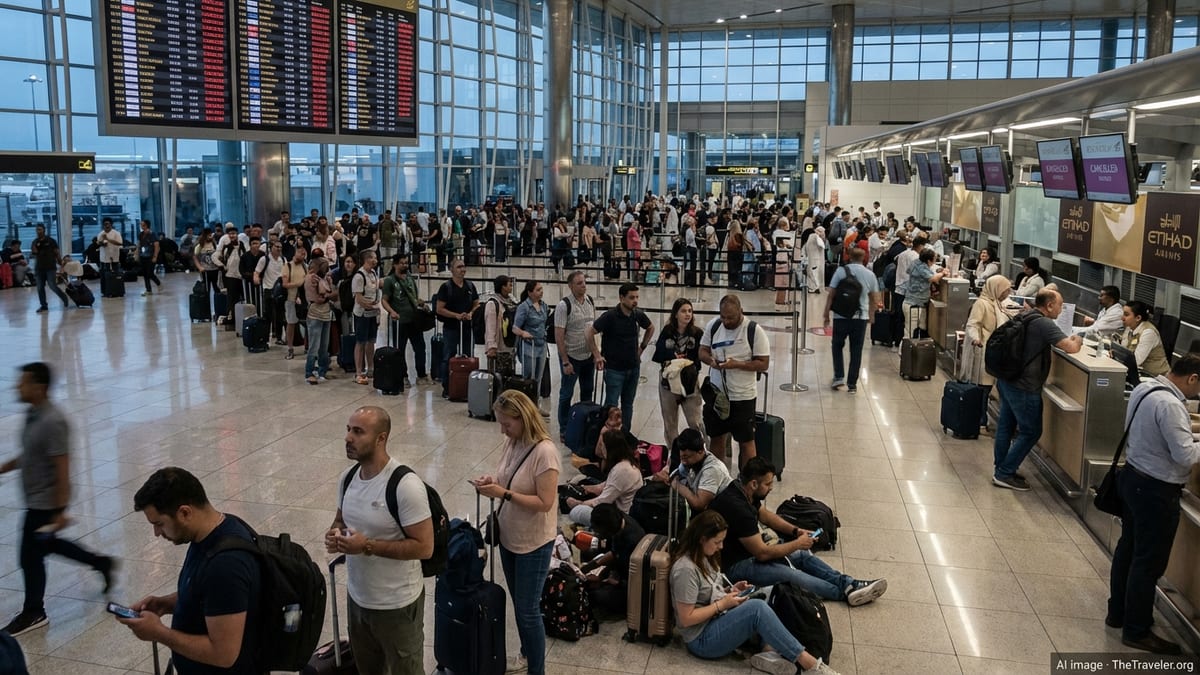
For passengers, that can translate into longer routings, last-minute schedule changes, or altered connections if airlines decide to avoid certain flight information regions or overwater corridors. Travelers connecting through regional hubs should be prepared for operational disruptions that may occur with little notice, especially if airspace advisories are updated in response to new incidents.
Because airlines do not all respond the same way to risk advisories, two carriers on similar routes may make different choices about rerouting or timing. That can affect arrival times and onward connections, particularly for itineraries that include tight layovers, overnight transits, or multi-city tickets across the Gulf.
How other governments are describing the risk
Other major English-language government travel advisories broadly align with the U.S. emphasis on regional instability and the possibility of attacks. The United Kingdom’s travel advice continues to warn against travel to certain parts of Saudi Arabia and stresses that conditions near sensitive areas can deteriorate quickly.
Australia’s Smartraveller advice similarly frames the overall security situation as a reason to reconsider the need to travel, reflecting a shared view among multiple governments that the current risk environment warrants extra caution and more conservative trip planning.
This convergence matters for travelers because it influences how insurers, corporate travel departments, and tour operators assess destination risk. Even when travel remains possible, a higher-risk designation can affect coverage terms, reimbursement policies, and the flexibility travelers have to change plans without penalties.
What travelers can do now if they still plan to go
Americans with upcoming trips should start by reading the current State Department advisory for Saudi Arabia in full and checking recent U.S. Embassy security messaging for the kingdom. Conditions can change quickly, and travelers benefit from understanding which areas are specifically flagged and what constraints may exist on movement or consular support during incidents.
Trip logistics deserve an extra layer of planning. Travelers may want to build in buffer time for connections, avoid overly tight schedules for tours and internal flights, and confirm hotel cancellation terms before departure. It can also help to keep key documents and contact information accessible offline in case mobile service is disrupted.
Finally, travelers should think through what “disruption” would look like for their itinerary, including how they would adjust if a flight is rerouted, an airport experiences delays, or certain districts are temporarily avoided. The core message of the advisory is not only about the possibility of an attack, but also about the broader travel impacts that can follow from heightened tensions.