


More news on this day
U.S. travel guidance for Iran has taken on new urgency this week, with Americans advised to leave the country immediately as published coverage points to heightened regional risk and the possibility of sudden flight cancellations or airspace closures that could strand travelers.
Get the latest news straight to your inbox!
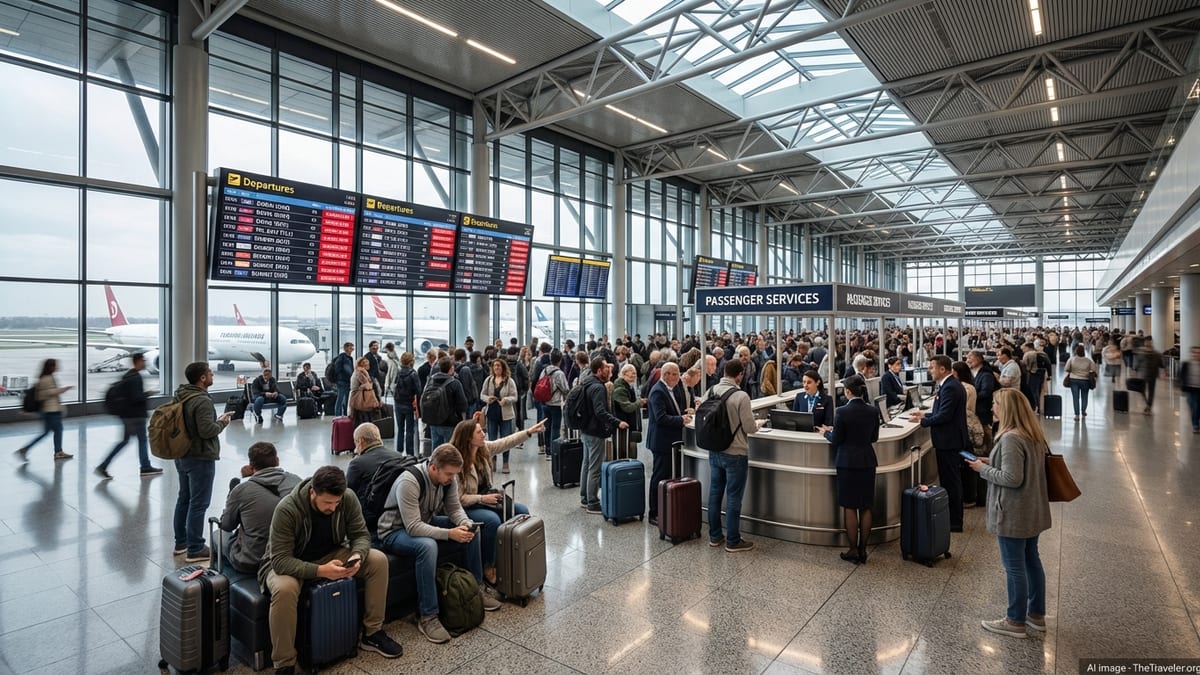
What the renewed warning signals for travelers right now
Published coverage in Hindustan Times highlighted a fresh “leave now” message aimed at U.S. citizens in Iran, paired with a broader caution to closely track airport operations, airline services, and border-crossing conditions. The update lands amid a volatile security environment where travel options can change within hours, especially for routes touching the Middle East and nearby air corridors.
Separately, publicly available U.S. Department of State information continues to list Iran at Level 4 (“Do not travel”), with language that urges U.S. citizens already in Iran to leave immediately. The advisory also emphasizes that the United States does not maintain an embassy or consulate in Iran, limiting the practical help available to travelers during fast-moving disruptions.
The timing matters for aviation: as regional tensions rise, airlines may cancel flights preemptively, shift routings to avoid certain airspace, or suspend service altogether, even when airports remain open. For travelers on tickets that connect through hubs in Türkiye, the Gulf, or Central Asia, disruptions can cascade quickly through onward connections.
Airspace risk and flight planning: the aviation layer behind the headlines
Beyond consular warnings, aviation safety guidance underscores the complexity of operating in or near Iranian airspace. Federal Aviation Administration notices and related restrictions have long urged U.S. operators to treat the area as elevated risk and to plan using current aeronautical information and NOTAMs, which can introduce last-minute restrictions or re-routes that impact commercial scheduling.
In recent days, additional airspace safety messaging has circulated in the region, including warning language tied to heightened readiness and maritime-related activity over adjacent areas. While such notices are not always visible to passengers, they can directly influence whether carriers keep routes operating, alter flight paths, or reduce frequency to preserve operational flexibility.
For travelers, the takeaway is practical: even if a flight is still showing as “on time” hours before departure, the operating environment can change quickly. Airport departures, overflight permissions, crew-duty limits after re-routes, and insurance and compliance considerations can all translate into cancellations that occur late in the travel cycle.
Where cancellations could spread: airlines, hubs, and sanctions pressure
Air connectivity to Iran is especially sensitive to policy changes and third-country decisions. Recent reporting has pointed to increasing pressure on Iran’s aviation sector following new rounds of U.S. sanctions targeting multiple Iranian carriers and related networks, a development that can influence how airports, service providers, and partner airlines manage risk.
Some published coverage has also described specific international service suspensions, including reports involving Iranian carrier Mahan Air and routes touching Türkiye and Oman. Separate reporting has suggested wider knock-on effects, including potential suspensions by non-Iranian carriers serving Iran. Because these reports can develop rapidly and may vary by route and date, travelers are likely to see changes first reflected in airline rebooking options and schedule updates rather than formal airport announcements.
Travelers connecting via major regional hubs should also watch for secondary impacts: if carriers re-route around certain airspace, flight times can lengthen, aircraft rotations can slip, and downstream departures can be canceled due to crew time limits or aircraft availability.
If you are in Iran: what “leave now” means in real-world logistics
For U.S. citizens currently in Iran, the renewed messaging effectively elevates the importance of acting before choices narrow. In scenarios involving periodic airspace closures or rapid cancellations, the hardest part of leaving can be the last-mile availability of seats, ground transportation to departure points, and the ability to move quickly if border policies tighten.
Published U.S. guidance highlights that consular support inside Iran is limited and that travelers should not plan around U.S. government-led evacuation. The same publicly available information notes Switzerland’s role as a protecting power for U.S. interests, but it also reflects constraints that can arise during heightened security situations.
For travelers weighing departure by land, conditions at border crossings can shift quickly depending on security posture and neighboring-country entry rules. Even when borders remain open, documentation requirements, nationality-based restrictions, and limited transportation options can make cross-border plans difficult to execute on short notice.
What travelers outside Iran should watch before rebooking or transiting the region
Americans not in Iran but traveling through the Middle East are also being urged in publicly available U.S. advisories to anticipate disruptions. The State Department’s worldwide caution update has warned of flight cancellations and periodic airspace closures across parts of the region, advising travelers to monitor airline and airport updates closely.
For anyone holding tickets that transit near Iran, the most practical step is to verify operating status directly with the airline and to confirm whether the itinerary depends on overflight corridors that could be avoided or closed. In disruption waves, the earliest options to change plans often come through airline self-service tools, but complex itineraries may require manual re-accommodation.
Travelers should also review insurance and payment protections before making changes. In fast-moving situations, carrier policies on waivers, refunds, and rebooking can evolve over days, and coverage may depend on the exact advisory language and the date a policy was purchased. If reliable, route-specific information cannot be confirmed for a particular carrier, itinerary, or airport, travelers may be better served by postponing non-essential travel until schedules stabilize.