


More news on this day
Airline passengers in the United States are facing the highest rate of long tarmac delays in more than a decade at the very moment holiday travel peaks, with new federal data showing three-hour waits on the tarmac have nearly doubled since 2024 while the Transportation Department has not issued a single airline consumer protection fine in almost two years.
Get the latest news straight to your inbox!
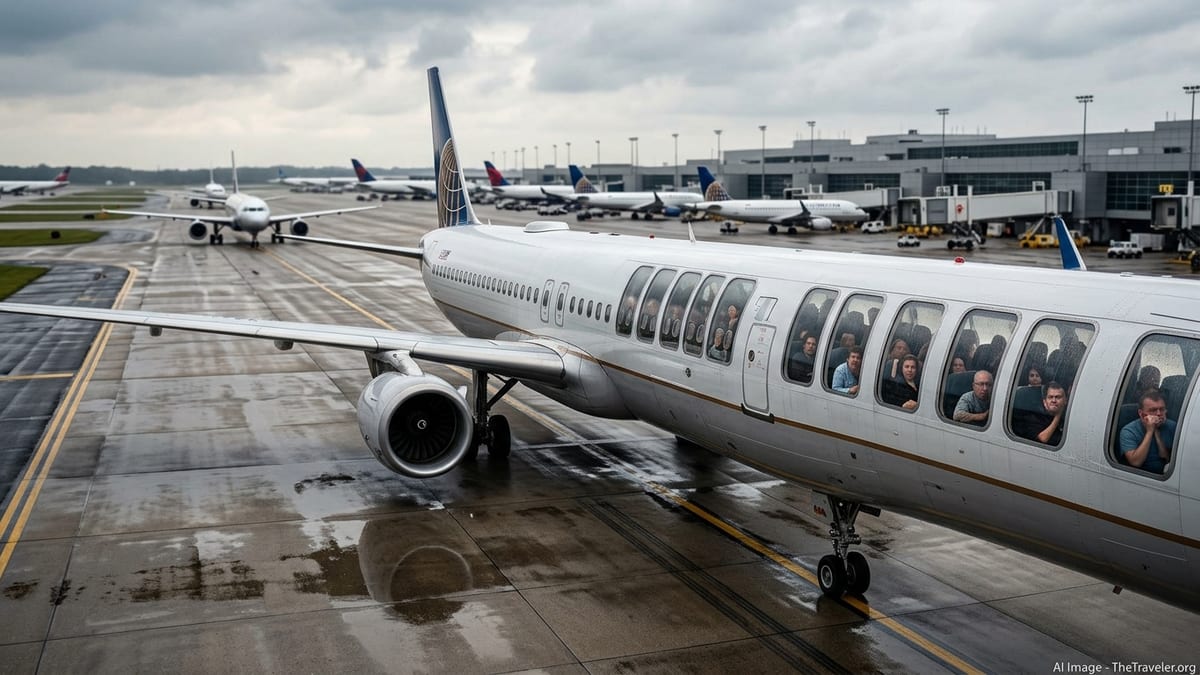
What The Latest Data Shows About Tarmac Delays
Federal transportation data compiled from airline reports indicates that domestic flights stuck on the tarmac for more than three hours are now occurring at their highest rate since 2009. Extended tarmac delays remain rare compared with the total number of departures, but their frequency has risen sharply since 2024. An analysis of data for the 30 largest U.S. airports published this week found that the rate of three-hour tarmac delays in 2026 is nearly double the level recorded in 2024, reversing much of the progress made during the 2010s in curbing extreme on-board waits.
The spike is particularly visible on days when the air travel system is under stress from storms or technical problems. During the nationwide ground stop triggered by an outage in Federal Aviation Administration systems on November 13, preliminary estimates shared by aviation data providers suggest that between several dozen and around 100 domestic passenger flights experienced extended tarmac delays at large U.S. airports. Passengers on some of those flights spent more than four hours waiting on board before returning to a gate or taking off, illustrating how quickly long delays can cluster when airspace and airport capacity are constrained.
Overall, three-hour-plus tarmac delays still represent a tiny fraction of daily operations. The United States typically sees around 19,000 scheduled domestic passenger flights per day, and data cited in recent reporting suggests that on average only a small single-digit number of those flights incur an extended tarmac delay on a normal day. However, the year-on-year increase since 2024 is large enough that consumer advocates and some members of Congress are treating it as a warning sign that protections introduced in 2010 are losing much of their deterrent force.
The 2010 Tarmac Delay Rule And How It Was Enforced
The current framework for tarmac delay protections dates back to a Department of Transportation rule that took effect in April 2010. That regulation generally prohibits U.S. airlines operating domestic flights from keeping passengers on a plane at a U.S. airport for more than three hours without giving them the opportunity to deplane, except in cases where safety, security or air traffic control instructions make it impractical to return to a gate. For international flights at U.S. airports, the corresponding limit is four hours. The rule also requires carriers to provide adequate food, water, operable lavatories and medical attention as needed during any long delay while passengers remain on board.
To implement the rule, DOT obliges “covered carriers” to adopt contingency plans for lengthy tarmac delays, obtain approval for those plans from the department and coordinate them with airport authorities. The plans must spell out how an airline will monitor delays, decide when to return to a gate and ensure that basic services are available while passengers are confined to the aircraft. In regulatory guidance, the department has emphasized that simply polling passengers about whether they are willing to remain on the tarmac longer than three hours does not relieve a carrier of its legal obligation to provide an opportunity to deplane within the time limit, barring the narrow exceptions written into the rule.
Enforcement during the 2010s was relatively active. Between 2011 and 2024, DOT’s Aviation Consumer Protection office levied fines on airlines almost every year for violations of the tarmac delay rule and other consumer regulations. Publicly announced settlements in past cases included civil penalties against carriers involved in high-profile incidents where travelers were stuck on aircraft for four, five or even six hours without being allowed to disembark. Following the introduction of the three-hour limit and the visible enforcement actions that followed, long tarmac delays fell sharply. By the department’s own account and independent analyses, the number of domestic flights experiencing three-hour or longer tarmac delays dropped by more than 90 percent in the early years of the rule compared with the late 2000s.
Enforcement Pause Under Secretary Duffy And Industry Response
The pattern has changed since Transportation Secretary Sean Duffy took office in 2025. According to data reviewed in a recent New York-based national newspaper analysis of DOT enforcement activity, the department has not issued a single civil penalty against a U.S. airline for tarmac delay violations or any other consumer protection matter in almost two years. That pause in formal enforcement coincides with the period in which three-hour tarmac delays have risen back to levels not seen since before the 2010 rule took effect.
The Transportation Department has not announced any formal suspension or change to the underlying regulations, which remain in force in the federal aviation regulations. Airlines are still required to file their contingency plans, comply with the three- and four-hour limits and report lengthy tarmac delays to the government. In public statements following the November nationwide ground stop, Duffy has emphasized the need to modernize the FAA’s telecommunications and air traffic control infrastructure and has argued that Congress should provide additional resources to complete ongoing upgrades. He has not, however, announced new enforcement actions under existing consumer rules or signaled plans to strengthen penalties for delays that breach the tarmac limits.
Industry representatives, responding to questions raised by the new data, generally point to factors such as severe weather, congestion at already busy hubs and the ripple effects of system outages as primary causes of long on-board waits. Airlines note that, in some situations, keeping passengers on a taxiway can appear preferable to returning to a gate if the carrier believes a clearance to depart is imminent and gate space is constrained. They also argue that the overall frequency of extended tarmac delays remains low relative to the number of flights operated, and that dispatchers and crews must make real-time decisions under complex constraints. At the same time, the absence of any recent fines has raised questions from passenger advocates about whether the deterrent effect of the 2010 rule is eroding just as the system is coming under new strains.
FAA Outages, Holiday Crowds And Weather Risks For Travelers
This autumn’s spike in disruptions has not been limited to long tarmac waits. On November 13, the FAA ordered a nationwide ground stop after technical problems affected key telecommunications infrastructure linking air traffic control facilities. The agency later described the issue as a telecommunications network instability exacerbated by legacy equipment handling unexpected data traffic patterns. The halt to departures lasted several hours, leading to thousands of flight delays and cancellations before being lifted later the same day, and prompted a formal review of modernization efforts already underway.
The ground stop was one in a series of recent technology problems affecting aviation in November, including a global outage of Microsoft services, a separate systems issue that delayed more than a thousand Delta flights and an unrelated IT disruption at a major bank that complicated some travelers’ ability to make payments. In response, the FAA has said it is working with its primary contractors to accelerate fiber-optic upgrades and replace older hardware, while also stressing that safety was preserved during the incident because controllers could still communicate with aircraft.
These technical stresses are intersecting with one of the busiest travel periods of the year. Forecasts from travel organizations and federal security agencies suggest that U.S. air travel over the Thanksgiving period in 2026 is expected to reach or slightly exceed pre-pandemic levels, with passenger volumes approaching those last seen in the late 2000s. Airports serving New York, Dallas, Atlanta, Chicago and other major hubs are preparing for heavy crowds, longer security lines and tightly scheduled runway usage. At the same time, forecasters have warned that two coastal storm systems could affect parts of the East Coast and possibly the Midwest over the Thanksgiving and Christmas travel windows, raising the likelihood of weather-related delays and diversions on top of any lingering operational strains.
What Travelers Can Do As Delays And Enforcement Diverge
For individual travelers, the combination of rising long tarmac delays, intermittent technology outages and holiday weather presents a challenging environment, especially when formal federal enforcement of consumer protections has slowed. The core rights created by the tarmac delay rule remain in place. Passengers on domestic flights at U.S. airports must generally be given the chance to deplane before a tarmac delay exceeds three hours, and those on international flights must be offered that opportunity before four hours, unless safety, security or air traffic control restrictions make a return to the gate impractical. Carriers are also required to provide food, drinking water, operable lavatories and needed medical attention after two hours on the tarmac.
In practice, the application of those protections can still vary by carrier and circumstance, particularly when thunderstorms, snow or ground stops lead to simultaneous delays across many flights. Travelers who are concerned about potential tarmac waits can review their airline’s published tarmac delay contingency plan, which must be available on the carrier’s website, before departure. When onboard during a long delay, passengers can ask crew members how close the flight is to the three- or four-hour limit, what steps the airline plans to take if that threshold is reached and whether returning to a gate is possible under current air traffic control instructions.
Given the increased risk of disruption this season, traveler organizations are also advising passengers to build more flexibility into their plans. That can include allowing extra time for connections, considering earlier departures on key travel days, checking flight and airport status before leaving for the terminal and monitoring weather forecasts along the route. If a flight is canceled or significantly delayed, passengers can continue to use established avenues for complaints, including filing reports with the airline and, if necessary, submitting complaints to the Department of Transportation’s Aviation Consumer Protection office. Even in a period of fewer fines, detailed complaints can influence how regulators prioritize investigations and shape any future policy changes. For now, the data suggest that long tarmac delays, though still relatively rare, are trending upward again just as millions of Americans head to the airport, making preparation and awareness increasingly important parts of holiday travel planning.